
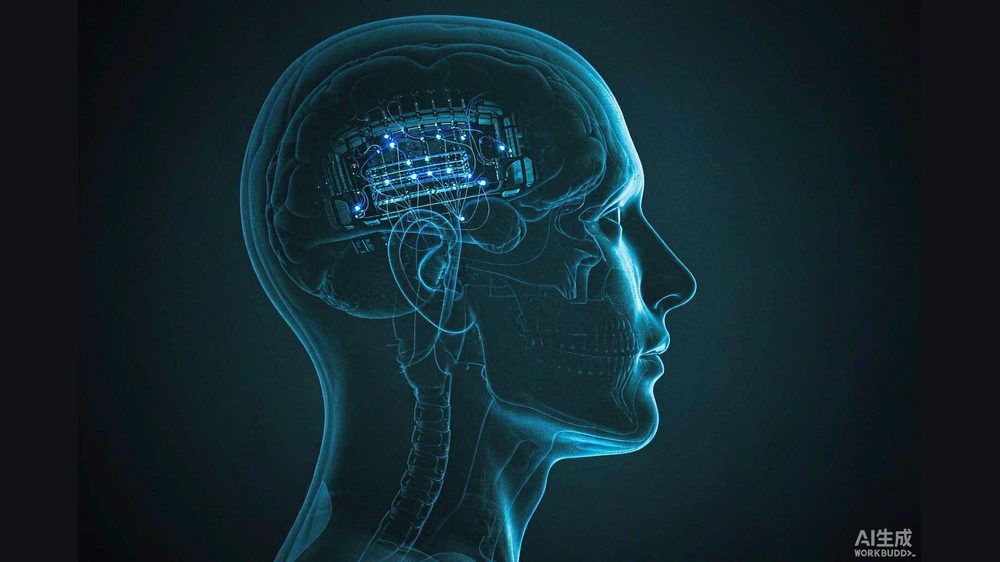
Most brain–computer interface (脑机接口) headlines are about a paralyzed person moving a cursor. This one is about something less cinematic and possibly more consequential: a provincial government writing a spreadsheet.
In 2026, Ganjiang New Area (赣江新区), a state-level development zone in Jiangxi province, published an action plan to turn itself into a brain–computer interface industry hub. The document is less a science story than a bet on how future industries actually get built — by assembling land, money, hospitals, and data centers before the breakthroughs arrive.
The plan, in concrete terms
The zone issued "Several Measures on Accelerating the Building of a Brain–Computer Interface Future-Industry Pioneer Zone," a 52-point action plan built around the fusion of five chains: industry, innovation, capital, talent, and policy. The targets are specific enough to be checked later. By the end of the 15th Five-Year Plan period, the zone wants to attract or cultivate more than 50 brain–computer interface enterprises, bring in over 10 national-level talents, and secure 5 Class III and more than 100 Class II medical-device certificates.
For 2026 alone, the plan calls for signing at least 20 projects and recruiting one nationwide "chain-leader" enterprise, supported by a reserve library of more than 200 candidate firms spanning the three technical routes — invasive (侵入式), semi-invasive (半侵入式), and non-invasive (非侵入式).
The money and the compute
Two numbers carry the weight. The zone says it will launch a about RMB 300 million (≈ US$42mn / HK$330mn) brain–computer interface industry guidance fund, meant to pull in private capital and help local firms reach provincial "first set" equipment breakthroughs. And it is building the data backbone: China Telecom is constructing a dedicated brain-data center whose first phase is planned at roughly 50 petaflops of compute (one provincial report cites 100P), paired with a high-standard dataset co-built with the provincial health commission to cover data collection, governance, and algorithm decoding.
That compute-and-data piece is the quiet core of the strategy. Brain–computer interface is as much a data problem as a neuroscience one: weak, noisy signals need large, well-labeled datasets and serious compute (算力) to decode reliably. A zone that owns the dataset and the racks can attract algorithm and device firms the way an oil town attracts refineries.
What would actually be built there
The plan names concrete anchors. A Shanghai invasive-brain–computer interface firm, BrainTiger (脑虎科技), is slated to build a "super factory" in the zone, and a "Jiangxi Brain Valley" joint brain–computer interface innovation center is planned. The zone also promises a clinical-research center and a public data-service platform, plus three application centers aimed at professional rehabilitation, addiction-treatment therapy, and autism (孤独症) research — choosing real, fundable use cases rather than vague "smart living" promises.
To pull patients and products together, the zone talks about "rehab vouchers" to help brain–computer interface rehab products reach users, and about linking with education and disabled-persons federations to build autism rehab centers. The logic is to manufacture demand, not just supply.
Why a Jiangxi zone, and why now
The national backdrop explains the urgency. Brain–computer interface was written into China's 2026 Government Work Report for the first time and sits in the 15th Five-Year Plan's list of future industries. When a technology gets that treatment, provincial zones race to be its "home base" — the same pattern seen with earlier strategic sectors. Ganjiang is explicit that it wants to avoid "scattered project piles" and instead connect lab to hospital bed to shelf through coordinated provincial effort.
For global readers, the interesting question is not whether one zone succeeds. It is what happens when many Chinese regions simultaneously subsidize the same frontier: a flood of pilots, datasets, and clinical beds that could compress the time from prototype to approved therapy — or produce a lot of half-built parks.
Honest limitations
Everything above is a plan and a set of targets, not an achieved result; the 50-enterprise and certificate goals are aspirations with no guarantee of being met. The 50-versus-100 petaflop figure varies between provincial reports, so the data-center scale should be read as approximate. Brain–computer interface remains clinically early, and a development zone's incentives do not by themselves solve the hard neuroscientific and safety problems. Regional competition also risks redundant capacity and over-promised timelines, so progress should be judged against delivered certificates, trials, and products rather than press releases.
What readers can do now
- Track the National Medical Products Administration's device-certificate count for Jiangxi to see whether the "5 Class III, 100 Class II" target becomes real.
- Watch for announcements of the BrainTiger super factory and the Jiangxi Brain Valley center as the first test of whether the plan attracts anchor tenants.
- For investors or researchers, compare Ganjiang's incentives against other Chinese brain–computer interface clusters (Beijing, Shanghai, Wuhan) before assuming any single zone will win.