
A man who cannot move his arms nudges a cursor across a screen using only the thought of moving. For three or four hours he is, by every metric his employer cares about, working — coordinating logistics, labelling backend data, earning. Then the coin-sized implant recharges and he rests.
This is not a lab demo. It is StairMed (阶梯医疗), a Shanghai company that has pushed an implantable brain-computer interface (脑机接口) past the point of "can it work" into "can a person live a day with it."
The device behind the story
StairMed was founded in August 2021 and is based in Shanghai's Pudong district. Its focus is minimally invasive implantable brain-computer interface (微创植入式脑机接口) — a route it designs to avoid a full craniotomy by using an extremely thin, flexible electrode delivered through a small opening.
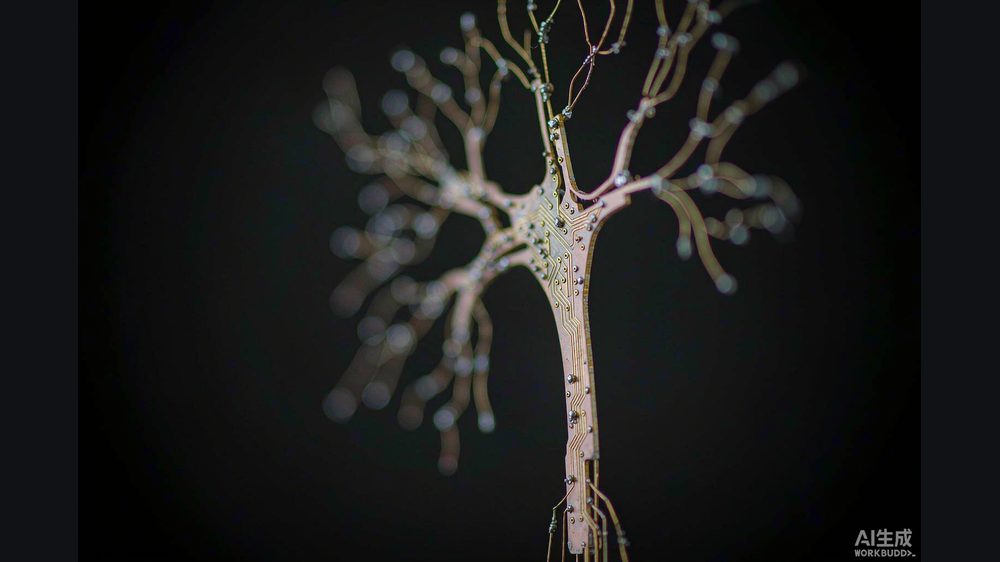
The electrode is the core asset. According to the company, it is about 1 micrometre thick, with a cross-section roughly 1/300th of a human hair, and it stays rigid for insertion before softening in tissue to reduce damage. In theory that thinness buys two things invasive rivals fight for: less trauma at implant, and longer stable recording.
The system that rode that electrode into patients is the WRS 01, a 256-channel implantable brain-computer interface. Reported by Shanghai's edition of People's Daily in August 2026, multiple patients with coin-sized implants controlled a computer purely by thought and sustained real work for three to four hours.
The numbers that matter
The disclosed performance figures are what separate this from a press release:
- Brain-to-action latency was compressed to under 50 milliseconds, well below the roughly 200 ms a typical human takes to react by hand.
- Information-interaction efficiency reached 380 bits per minute, described as approaching the level of a healthy person using a hand on a computer.
- One named (pseudonymous) subject, a high-level paraplegic identified as Zhang Hefeng (章贺峰), completed an e-commerce order's logistics coordination "by thinking about it."
Founder Li Xue (李雪) framed the result in human terms: the value is not the cursor, it is the return of a social identity — from "someone cared for" to "someone needed."
Why "smallest" is the real claim
People's Daily described the WRS 01 as the world's smallest, lowest-trauma clinical-grade implantable brain-computer interface, and the first such fully implantable system to enter China's innovation medical-device special review (创新医疗器械特别审查程序, often called the "green channel / 绿色通道"). That regulatory doorway matters more than any single benchmark: it is the fast lane toward a formal registration that a hospital can actually prescribe.
The Shanghai context helps explain the speed. The city published an action plan, the Shanghai Brain-Computer Interface Future Industry Cultivation Plan (2025–2030) (《上海市脑机接口未来产业培育行动方案(2025—2030年)》), and has deliberately clustered research, clinics, and manufacturing so that "the floor above is the supply chain below." StairMed is one beneficiary of that stacking.
The capital behind the climb
StairMed's funding has drawn unusual breadth. On its official site the company states cumulative financing above RMB 1 billion (≈ US$140M+ / HK$780M+) and, in a March 2026 announcement, a RMB 500 million (≈ US$70M / HK$390M) strategic round led by Alibaba, with Tencent and 国投创合 following; it says the prior twelve months brought cumulative financing above RMB 1.1 billion (≈ US$155M / HK$858M). An earlier February 2025 round of RMB 350 million (≈ US$49M / HK$273M) was led by Qiming Venture Partners, OrbiMed, and Lilly Asia Ventures.
The appearance of Alibaba and Tencent in the same brain-interface cap table is itself a signal: the internet giants are positioning neurotechnology as next-generation human-machine infrastructure, not merely a medical device.
The honest comparison
StairMed is frequently measured against invasive pioneers abroad, and the comparison is legitimate but incomplete. Its channel count is lower than the leading U.S. implant's, and its route is minimally invasive rather than deeply penetrating. What it argues is that a thinner, softer electrode and a tiny implant change the surgery, the recovery, and the patient pool — and that those are the variables that decide whether a technology reaches a hospital ward or stays in a journal.
Honest limitations
The clinical figures — under 50 ms latency, 380 bits/min, multi-hour work sessions — come from company-reported trial results carried by state media (People's Daily, Shanghai edition), not from a published peer-reviewed multicenter study. The cohort described is small and early-stage. "World's smallest" and "lowest-trauma" are the company's characterisations repeated by media, not independent rankings. Implantable neurotechnology carries surgical, infection, and long-term signal-stability risks that no early milestone resolves, and formal market approval has not yet been granted. Funding amounts are from the company's own announcements and Chinese financial media; they are consistent but not audited in the sources reviewed.
What readers can do now
- If you follow medtech, watch the NMPA innovation "green channel" status — entry there is a far stronger signal than an implant-count press release.
- If you work in rehab or neurology, read up on ultra-flexible thin-film electrodes; electrode softness, not channel count, may be the variable that decides patient candidacy.
- If you evaluate the sector, separate minimally invasive from fully invasive routes — they face different surgery, different risk, and different adoption curves, and conflating them hides the real story.