
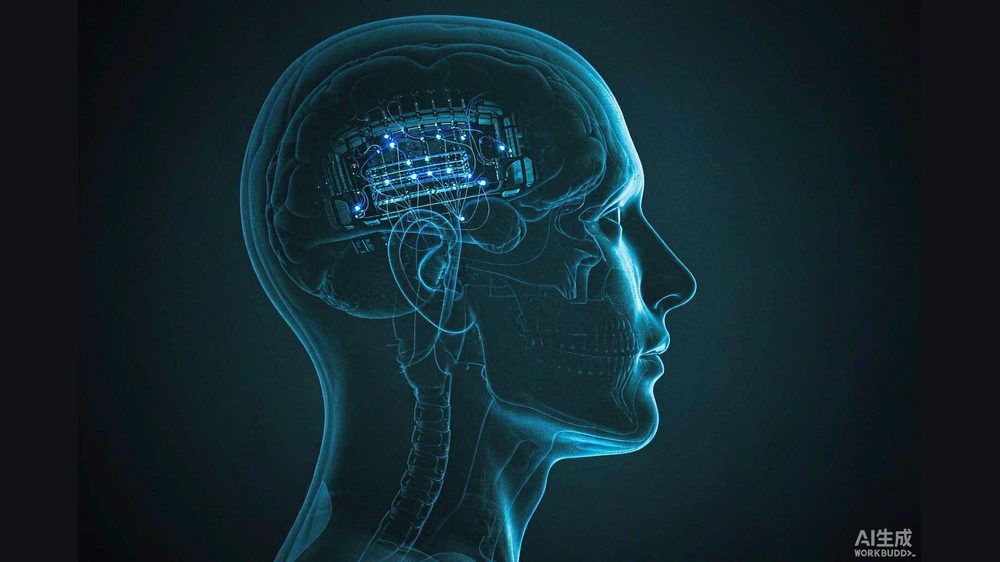
If a company could read your thoughts, should it? And who would own what it reads? This isn't the opening of a science-fiction novel; it's a real question each of us may have to face once brain-computer interfaces are widely implanted in human bodies. The brain is turning into a data mine that can be read.
When devices can read, decode, and even predict a person's mental activity, the boundary of privacy is pushed into entirely new territory. We're used to protecting passwords and photo albums, but we haven't yet learned to protect our thoughts. That's a gap we need to close, and take seriously.
When brain-computer interfaces still seemed a distant prospect, debating who owns neural data felt premature. But once devices start entering hospitals and human brains, the question shifts from a philosophical puzzle to one that demands an answer. The earlier we think it through, the less likely things are to go wrong.
This is especially true in medical settings, where patients are often in a vulnerable position and the excitement around a new technology can easily drown out caution about its risks. In that moment, rules are not obstacles but guardrails, protecting the very people who deserve protection.
When a Company Can Read Your Thoughts
What brain-computer interfaces collect isn't just simple commands like "move left." It's more likely to be neural signals tied to emotions, preferences, and even subconscious states. Once such data is stored, resold, or misused, an individual's mental privacy faces a new kind of exposure.
More subtly, neural signals reveal not only what you're thinking but also preferences, moods, and even inclinations you never said out loud. This kind of data is far more private—and far more dangerous—than your browsing history.
Researchers have already warned that brain-computer interfaces could become extraordinarily powerful mind-reading tools. So as the technology moves from the lab into the clinic, regulation needs to be in place before the celebration starts. That isn't about holding technology back; it's about helping it last, and helping people feel safe with it.
The sooner we set rules, the fewer regrets we'll have. Putting guardrails in place up front is always better than scrambling to fix things after something goes wrong.
That's exactly why countries are beginning to bring neural data under regulatory scrutiny. Technology can move fast, but rules cannot be absent. Drawing the line between encouraging innovation and protecting people has become a governance problem no one can avoid. The answers are taking shape in the policy frameworks of recent years.
The U.S. Puts Ethics First
In March 2025, the U.S. National Institutes of Health released the BRAIN Initiative Neuroethics Roadmap (2025 Revised Edition), requiring every brain-computer project to include a sub-project on ethical, legal, and social implications—turning ethics from an optional extra into a mandatory requirement.
Putting ethics first is like installing a gate at the very start of research and development. It needn't slow innovation down, but it can keep innovation on a steadier track and reduce the cost of cleaning up after the fact.
That matters especially in a field like brain-computer interfaces, which act directly on the nervous system: a single misstep could affect a person's temperament and judgment, at a cost no amount of money can measure. That is precisely where the gate proves its worth.
That same year, the U.S. Food and Drug Administration issued the Clinical Trial Guidance for Brain-Computer Interfaces (2025 Trial Version). The document tightened the grading of ethical risks and comprehensively upgraded informed consent; for participants with cognitive impairments, it required dual consent from a legal representative and an independent ethics advisor, and made long-term follow-up mandatory.
Long-term follow-up was written in as a mandatory requirement because the effects of a brain-computer interface can span years, and short-term safety is no guarantee of long-term peace of mind. Leaving a window for observation over time is a responsibility owed to patients.
Informed Consent in the U.K.
In April 2025, the U.K. introduced its Neurotechnology Ethics Guidelines, emphasizing patients' right to informed consent. The guidelines put the question of whether a person truly understands and is truly willing at their center, reminding developers that no matter how advanced a technology is, it cannot bypass the individual's own decision.
For patients, informed consent isn't a matter of signing once and being done; it's a capacity that runs through the whole course of treatment. The more complex the technology, the more we must ensure the person remains present throughout, rather than being quietly replaced by a proxy.
In practice, participants are often seriously ill, with limited ability to understand or to negotiate. Writing "being present" into the principles compensates for that vulnerability and makes consent genuinely meaningful.
The U.K.'s approach leans toward empowering individuals, complementing the U.S. emphasis on grading risks. Both point to the same idea: the boundaries of neurotechnology should be guarded by participants themselves. When the brain becomes an interface, consent stops being a sheet of paper and becomes a line of defense.
China's Principle of Moderation
China has also been laying the groundwork for some time. In 2024, it issued the Ethical Guidelines for Brain-Computer Interface Research, stating that such research should be moderate and cause no harm, and that its fundamental purpose is to assist, enhance, or repair human sensory and motor functions, or to improve human-machine interaction, so as to advance human health and well-being.
Writing "no harm" into the principles means no research may come at the cost of a participant's physical or mental health. It's a single phrase, but it's a bottom line. The guidelines don't hail brain-computer interfaces as a master key; instead, they frame the technology within the language of repair and assistance.
The key word in these guidelines is moderation. They neither endorse boundless enhancement nor reject legitimate medical repair; instead, they keep the technology on a track of serving people. That restraint is exactly the kind of clear-headedness especially needed amid rapid development.
For companies, the principle of moderation is also a reminder: they can develop boldly, but must not cross into remaking human beings themselves. Once the boundaries are clearly drawn, the industry can move forward with confidence.
This also explains why China put research ethics guidelines in place before talking about industrial expansion. The order cannot be reversed; otherwise the accelerator comes before the brakes, and the risks are left trailing behind.
Rules Must Keep Up With the Technology
Put the four documents side by side and a clear consensus emerges: brain-computer interfaces are not beyond the law, and neural data is a form of privacy that must be taken seriously. Whatever the country, institutions are being used to fit the technology with brakes.
For individuals, one straightforward piece of advice is to look closely at the device and data terms. Are you authorizing the reading of motor signals, or all of your neural activity? Asking that clearly before you sign is far more useful than regretting it afterward.
It's a good thing that technology keeps moving forward. But the direction it runs in needs rules to correct it. The brain is one of the last private territories we have left; only by guarding it can brain-computer interfaces earn people's trust.
Back to the question at the start: who owns our thoughts? Until the rules are mature, the answer shouldn't be written by companies alone. The faster technology runs, the more tightly rules need to keep pace. Only when the brain's data is truly respected can brain-computer interfaces go the distance.
Disclaimer: This article is based on publicly available information and is for reference only. It does not constitute investment advice.