
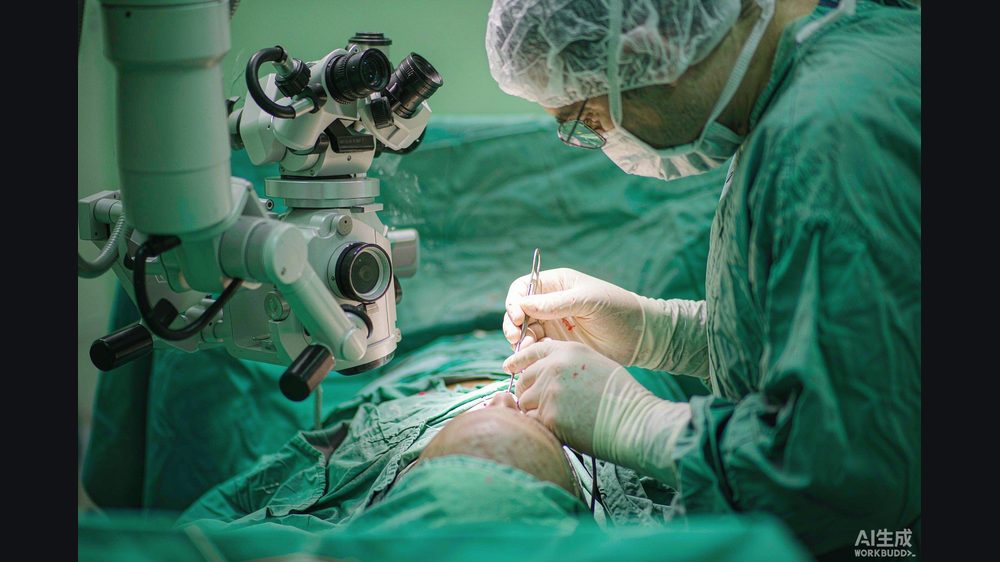
A 21-year-old woman who could not move her right side lay on an operating table in Shanghai. Minutes after surgeons placed a thin film on the surface of her brain, her neural signals were already flowing to a screen. Within two days she was playing computer games with her thoughts; within two weeks she was opening WeChat and controlling a smart-home light switch without lifting a finger.
The device behind that scene was not a rigid spike driven into brain tissue. It was a flexible film — 256 signal channels woven across the cortex at a thickness of roughly 10 microns, about a fifth the width of a human hair. That distinction, between piercing the brain and merely resting on it, sits at the center of one of the most consequential engineering debates in brain-computer interfaces (BCIs) today.
Key takeaways
- NeuroXess (脑虎科技), a Shanghai firm founded in 2021, builds flexible cortical electrodes (柔性皮层电极) that sit on the brain's surface rather than penetrating it.
- The deployed system records 256 channels; the company states its platform can scale to 1,024 channels.
- Surface placement trades some signal sharpness for far lower surgical risk — a deliberate design choice versus penetrating arrays.
- Dense surface recording is what lets one implant serve both motor decoding and language decoding at once.
Why "dense" changes everything
A brain-computer interface is only as good as the signal it can read. The number of independent channels — think of them as microphones listening to different patches of cortex — determines how much of the brain's spatial map a system can capture at once.
NeuroXess's lead product is an electrocorticography (ECoG) array: a soft, conformable sheet placed under the skull on the brain's outer surface (subdurally or epidurally). Where a single clinical electrode might sample one region, a 256-channel array samples hundreds of neighboring points simultaneously. That density is what makes fine motor control possible: the research team at Huashan Hospital (华山医院), affiliated with Fudan University, reported mapping the patient's high-gamma brain signals and translating them into cursor movement with a system delay under 60 milliseconds.
Density also unlocks language. In a separate 2024 procedure, the same class of 256-channel device was used on a patient with a lesion in the language area. Within five days the system reached 71 percent accuracy decoding 142 common Chinese syllables, with single-character latency under 100 milliseconds. Chinese is a tonal, logographic language that recruits many brain regions at once — exactly the kind of problem that demands wide, simultaneous coverage rather than a few deep contacts.
The company frames this as a two-level capability. Movement control (intention recognition) is one layer; language understanding and generation is a deeper layer that, the firm argues, requires the broad cortical sampling only a high-channel surface array can provide.
The safety trade-off nobody talks about
The flashier branch of invasive BCI uses penetrating microelectrodes — hair-thin threads pushed directly into cortical tissue to capture single-neuron activity with maximal resolution. The cost is biological: every penetration risks tissue damage, immune response, and signal loss as the brain reacts to foreign objects.
NeuroXess's founder and chief scientist, Tao Hu (陶虎), a former deputy director at the Chinese Academy of Sciences' Shanghai Institute of Microsystem and Information Technology, has publicly contrasted the two approaches, noting that placing the interface on the cortex avoids the tissue damage associated with penetrating implants. The company's arrays use MEMS semiconductor manufacturing, and its newer "fully implantable, fully wireless, fully functional" (全植入、全无线、全功能) system — described by the company as China's first and the world's second built-in-battery BCI — keeps all electronics, including a rechargeable cell, inside the body to remove infection pathways from external cabling.
This is not a claim that surface electrodes beat penetrating ones on raw bandwidth. It is a claim about the clinical risk-reward curve. For patients with amyotrophic lateral sclerosis (ALS 渐冻症), epilepsy, paraplegia, or stroke, the priority is often a safe, durable, serviceable interface — not the absolute highest data rate.
From research bench to ward
NeuroXess has pushed beyond single demonstrations. In 2025 the team reported a 19-year-old epilepsy patient using the 256-channel implant to play complex games including Honor of Kings and Black Myth: Wukong, and to navigate apps and smart-wheelchair controls through its XessOS operating system. A later fully implantable procedure in a high-paraplegia patient reached a reported decoding rate of 5.2 bits per second.
Those numbers matter less than the trajectory: the same hardware platform is being pointed at multiple indications — motor reconstruction, language synthesis, and eventually sensory restoration — rather than a single narrow task. That is the real promise of dense, flexible surface recording. One array, many maps.
What readers can do now
- If you evaluate BCI vendors, separate "channel count" from "implant depth." A higher number only helps if the array's placement matches the clinical goal and the surgical risk is acceptable.
- Patients and families should ask whether a system is surface-based (ECoG) or penetrating, and what the long-term explant and maintenance plan is — these questions matter more than marketing benchmarks.
- Follow the standards, not just the demos. China's first BCI medical-device terminology standard took effect on 1 January 2026, giving regulators and buyers a shared vocabulary to judge claims.
Honest limitations
This article relies heavily on figures published by NeuroXess and the Shanghai government's English news service, supplemented by the company's own technical pages. Per the spec's fact-check rules, company-stated specifications — 10-micron thickness, 1,024-channel ceiling, 5.2 bits-per-second rate, and the "world's second built-in-battery" claim — are reported as the company states them and were not independently re-measured here. The clinical context (Huashan Hospital/Fudan, 2024–2025 procedures) is corroborated by a government English outlet, which is treated as authoritative; small procedural details may differ in later peer-reviewed publications. I have not covered penetrating-electrode competitors in depth, and I have deliberately not framed Chinese-speech decoding as the headline, since intracortical speech decoding was outside this column's scope.