
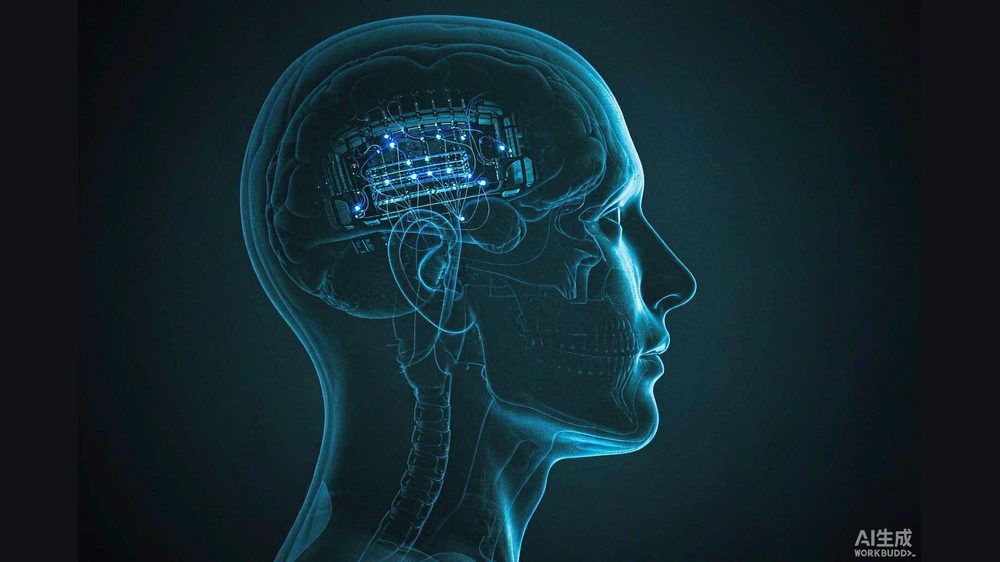
A patient with quadriplegia caused by a spinal cord injury once could not even dream of lifting a finger. Now, with the help of a brain-computer interface system, he has regained the possibility of controlling hand movement.
What made that hand "move" was no magic, but a domestically developed implantable device—and a late yet crucial milestone.
Such patients often have the signal pathway between brain and muscles interrupted by trauma or disease: the brain wants to move, but the body will not obey. What a brain-computer interface does is build a bypass at the break: it reads the motor intent and then drives an external device to complete the action.
In a sense, the hand "hears" the brain's command again.
The reason to target the hand first is that it answers the patient's very pressing daily needs: holding a cup, gripping a pen, pressing a switch. Restoring basic actions can tangibly raise quality of life by a notch.
A Long-Awaited Approval
On March 13, 2026, the "Implantable Brain-Computer Interface Hand Motor Function Compensation System," developed jointly by Tsinghua University and Boruikang, was approved for market by the National Medical Products Administration. The National Healthcare Security Administration simultaneously completed the medical insurance coding assignment.
According to CCTV.com, the system obtained the market approval for a Class III medical device for invasive brain-computer interfaces, reaching the stage of clinical application among comparable products. It is precisely aimed at patients with quadriplegia caused by spinal cord injury, meaning this technology has formally moved from clinical research into clinical application.
For patients who have waited a long time, this is a true dawn.
A "Class III medical device" is the national category for devices carrying a high risk level, and it must pass strict review before reaching the market. That this brain-computer interface earned the approval means its safety and efficacy have passed the regulator's examination, and it is no longer merely a lab demonstration.
In other words, the approval is not a trophy but an entry threshold. Only by crossing it is a product allowed to be used on patients; without crossing it, it can only stay at the research stage. This is why the words "approved for market" weigh so heavily for a brain-computer interface.
Getting this far rested on long alignment among three sides: research and development, review, and clinical practice. If any one of them fails to line up, a breakthrough on paper never reaches the bedside.
The Confidence of Domestic Substitution
Another meaning of this system lies in "autonomy." Its key core technologies and core components are all localized, with no dependence on external supply chains. In a landscape where high-end medical devices have long been dominated by overseas players, this route offers a Chinese solution.
It should be noted that it focuses on the medical rehabilitation scenario, aiming to help paralyzed patients rebuild motor function rather than enhance the abilities of healthy people. Using the technology for "compensation" rather than "transcendence" also fits better within current regulatory and ethical boundaries. With the boundary clear, the technology can advance steadily.
Boruikang, as a domestic brain-computer interface company, joined forces with a top research institution like Tsinghua, following an "industry-academia-research" collaborative path. Compared with going it alone, this combination is more likely to turn a breakthrough in a paper steadily into a product at the patient's bedside.
That this system won approval also indirectly shows that domestic review capacity is catching up. In the past, such frontier devices often had to wait for overseas pioneers to clear the way; now local teams can close the loop within their own regulatory system.
The Relay of the Beinao Series
Progress in Beijing also deserves attention. The "Beinao-1 (North Brain-1)," advanced by the Beijing Institute of Brain Science and Brain-Inspired Research, had completed 10 human trials by April 2026. It belongs to the semi-invasive route, with electrode sheets placed outside the dura mater, not invading brain tissue, and thus having less impact on the patient.
According to public plans, the higher-performance "Beinao-2 (North Brain-2)" is planned to start clinical validation in 2026, targeting patients with movement disorders and continuing forward on the existing semi-invasive route. From No. 1 to No. 2, one can see China steadily stepping up its commitment to this route.
The ingenuity of the semi-invasive approach is that it avoids the high risk of opening the skull while sitting closer to the signal source than scalp-external solutions. This "compromise" is not concession but the search for a relatively sound balance between safety and clarity. The advancement of the Beinao series is exactly the continuation of this thinking.
From No. 1 to No. 2, the pace is also quickening. No. 1 first validates the safety and feasibility of the semi-invasive approach; No. 2 then pushes up channel scale and decoding precision. This stepwise progression, rather than an all-at-once leap, actually fits the real clinical rhythm.
Coding Is Not Reimbursement
One easily confused point is that obtaining medical insurance coding is not the same as being included in insurance reimbursement. The coding assignment resolves "identity recognition" and "fee-item classification," while truly entering the reimbursement catalog still requires a series of processes such as pricing and access.
Understanding "having a code" as "being reimbursed" exaggerates the technology's accessibility. For readers, distinguishing these two steps lets you see both the joy of the breakthrough and the realistic pace of its landing. Medical innovation never ends at receiving the approval; it is the start of another long run.
For the developing company, the coding assignment is equally an important step: it gives the product a name in the fee-charging process, so hospitals and the insurance system can reconcile accounts. Yet a name is not reimbursement, and this step still must be kept distinct.
Clinical Meaning Outweighs Applause
Earlier exploration is also accumulating. According to CCTV.com, in March 2025 China released a wireless implantable Chinese-language brain-computer interface, helping patients who had lost speech to amyotrophic lateral sclerosis rebuild their ability to communicate. From the hand to language, brain-computer interfaces are recovering what people have lost.
What ALS patients fear is often the gradual loss of the ability to express themselves. When a language interface can turn thoughts back into text and voice, some of the dignity taken by the disease is returned. This is where the technology has warmth, and why it deserves to be taken seriously.
Of course, the language interface is still at an exploratory stage, far from large-scale use. But the meaning of this step lies not in how many people it can help today, but in proving the direction is feasible and blazing a trail for those who follow.
From a single hand to a single sentence, every step of the brain-computer interface moves slowly yet solidly. Slow, because it concerns the human body; solid, because it faces real needs.
Return to the hand that moved again at the opening. This breakthrough deserves applause, but what deserves more attention is the clinical logic behind it: technology first, ethics as the backstop, payment as the relay. The Chinese story of brain-computer interfaces has only just begun to be written.
Disclaimer: This article is based on publicly available information and is for reference only. It does not constitute investment advice.