
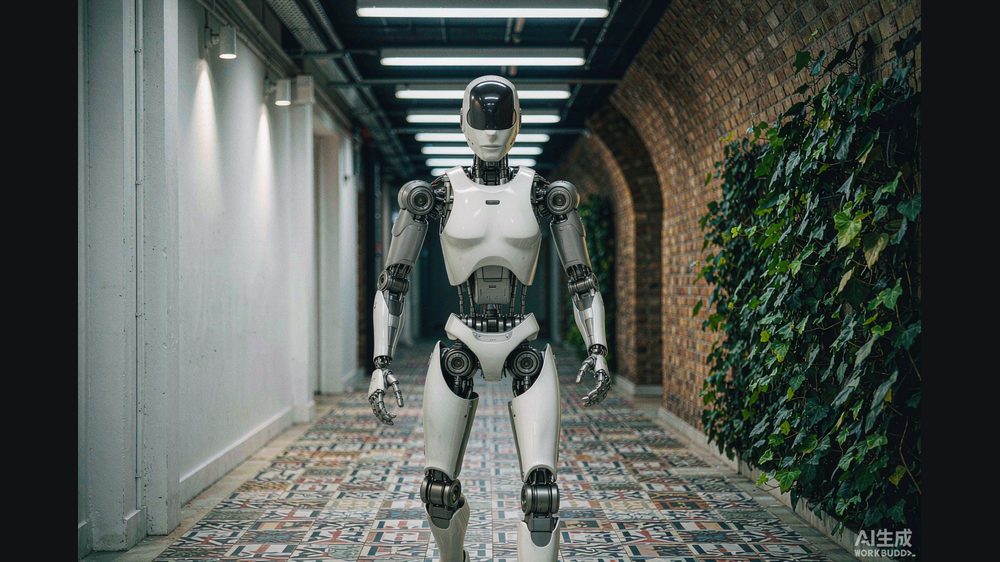
How much does it cost to rent a humanoid robot for a day? According to industry reports, last year that figure still stood above ten thousand yuan; in the first half of this year it fell to about five thousand, and after the National Day holiday some quotes were even pushed down to around two thousand. The curve of that price slide is steeper than many people expected.
Once dancing robots stop being a novelty, the logic of buying and selling starts to change.
The Capital Frenzy on Listing Day
On August 19, Unitree officially listed on the STAR Market, dubbed by the market the first stock in humanoid robots. According to reports by The Paper, Securities Times, and other media, the company set its issue price at 150.8 yuan per share; the stock opened sharply higher on its first trading day and then went through noticeable swings.
In the early days after listing, its market value and the returns from IPO subscriptions were talked up to lofty heights, and the media was full of chatter about paper gains on allotted shares—an excitement that felt almost unreal. But excitement aside, the books still have to be read line by line.
The listing fever didn't come out of nowhere. The prospectus shows that the company's revenue grew quickly over several years, and that in an industry still largely in an investment phase, it is one of the few robotics companies already turning a profit.
Hard, real numbers on the books are what prop up the capital market's imagination.
According to reports by Shanghai Securities News, CNR, and other media, on October 28 Unitree delivered its first quarterly report after listing.
For the first three quarters, the company posted revenue of 1.817 billion yuan, up 55.71% year on year; net profit attributable to shareholders came to 387 million yuan, up by more than two times year on year.
The growth rate is still impressive, but the market has learned to look at this report card with a more critical eye.
The protagonist of this capital feast is someone born in the 1990s. Founder Wang Xingxing, born in 1990, started with quadruped robot dogs and carried the company all the way to the STAR Market, becoming a rare young helmsman in the market. Being young also happens to mean facing a longer stretch before the promises are cashed in.
The Price Slide in the Cost Ledger
Back to the rented robot at the start. The daily rate falling from over ten thousand to around two thousand reflects the rapid evaporation of the novelty premium. When trade shows, shopping malls, and short videos are full of robots doing backflips, customers are no longer willing to pay simply for the sight of one. Price has become an honest thermometer.
According to reports by Economic Information Daily, China Securities Journal, and other media, research institutions had forecast early in the year that domestic humanoid robot shipments would continue to grow markedly on top of the previous year. Unitree itself has also disclosed that in 2025 its humanoid robot shipments exceeded 5,500 units.
Once volume picks up, the cost per unit gets spread thinner, and the rental price naturally can't hold.
A more direct reference comes from Unitree's own quadruped robot dogs. They too were a rarity in the early days, and have long since found their way into many labs and factories. Humanoid robots are coming down a similar path: from showpiece demos to production tools that can be priced by the day or serviced by the year. The shape of the cost curve sets the pace of adoption.
Unitree's confidence in pushing prices down is hidden in its supply chain. According to the company, a high share of core components such as joint motors and modules are developed in-house, so the body, motion control, and production can be iterated together, and the cost curve moves down as output rises.
Its consumer-facing G1, since its release in 2024, has cumulatively rolled off the line in numbers above ten thousand units over the years—a different ledger from single-year shipments.
Customers Change Course on the Revenue Ledger
Prices collapsed, yet the business may actually be steadier. In the past, customers rented robots mostly for the foot traffic that came with seeing something new; now more of them are doing a different calculation—getting robots to do real work. Guiding tours, cleaning, inspections, and hauling: these repetitive, labor-hungry jobs have become the new reasons to pay.
According to industry observers, many companies have moved robots from event props to staff headcount. They no longer chase applause at center stage, but stand by warehouse doors, alongside production lines, and in exhibition aisles, providing long-term, stable, measurable service.
Only when the logic of paying shifts from a one-off thrill to continuous output does the commercial loop truly mesh.
This also explains why Unitree is putting a substantial share of its fundraising into embodied intelligence and model research. Hardware that can run and jump is only the ticket in; what actually makes customers renew is whether the robot can understand instructions, adapt to its surroundings, and make few mistakes. The key to growing revenue is hidden in software and models.
But the revenue mix still carries a warning. According to media reports, research and teaching scenarios account for a not-insignificant share of the company's humanoid robot revenue, while genuine industrial and commercial deployment is still being cultivated. That means robots are still a fair distance from becoming permanent labor on production lines.
The Replacement Ledger Is Still One Step Short
The third ledger is the hardest to calculate, and the one that shows the truth. Long-task ability really is improving: robots can complete multiple steps in a row and replan their route when an object moves. But succeeding in a prepared room is not the same as succeeding in a different room with a different cup. Generalization still hasn't been fully proven.
A plain consensus in the industry is that for a robot to replace a person, it first has to be validated repeatedly in well-defined settings. Factory inspections, warehouse hauling, and mall guiding have clear boundaries and plenty of room for error, making them the more realistic landing spots for now. As for entering countless homes and coping with endless variables, that timetable is far from written.
From robot dogs to humanoids, Unitree's playbook has always been one thing: first open a path to large-scale use with high cost-effectiveness, then turn that cost advantage into customer stickiness. Whether this path can be replicated in more complex real-world settings is the real question ahead.
This is exactly what explains the market's ambivalence: Unitree has real shipments and eye-catching profits, yet it's tagged as a scarce track. When money is buying expectations rather than the present, any ripple gets magnified into a roller coaster in the stock price.
Competition is quietly intensifying too. According to media reports, in the first half of 2026 a rival briefly led in shipments, and the two leading companies together accounted for most of global shipments. The rankings are far from settled, and no one dares to relax in the slightest.
Excitement is easy; the long run is hard. Whether a product keeps winning customers is more worth asking than how dazzling it looked on the day the bell was rung; turning stage applause into shifts on a production line takes homework far more tedious than a prospectus.
Back to that robot renting for around two thousand a day. Its cheapness is both a medal for a maturing industry and a footnote to brutal competition. For Unitree and every peer, the genuinely hard thing was never proving it can dance, but proving it can keep being used by customers.
Disclaimer: This article is based on publicly available information and is for reference only. It does not constitute investment advice.