
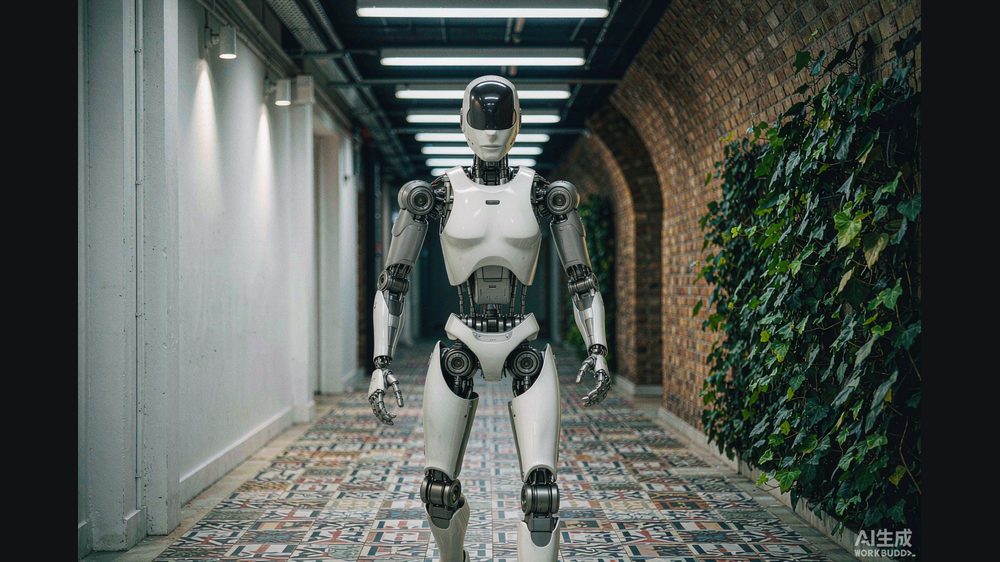
On the factory floor, robots roll off the line one after another, with cumulative output reaching the thousand-unit scale. They aren't placed under spotlights on a display stand; they're shipped to BMW's vehicle plant in the United States to deal with a real production line.
Between a flashy demo at a launch event and a good unit that works steadily on the line lies a gap that isn't easy to cross. Robots are no longer exhibits to be watched; they've become roles entrusted with specific jobs.
The Mass-Production Signal of a Thousand Units
According to the company's disclosures and multiple media reports, cumulative output of the third-generation robot has reached the thousand-unit scale, with the production tempo rising from about one unit a day early on to around one unit an hour. For a company founded only a few years ago, this is no longer hand-built prototypes but something closer to a production line that genuinely turns.
According to reports by The Paper and Cailian Press, Figure's robots are already working at BMW's plant in Spartanburg in the United States, taking on repeatable roles such as logistics sorting.
They sort jumbled parts into sequenced carts, which an automated transport system then carries to assembly stations. This isn't a show of technical flash; it's a structured, real job that can run every day.
Building one prototype and building a batch of robots all identical to each other are two different disciplines. The first relies on engineers' craft; the second on the meticulous coordination of supply chain, tooling, and inspection standards. Once volume climbs, any tiny tolerance gets magnified into a problem across the whole batch.
Earlier models had already completed long-cycle hauling validation on BMW's line, accumulating data for later models. Precisely because of that, BMW was willing to let newer robots take over logistics sequencing, upgrading an experimental partnership into a routine deployment.
The meaning of mass production usually isn't in the round number itself. Behind the thousand-unit scale lies repeated validation of the supply chain, production execution, and quality consistency. Only when a company can make robots enough like industrial products rather than lab exhibits will capital and customers take it seriously as a business.
Design Locked, Model Not Yet Released
On the hardware side, according to reports by The Paper and Cailian Press, the fourth-generation model has completed design lock, with components entering delivery and validation cycles. Note that this is design lock, not a release. It's more like a set of drawings that's been signed off—still some distance from actually sitting in front of customers.
According to Cailian Press, the company positions the fourth-generation model as a standardized hardware base suited to a mix of general home and complex industrial settings, wanting the model to carry out long sequences of tasks steadily in more unfamiliar environments. Design convergence means effort shifting from piling on new features to doing the decided things thoroughly.
The model side is equally restrained. According to reports by The Paper and Tencent News, the company says its next-generation model is still in internal testing, with no evaluation details, paper, or release date given; to the public, for now it's just a teaser, not a product you can buy.
That restraint actually matters. The industry has seen too many demo videos that peak at launch and then go quiet on a real production line. The company chooses to converge the hardware first, build up a thick store of data, and only then slowly grow the model—a path almost plain in its clarity, and one that keeps expectations managed with equal restraint.
Feeding the Brain With Videos From Around the World
Another card the company is betting on is a data-collection project aimed at ordinary people. Through a mobile app, it invites everyone to film everyday actions at home, in offices, and in warehouses, then turns those videos into nourishment for training robots.
As of that internal event, as cross-checked by multiple media outlets, the project had accumulated about 37.5 million videos of human actions, covering more than a hundred countries.
The value of the data isn't in the count itself, but in whether it covers the messiness of the real world. The same action looks completely different in another room, under another light, or with a different cup; record it over and over at one fixed workstation and what the model learns is really memorizing the answer, not generalizing.
To make this data actually count, according to Cailian Press, the company signed a compute partnership of considerable initial scale to feed the huge volume of videos into model training.
According to media reports, this route is extremely expensive, with data spending in a single week running into millions of dollars; whether scale and diversity are truly the right answer still has to be verified by how the model performs in unfamiliar environments.
According to The Paper, a new model pre-trained on this batch of data completed whole tasks such as tidying, stacking, and making beds in never-before-seen home environments at a markedly higher rate than earlier. What data diversity is really worth is beginning to have results you can compare against.
There's one more telling detail. According to foreign media and industry-tracking reports, a third-generation robot once ran continuously for nine days on a treadmill at the company's headquarters, as a durability stress test for its legs and actuators; it was powered by a cable throughout, testing the mechanics rather than battery life.
It shows the hardware is tough enough, but it's far from proving the robot can work a shift on its own. Durability is one thing; whether it can work steadily on an unwatched shift and handle surprises by itself is another—and between the two lies the test of a real site.
The Gap Between a Demo and a Good Unit
Back to the scene at the start. Robots entering BMW's plant means they've cleared the first hurdle of being usable at all; but going from a handful of working units to reliably delivering thousands upon thousands is where the test is only beginning. One production line and one flagship customer still don't prove a commercial loop for the whole industry.
A demo can pick its one good take; delivery has to guarantee every take holds up. On a display stand, the lighting, floor, and props are all arranged in advance; in a real workshop, people come and go and materials shift position at any moment, and the robot has to judge its next step itself. No beautifully edited video can fill that gap.
The industry describes this year as a race from pilot to platform: Figure, Tesla, Boston Dynamics, and Chinese manufacturers are all trying to prove robots can hold up in real factories, rather than only handle choreographed demos. The humanoid robot industry stands at a pivotal point, moving from prototype validation to large-scale deployment.
According to foreign media reports, the company's founder mentioned that over the past year the roadmap shifted substantially, with the focus moving to the fourth-generation model and scaled mass production. That's a trade-off in direction, not a result already delivered; when you read it, you have to keep it separate from the machines actually rolling off the line in the workshop.
For Figure, a thousand units rolling off the line is more than a number; it's a piece of evidence handed to investors and partners that humanoid robots can genuinely move from the launch event onto the production line.
Disclaimer: This article is based on publicly available information and is for reference only. It does not constitute investment advice.