
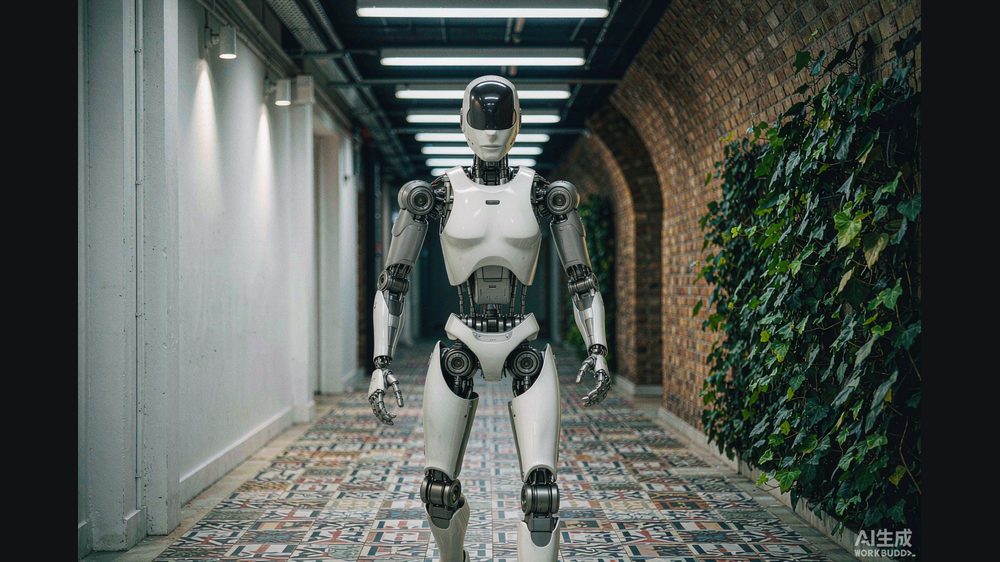
Tear out a car production line and free up the factory space to build robots—Musk actually did it. Earlier this year, Tesla removed the Model S and Model X assembly lines at its Fremont factory, handing the space over to a brand-new humanoid robot line.
From making cars to making robots, the company placed its bet within the very same physical space.
That also means the Optimus line in Fremont has had no spare capacity buffer from the very start: if the robot program slips, there's no old line to fall back on. With an irreversible conversion, Tesla has bet on the next stop for automation.
This isn't a whim. Musk has repeatedly called Optimus a major part of Tesla's future value, even saying on social media that robots and robotaxis are where most of the company's value lies. Handing a flagship model's line over to robots is a very concrete act of that belief.
The Start-of-Production Signal in the Shareholder Letter
In October 2026, Tesla released its third-quarter shareholder letter. In the robotics section, the company wrote only a few words: production had begun on the high-volume line in Fremont, and the units rolling off were the company's first robots to meet mass-production quality requirements. The wording was restrained, yet it was a clear signal that production had started.
The letter's capacity table lists Optimus side by side with Model Y and Cybercab. The California factory is marked as early ramp-up, the Texas factory as under construction, and the capacity column is left blank. In other words, the line really is turning, but a clear blank still separates it from large-scale external deliveries.
On the earnings call that followed, Musk spent a great deal of time cooling expectations. He stressed that although the line was in place, reaching true mass production would still take about a year. The story is thrilling, but line yield has to be ground out bit by bit; he chose to spell that gap out to his own people first.
Tesla had previously announced that Optimus was planned to begin formal production in 2026 and move into external applications around 2027. Now that the start of production has landed in the shareholder letter, the timing roughly lines up, but the pace has been deliberately slowed.
Between being written into a financial report and actually running, there's still a fair distance. A line starting to turn only means the process has been validated once; to get every shift producing steadily, yield, cycle time, and supply chain all have to be smoothed out one by one. Those few lines in the report are a starting point, not a finish line.
Twenty Thousand a Week Is a Target, Not Capacity
The number outsiders care about most is "twenty thousand units a week." Musk mentioned that the Fremont line, designed for an annual output of one million units, would need at least a year—perhaps longer—to reach the corresponding annualized pace, which is about twenty thousand units a week. Note that this is a target and a vision, not capacity already achieved.
In fact, Tesla itself hasn't published its current weekly output. Going from "early production has begun" to "steadily running at an industrial-grade pace" is two separate stages, not one and the same.
Musk describes this growth curve as starting flat and still a bit bumpy, because this is a brand-new product with ten thousand details that have to be got right. According to media reports, it took Tesla 46 days to dismantle the old line and clear the space; the conversion was no easy job.
The larger line in Texas has its long-term planned annual capacity set at the ten-million-unit level. For now, though, it remains nothing more than "under construction." Tesla has also begun building another robot factory in Austin, far larger than Fremont; real volume will have to wait until the design has converged.
The grand narrative is moving, but when it comes down to each tightened screw and each process that has to run through, the pace is not something you can be optimistic about by sheer will. Tesla has also planned a robot academy, first building a batch of robots so they can spar against themselves and feed back into the model.
The Shortcomings Musk Pointed Out
Musk doesn't shy away from the robots' shortcomings either. On the call he singled out the hand—and especially the fine tuning of the fingers—as still one of the hardest parts of the hardware. A human hand repairs itself, and is soft and covered with sensors;
whereas making a robot's fingers that are wear-resistant, soft, equipped with a full set of sensors, and able to keep moving repeatedly without breaking is harder still.
The third-generation Optimus reworked the hand substantially, redesigning both the structure and the drive approach of the dexterous hand. Yet Musk still admits that, from an electromechanical standpoint, the hand is harder than every other part of the body put together. Durability, safety, and independently handling a variety of tasks are also on his list of things still to be filled in.
Onboard compute is a bottleneck too: next-generation AI chips may not make it into the robot's body until around the following year. In other words, the units rolling off the line today are still several hard gates away from truly standing on their own.
These admissions actually add credibility: compared with packaging demos as deliveries, admitting the line still needs another year of tuning at least lets outsiders see that robots on the production line are real, while replacing workers is still far off.
Money is genuinely being burned too. In the third quarter, Tesla's R&D spending reached over 2.7 billion dollars, up markedly year on year, with a substantial share going to new products such as Optimus.
The chief financial officer said on the call that tracking of per-unit cost was holding up reasonably well, but the design is still iterating frequently, so it's too early to say the target has been met; cost is approaching the level of Cybercab.
Building the machines first and then letting them spar against themselves is Musk's more realistic choice for now, even though the hand isn't fully settled.
The Signal From Chinese Suppliers Getting Busy
While the line turns in California, the supply chain has heated up first in China. According to multiple media reports, Tesla's robotics team arrived in Ningbo, Zhejiang, on September 16, then began mass-production factory audits at listed companies including Tuopu Group, Sanhua Intelligent Controls, and Joyson Electronics.
These companies already supplied Tesla with auto parts, and have now transferred that capability over to robots.
Factory audits mean orders are starting to land. Sanhua Intelligent Controls is moving its thermal-management experience to robot joint modules, Joyson Electronics is focusing on robot domain controllers and dexterous hands, and Tuopu Group is taking on actuator assemblies.
According to data from the Ningbo Municipal Bureau of Economy and Information Technology, about 80% of the component categories in humanoid robots overlap heavily with the new-energy vehicle supply chain, so companies can shift capacity and switch lines quickly.
The long-term target cost per unit has been set in the range of 20,000 to 30,000 dollars, to be realized through localizing and scaling huge numbers of components. Musk sketched a direction for the first external customers: industrial jobs that are dangerous, repetitive, that no one wants to do, and that need to run 24 hours a day;
Home users won't get in line until output genuinely ramps up. The gap between the grand narrative and the line's yield is the truest footnote to this moment.
Disclaimer: This article is based on publicly available information and is for reference only. It does not constitute investment advice.