
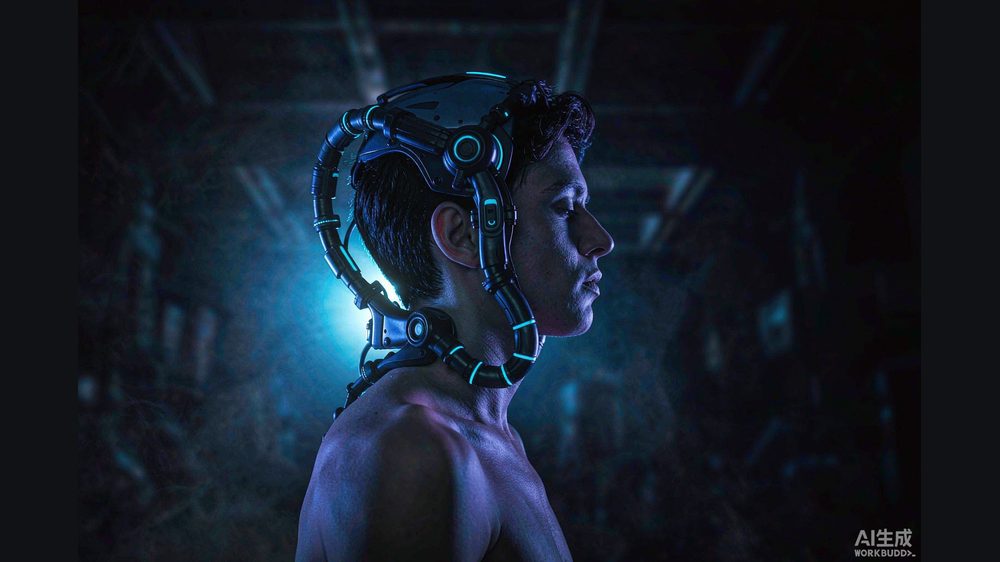
A patient who lost the use of both arms imagines moving a cursor, and a screen responds. The signal travels from electrodes thinner than a hair, through a coin-sized implant, to a computer that reads intention as command. For a five-year-old Shanghai startup, that scene has already left the simulation.
Key takeaways
- Stair Med (阶梯医疗), founded in August 2021 by researchers Zhao Zhengtuo (赵郑拓) and Li Xue (李雪) from the Chinese Academy of Sciences, builds fully implantable brain-computer interfaces (脑机接口).
- Its WRS01 system is a 256-channel minimally invasive implantable BCI aimed at restoring movement for high-level paralyzed patients.
- In March 2025 the company ran China's first pre-registration prospective (FIM) trial of an invasive BCI at Huashan Hospital (华山医院), Fudan University.
- WRS01 became the first invasive BCI product admitted to the NMPA (国家药监局) "innovation green channel" (创新医疗器械特别审查程序), carrying a "globally new" (全球新) designation.
- As of late 2026 the company reports 42 long-term implants and has opened IPO counseling; cumulative funding reached about 26亿元 (≈ US$366M / HK$2.9B), with Alibaba and Tencent among backers.
A young company, a hard problem
Stair Med is often described as the Chinese invasive-BCI startup most comparable to Neuralink, because it chose the hardest route: placing electrodes directly in contact with brain tissue. The company was founded by a married pair of 1991-born researchers who returned from US doctoral and postdoctoral training to the CAS Center for Excellence in Brain Science and Intelligence Technology.
- Zhao Zhengtuo (赵郑拓) leads neural-interface research; Li Xue (李雪) leads multimodal neural-interface work.
- Both are listed as controlling shareholders in the IPO counseling filing.
- The stated logic: invasive engineering, while harder, offers more deterministic performance once resources are committed.
The device: coin-sized, hair-thin
The hardware is deliberately small and soft. Public reporting and the company describe an implant about the size of a coin and electrodes far finer than conventional rigid arrays.
- Implant body: roughly 26 mm in diameter and under 6 mm thick.
- Ultra-flexible electrode: about one-hundredth to one-three-hundredth the diameter of a human hair.
- Channel count: 256, for high-throughput neural recording.
- Surgical access: a 3–5 mm skull micro-hole using mature minimally invasive neuro-navigation.
According to Zhao Zhengtuo, "a brain-computer interface is not only an engineering problem; it also needs the foundational support of neuroscience." The softer electrode is meant to reduce tissue damage and the immune scarring that rigid implants can trigger.
Clinical milestones
The company's progress moved from animal work to human implantation within a few years, and China became the second country after Neuralink to enter invasive-BCI clinical trials.
- March 25, 2025: first domestic pre-registration prospective (FIM) invasive BCI trial at Huashan Hospital (华山医院), with patients controlling cursors and games after weeks of training.
- A matching study, "A Study on the Safety and Functionality of the Implantable Wireless Brain-Computer Interfaces for Motor Rehabilitation (STAIR)," is registered on ClinicalTrials.gov as NCT06944834, sponsored by Shanghai StairMed Technology, last updated April 2025, listed as not yet recruiting, with estimated enrollment of 5 and primary completion in April 2027.
- Company-disclosed figures reported by financial media describe 42 long-term implants, cumulative in-body time above 5,000 days, and brain-control usage above 10,000 hours.
From lab to listing
Stair Med has become one of the most capitalized invasive-BCI ventures in China and started formal steps toward public markets.
- IPO counseling began in late 2026 with Huatai United Securities as sponsor, per the CSRC (中国证监会) filing.
- Cumulative financing reached about 26亿元 (≈ US$366M / HK$2.9B) by September 2026.
- A March 2026 strategic round of 5亿元 was led by Alibaba, with Tencent and other existing backers following — reported as the first time both internet giants co-invested in an invasive BCI company.
Beyond movement: stimulation
The same ultra-flexible electrode and decoding platform is being extended from movement restoration toward treating neurological disease. This matters because it turns a single hardware investment into two medical markets.
- The company also develops a closed-loop, ultra-low-damage deep-brain neurostimulation system.
- It reported four clinical research implants of that stimulator and plans a 2027 trial with Parkinson's disease and epilepsy as indications.
- If the stimulation track advances, the implant could both read intent and write signals back, a step toward two-way brain-computer interfaces.
Honest limitations
- Implant counts and "exceeds Neuralink" comparisons are company-disclosed figures reported by financial media, not independently audited clinical registries; we could not confirm 42 implants against a public database.
- The "innovation green channel" (创新医疗器械特别审查程序) speeds review but is not market approval; WRS01 remains in the registration-clinical stage, not a cleared product.
- Long-term safety of multi-year implants in a small cohort is preliminary; broader evidence and multi-center trials are pending.
- This piece focuses on one firm; other Chinese invasive-BCI programs follow separate routes and timelines.
What readers can do now
- Monitor the NMPA innovation-channel public notice list and ClinicalTrials.gov (NCT06944834) for verified status rather than headlines.
- For investment, distinguish a "globally new" (全球新) designation and IPO counseling from actual product approval and revenue.
- Clinicians and patients should wait for peer-reviewed, multi-center outcomes before weighing invasive BCI as a treatment option.