
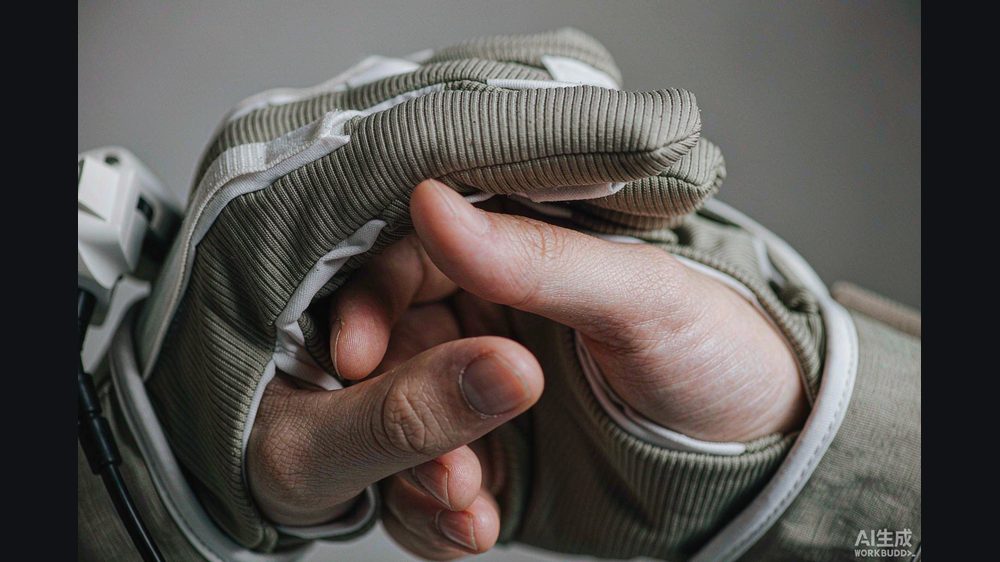
A child who cannot sit still in class puts on a slender headband, and a tablet begins to trace whether his attention is drifting. Across town, a man missing a forearm closes his remaining hand and a robotic grip answers in sync. These are no longer lab curiosities — they are products a Hangzhou company is shipping.
Key takeaways
- BrainCo (强脑科技), founded in 2015 by Harvard alumnus Han Bicheng (韩璧丞), is one of China's first brain-computer interface (脑机接口) unicorns and a member of the "Hangzhou Six Little Dragons" (杭州六小龙).
- It concentrates on non-invasive BCI technology using scalp EEG and muscle (EMG) signals rather than implanted electrodes.
- Core products span consumer cognitive-training headsets and machine-learning-driven bionic prosthetic limbs, targeting attention deficits, autism, Alzheimer's and amputee rehabilitation.
- In August 2025 Bloomberg reported the firm was seeking pre-IPO funding above a US$1.3 billion valuation; by early 2026 it had completed a roughly 20亿元 (≈ US$282M / HK$2.2B) pre-IPO round and filed a confidential Hong Kong IPO application.
- The company states a goal of helping one million limb-different people and improving life for ten million patients with brain-related conditions within five to ten years.
From Harvard lab to Hangzhou unicorn
BrainCo was incubated at the Harvard Innovation Lab and is frequently described as the first Chinese team to enter that program. It later settled in Hangzhou, where it became one of the "Hangzhou Six Little Dragons" (杭州六小龙) — a loose label for the city's most-watched technology startups alongside names such as the game studio behind Black Myth: Wukong and the AI lab DeepSeek.
- Founded February 2015 by Han Bicheng (韩璧丞), a Harvard-trained neuroscientist.
- Positioned as a global leader in non-invasive brain-computer interface (脑机接口) technology.
- Built a dual identity: a consumer and education brand on one side, a medical prosthetics company on the other.
Two tracks: focus training and prosthetics
Unlike peers chasing surgical implants, BrainCo reads signals from outside the skull. Its headsets capture EEG (electroencephalography) to infer attention or cognitive state, while its prosthetic line reads EMG (electromyography) from residual muscles to drive artificial limbs.
- Consumer headsets aimed at focus training, with stated applications for ADHD (attention deficit hyperactivity disorder) and learning.
- Bionic prosthetic hands controlled by muscle signals, serving amputees and, the company argues, robotics components.
- In 2025 the firm launched a new dexterous hand for embodied-intelligence scenarios and partnered with the Beijing Institute of Brain Science and Brain-Inspired Research to build a joint BCI innovation center.
- The company frames autism, ADHD, Alzheimer's and insomnia as the patient groups it hopes to reach.
The money and the IPO path
BrainCo's funding story is unusually large for a neurotech startup outside the surgical-implant camp. The arc runs from an early US-dollar round to a confidential filing in Hong Kong.
- A 2019 Series A of about US$40M established its foothold.
- In 2025 it took a US$30M Pre-B round from DoCorr (道氏技术) and a US$20M B round from 37 Interactive (三七互娱).
- Bloomberg reported in August 2025 that the company was negotiating roughly US$100M in pre-IPO financing at a valuation above US$1.3 billion, preparing for a listing in Hong Kong or mainland China.
- By early 2026, Chinese financial press reported a completed pre-IPO round of about 20亿元 (≈ US$282M / HK$2.2B) at a post-money valuation above US$1.3B, alongside a confidential Hong Kong IPO submission.
- Backers cited include IDG Capital, Walden International (华登国际), Lens Technology (蓝思科技) and Will Semiconductor (韦尔股份).
Why non-invasive matters
The strategic choice to stay outside the body shapes both the market and the risk profile.
- Lower procedural risk means a far larger addressable population than implanted systems.
- Consumer distribution is feasible through education and wellness channels, not only hospitals.
- Regulatory and reimbursement paths differ sharply from invasive devices, which face longer clinical and approval timelines.
Honest limitations
- Fundraising and valuation figures come from company statements and financial press (Bloomberg, Shanghai Securities News, Hangzhou Daily). Exact round sizes shift as deals close, and a confidential IPO filing is not yet a listing.
- Most clinical-sounding claims — ADHD, autism, Alzheimer's improvement — are framed by the company as application goals rather than independently peer-reviewed medical outcomes; we did not verify randomized trial data.
- This article covers one commercial path, not the broader Chinese non-invasive BCI field (universities, hospitals, competing startups) that may be advancing on different timelines.
- Product efficacy for neurodevelopmental conditions depends heavily on individual fit and remains active research, not settled medicine.
What readers can do now
- If you evaluate neurotech investments or procurement, read the NMPA (国家药监局) and clinical-trial registries before trusting consumer "focus" claims.
- Parents considering attention-headset products should ask vendors for published, independent efficacy studies, not only marketing metrics.
- Track the Hong Kong exchange disclosure once the IPO prospectus lands, to separate fundraising narrative from audited fundamentals.