
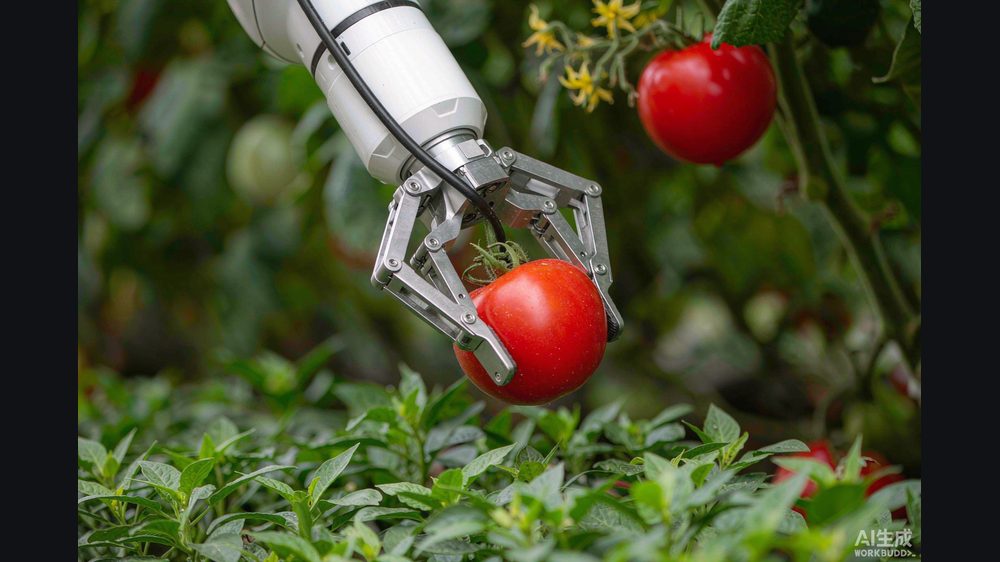
A robot can turn a clean backflip on a stage and still fail to screw a part onto a line. That gap sat underneath a forum in Shanghai this November, where a new map of "where robots should work" was published alongside a blunt distinction between showing off and doing a job.
The atlas is a matching tool, not a report card
The release happened on November 5 at the "Humanoid Robots and Embodied Intelligence: Industrial Innovation and Cooperation" sub-forum of the ninth Hongqiao International Economic Forum, held at the National Exhibition and Convention Center in Shanghai. The publisher was the China Humanoid Robot and Embodied Intelligence Bairen Association (中国人形机器人与具身智能百人会), and the document was the 2026 Humanoid Robot Application Scenario Atlas (《2026人形机器人应用场景图谱》).
Its spine is a three-part chain: field, scenario, company (领域—场景—企业). Following that chain, it sorts ten application fields described as having "potential for landing" — industrial manufacturing, public welfare services, special operations and modern agriculture among them — and pairs each with two kinds of information. One column names the core pain point on the demand side. The other shows representative companies and solutions on the supply side.
That structure is the point. A single table asks "where is the problem" and "who might solve it" at the same time. It is the basic shape of a supply-demand matching tool, not an achievement list. A report card records what is already finished; a matching tool records what still needs pairing. Its usefulness depends on how concretely the pain points are written — the more specific the problem, the easier it is for a supplier to judge whether it can take the work.
The source names only four of the ten fields. The full list is not given, so it is not reconstructed here.
"Can run and jump" versus "can think and work"
The forum's speeches supplied a vocabulary that is worth learning. Vice Minister of Industry and Information Technology Xiong Jijun (熊继军) said full-machine products are upgrading from "能跑会跳" (neng pao hui tiao — can run and jump) to "能想会干" (neng xiang hui gan — can think and work). He described a next step of real-scenario training (实景实训) to move machines from "功夫模式" (kung fu mode) to "作业模式" (work mode), and called for faster building of a high-level humanoid robot open-source community.
These are official remarks from a speech, recorded and explained literally here.
The contrast is between two states. "Can run and jump" and "kung fu mode" describe a capability display: running, jumping, flipping, waving. The motions look good, but the task can be repeated and preset, and it does not require reading a changing environment. "Can think and work" and "work mode" describe task delivery: judging conditions in a real setting, handling variation, and finishing something.
Put plainly, one is performing and the other is going to work. Performance asks that the movement land; work asks that a result be delivered — was the part fitted, was the item sorted correctly, did the inspection catch a fault. A humanoid robot may backflip in a demo video and still be unable to work an eight-hour shift on a line. Conversely, a machine that looks clumsy may be completing a real task. That is the distance between a demo and a job.
Seen this way, the atlas has a clearer purpose: it marks the scenarios where real work is needed, not the motions that look good on camera.
"Real-scenario training" points the same direction. Real means the actual setting of use; repeated training means practising there over and over. A demo can be staged in a prepared venue. Work has to survive a place where light, positions and object placement differ from rehearsal. Whether the machine handles that variation is the line between the two.
The open-source community refers to something else again: better machines depend on shared software, data and tools. For a company, joining a community changes the development threshold and the way collaboration works. For users and developers, it means capability is no longer held by a single firm.
Two organizational facts
One more piece of information concerned standards and talent. Xu Xiaolan (徐晓兰), president of the Chinese Institute of Electronics (中国电子学会), said the institute serves as the secretariat for the Ministry of Industry and Information Technology's technical standardization committee on humanoid robots and embodied intelligence. She also said it leads the development of a national occupational standard for a new profession: embodied intelligence robot application technician (具身智能机器人应用技术员).
Both are organizational facts. The first says where the secretariat for standards work sits; the second says who leads the new occupational standard. For people inside the industry, they identify the entry points for participating in standards and vocational training later on. The institute also described itself as secretariat of the Bairen Association, which links the two threads of the day.
Key takeaways
- The 2026 Humanoid Robot Application Scenario Atlas was released on November 5 in Shanghai by the China Humanoid Robot and Embodied Intelligence Bairen Association, organized by field, scenario and company.
- It covers ten fields with "landing potential," listing demand-side pain points beside supply-side companies and solutions — a matching tool, not a list of completed deployments.
- Official wording set "can run and jump" against "can think and work," and "kung fu mode" against "work mode": capability display versus task delivery.
- The Chinese Institute of Electronics holds the standardization committee secretariat and leads development of the new "embodied intelligence robot application technician" occupational standard.
Honest limitations
The atlas is a supply-demand matching tool, not a scorecard of deployments. The report did not publish the full ten-field list, the companies named, or any method for validating the pain points; none are reconstructed or judged here.
"Can run and jump," "can think and work," "kung fu mode" and "work mode" are the speaker's words. They are recorded and explained only at the level of literal meaning, with no evaluation attached.
The real-scenario training program and the open-source community are work directions named in the same speech. This article records them and explains their technical sense without commenting on policy.
Whether the pain points and solutions in the atlas were verified by any third party is not stated in the source. Their effectiveness is therefore not assessed.
What readers can do now
- In documents like this atlas, read the demand-side pain-point column first. That is where the real problem sits; a company name is only a candidate supplier, not proof that a problem is solved.
- When watching a humanoid robot video, ask what task it is completing. Display and delivery are different things and deserve different judgments.
- If you work in the field, follow the development of the "embodied intelligence robot application technician" standard. Skill requirements tend to follow the standard once it is set.
A map is useful because it separates where the road goes from where the cars already are. The atlas does the same for robots.