
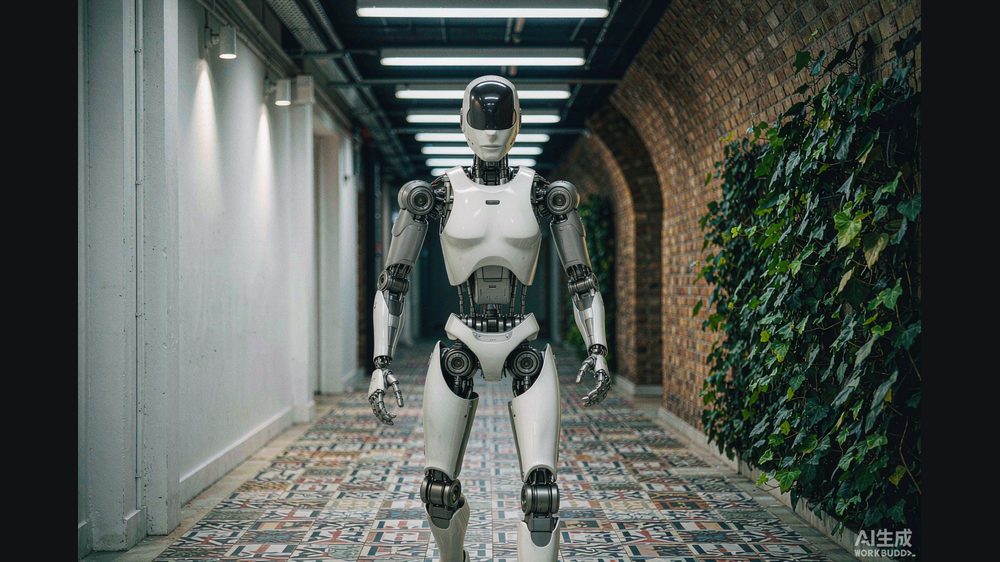
Most robot coverage is about the people who build robots. A vocational competition in Shenzhen this week is about the people who will have to live with them: the technicians who install, configure, troubleshoot and repair them.
The 2026 Guangdong embodied-intelligence service-robot applied-technology vocational skills competition (2026Guangdong Provincial Embodied-AI Service Robot Applied-Skills Competition (年广东省具身智能服务机器人应用技术职业技能大赛)) has its provincial final scheduled for 27–29 November at Shenzhen Pengcheng Technician College (深圳鹏城技师学院).
What is being tested
The competition is not a robot beauty contest. Its technical standard is the national occupational standard for service-robot application technicians (服务机器人应用技术员), at the advanced-worker level, or grade three. Theoretical knowledge is folded into the practical assessment rather than tested separately.
It is a two-person team event with two categories: a worker group and a student group. That structure is telling. The worker group is for people already employed in the occupation; the student group is for full-time students in relevant programmes. A two-person format reflects how field work is actually done — one person operates while the other checks, or one handles the robot while the other handles the task.
The Guangzhou selection round, held on 17 November at Guangzhou Light Industry Technician College (广州市轻工技师学院), produced one worker team and two student teams to represent the city. Eligibility required either a year of social-insurance records for workers or proof of enrolment for students. That is a deliberate barrier against treating the contest as a casual hackathon.
Why a technician matters more than a demo
A service robot leaves the factory as a general-purpose machine. It becomes useful only after someone maps the site, sets up the routes, tunes the grippers, defines the task sequence, trains the staff who work alongside it and deals with the failures.
Those are technician jobs. If the robot stops recognising a tray, if a door threshold defeats its navigation, if the gripper slips on a new packaging material, the person who fixes it is not usually theR&D (研发) (research and development) engineer who designed it. It is the field technician.
A competition built on a national occupational standard does two things at once. It gives the occupation a visible definition — here is what a qualified person should be able to do — and it gives employers a signal about what skills are measurable. Neither is a guarantee of employment, but both are more useful than a list of robot specifications.
The host college
Shenzhen Pengcheng Technician College is a public technician college funded by the Shenzhen municipal government and directly under the Shenzhen Human Resources and Social Security Bureau. It is designated a national key technician college and a national high-skilled personnel training base.
Its intelligent manufacturing faculty offers a programme in intelligent robot application and maintenance, with an embodied-intelligence direction. The college says it works with more than 270 companies, including Huawei, Tencent, UBTECH and Inovance, and has built shared industry colleges with several of them. That network is the practical background to hosting a vocational final: the equipment and the instructors both come from it.
What was — and was not — verified
The dates, venue, format, standard and selection structure come from an official notice published by Guangzhou Light Industry Technician College. The provincial final was described as tentatively scheduled for 27–29 November; readers should check the college's channels for any change.
Details that appear in some previews — an exact count of city teams, and named manufacturers demonstrating particular machines at the final — could not be confirmed against an authoritative source and are not repeated here. The presence of established robotics companies in Guangdong's wider ecosystem is well documented, but that is not the same as a confirmed demonstration list for this event.
Why the workforce angle matters
China's robot industry has been quick to announce production targets and shipment numbers. Slower to be discussed is the question of who maintains the installed base. A technician who can repair a robot locally changes the economics of a deployment: downtime falls, and a small site does not need a manufacturer's engineer on call.
Skills competitions are one of the few places where that work becomes visible. They turn a set of tacit abilities — calibrating a sensor, recovering from a failed grasp, deciding when to reset a task — into a scored exercise that a school can teach.
For students, the signal is direct. There is a defined occupation with a grade structure, and a route into it that does not require a research degree. For employers, the signal is that a vocational qualification may become a more useful hiring filter than a general engineering credential.
The limits are obvious. A timed competition rewards speed under familiar conditions. Real deployments involve shifts, weather, unpredictable visitors and equipment that ages. A contest result is an entry point, not proof of field readiness.
What readers can do now
- If you work with service robots, look up the national occupational standard for service-robot application technicians and check which modules match your job.
- Students can ask local technician colleges whether they run the embodied-intelligence robot track and whether competition results feed into certification.
- Buyers should ask suppliers who maintains the machine after installation and what training is included; that is the workforce question behind the purchase.
Honest limitations
The competition details are drawn from an official college notice and from public information about Shenzhen Pengcheng Technician College. The final was described as "tentatively scheduled," so dates may shift. No results, participant list from other cities, or manufacturer demonstration list were available at the time of writing, and none are asserted here. The article makes no claims about employment outcomes.