
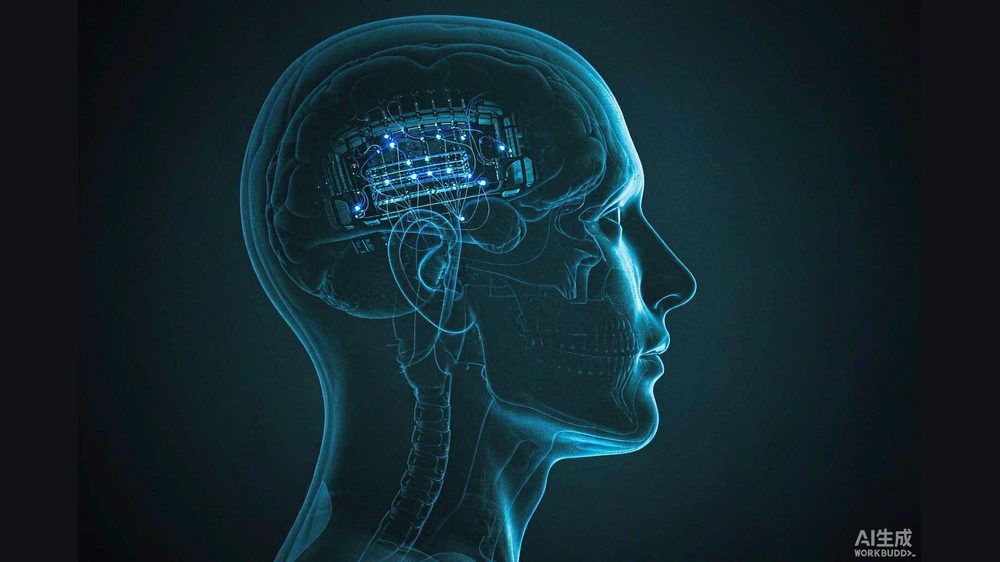
On October 30, Musk posted on the social platform he owns about two Neuralink products: the first is called Telepathy, the second Blindsight. The tone was that of a man introducing two new phones, one after the other.
He said Blindsight is technically ready and only awaiting regulatory approval. It sounds like a phone launch: the prototype is done, only a network license is missing, and it can ship once the event ends.
The difference is that a phone waits for a network license, while a brain implant waits for permission to open someone's skull. The two pieces of paper are not in the same league. The first usually takes months; the second often takes years, and may never come.
A Camera Doing the Eye's Job
Blindsight's idea is not complicated: a pair of glasses with a camera turns the scene into electrical signals, sends them to the visual cortex, and bypasses the damaged eye and optic nerve, drawing directly in the brain.
The electrodes go into the occipital lobe, the part at the back of the head that processes vision. It holds an inverted map of the visual field; stimulate different spots and the person sees points of light in different corners of their view.
The principle is not new. Scientists were stimulating the visual cortex during surgery decades ago and asking patients to report flashes of light. The hard part was never whether you can light a point, but how many you can light.
The human eye has more than a hundred million photoreceptors, and the optic nerve carries roughly a million fibers. An electrode array covers channels in the hundreds. That gap in scale is the wall every visual prosthesis runs into.
The number of points, their positions and their refresh rate decide whether a person sees a fuzzy pixel world or can recognize a cup, a step and a face. On this step, there is no public human data yet.
Why Vision Is Harder
In the motor cortex, what gets decoded is direction and force. Arm left or right, grip or release: a few degrees of freedom can produce a usable robotic hand, which is what makes it easier to deploy.
Vision has to reconstruct a picture. Every point has a position, a brightness and a flicker rhythm; lose one and the outline breaks, add one and the image blurs, and all of them must align at the same time and place.
One electrode in the motor cortex may buy a usable control dimension; in the visual cortex it buys a single point, which is far from enough. Spelling out a line of text needs hundreds or thousands of points correct at once.
That Designation Is Not an Approval
Many people treat a breakthrough device designation as an approval. It is not. On September 17, 2024, Neuralink announced that Blindsight had received the designation from the US Food and Drug Administration, in a post on the company's own website.
What the designation provides is a channel: earlier conversations, priority review resources, denser feedback. It does not prove the device is safe, does not prove it works, and does not permit marketing. It cannot even support a prescription.
The real road is much longer: a feasibility study first, then more participants, then a premarket approval application. Each step can stall, and the reason is often not the technology but data that is not strong enough.
As of now, Blindsight has no publicly confirmed human trial results. The company said early this year that its first product, Telepathy, had 21 participants; the second is still behind the drawing board, and the distance between them is plain.
What a Person Blind From Birth Could See
The most moving line in Musk's account is that people blind from birth might see again. That claim remains scientifically contested, and the dispute is not small; it runs into developmental biology.
A brain that has never received normal visual input may not have grown a conventional visual map. Force signals in and it may not recognize them, let alone assemble a meaningful image.
Research suggests that people who lost their sight in adulthood retain relatively intact visual cortex structure and have a better chance of recovering some light perception. People blind from birth are a different problem, and the answer is not written yet.
So the safer formulation is this: the technology may give some blind people coarse light perception and outlines, rather than take someone from total darkness to reading a newspaper. That expectation is closer to where the experiments stand.
Time Is Not on Musk's Side
In August this year, he said that if approval came, the plan was to begin human implantation within six months to a year. Note the condition: if, not when. The timetable hangs behind the approval.
More than two years have passed since the September 2024 designation, and public information shows not a single Blindsight implant. That pace differs from Neuralink's public messaging, one measured in months, the other in years, with clinical work in between.
Medical device review does not watch launch events. It looks at tissue response in animal studies, electrode longevity, surgical complications and decoding stability, stacked sheet by sheet until a reviewer dares to sign, not until a demo video looks good.
Telepathy has completed part of that road: the first human implant in January 2024, followed by public accounts of cursor control, chess and video games. Blindsight has not reached that point; it has not taken the first step.
Huafu Securities' assessment is that in 2026 the brain-computer interface industry completed the key jump in medical settings from technically feasible to product-ready. That is a brokerage view, not a regulator's conclusion, and the two should not be read as one.
China Already Has a Certificate
According to Xinhua, in March this year China approved the world's first invasive brain-computer interface medical device for market. The phrase "world's first" comes from Xinhua, not from a company slogan. The indication is compensation for hand grasping function.
According to Economic Daily, four months later the first prescription for that certificate was written in Shanghai, and the first implantation was completed at Huashan Hospital affiliated with Fudan University. From approval to bedside took four months, which is fast.
Put the two stories together and the contest is not about whose technology is cooler, but about who can deliver enough safety data first, so a regulator dares to sign a piece of paper and a hospital dares to take its first patient.
Behind one certificate sit a stack of documents, dozens of follow-up cases and endless discussions of adverse events. None of that trends online, but it decides whether a device enters a hospital, whether it can be billed, and whether insurers dare to cover it.
The Time Spent Waiting
So Blindsight's position is clear: the technology is on stage, the approval is in the wings, and in between lies a stretch with no livestream and no timetable. No one knows how long, and the company has given no date.
For patients, this time is hope and also risk. The hope is that a direction has been seen; the risk is that some will hear "only awaiting approval" as "already working", and mistake waiting for a countdown. That misunderstanding is common.
"Only awaiting approval" sounds like the last kick before the goal. But the door on medical devices is never kicked open. It is pushed inch by inch, by many people together, until the data is enough and the door opens a crack.
Disclaimer: This article is based on publicly available information and is for reference only. It does not constitute investment advice.