
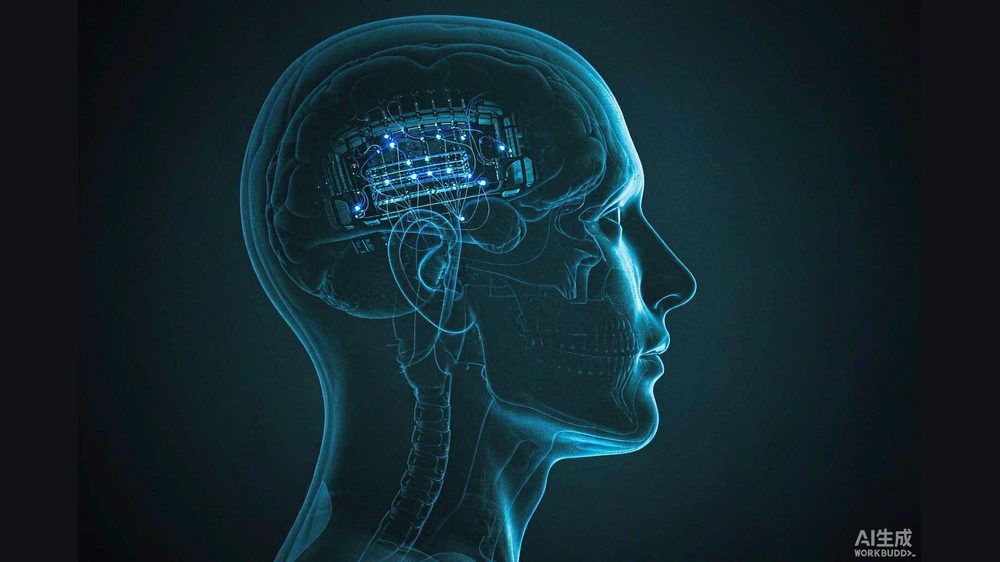
In early November, one more name appeared on the pre-IPO tutoring register on the securities regulator's website: Shanghai Stairmed Technology Co., Ltd. The tutoring institution is Huatai United Securities, the agreement was signed on October 30, and the company is registered in Pudong, Shanghai.
This is not a listing, and it is not a prospectus. It simply tells the regulator that the company intends to go public and has invited a broker in to teach it the rules. Only after the tutoring passes review do the filing documents come next, with questions and hearings in between.
What makes you pause is another set of numbers. By the end of October, forty-two patients had this company's electrodes in their brains. One of them used the system to make a robotic arm pick up a lollipop and bring it to his mouth, bite by bite.
Forty-two is not a number you write down casually. It means forty-two craniotomies, forty-two sets of follow-up files, and forty-two families asking for leave, catching trains and standing in queues on every check-up day.
One Hundredth of a Hair
Stairmed takes the fully invasive route: the electrode passes through the dura and sits against the cerebral cortex. According to the company, the electrode is only one hundredth the diameter of a human hair. The company says that when it bends, the stress is on the order of the forces between cells.
Thin is about being soft. The softer the material, the less it rubs against brain tissue, and the milder the rejection response during long-term implantation. Every invasive company has to clear this hurdle, and it is the hardest part of the product to copy.
The implant itself is a different set of dimensions. About 26 millimeters across and 6.9 millimeters thick, roughly the size of a coin, the company says, set into the skull so you can feel its outline through your hair. That size also decides how long the surgical incision has to be.
Under the coin are 256 channels. More channels means denser neural signals at any one moment, but heat dissipation, power consumption and packaging all get harder. You do not win just by stacking up the count.
Five Hundredths of a Second on the Table
There is a plain way to judge whether the system works well: how long it takes from thinking of a movement to the cursor moving on screen. The shorter that gap, the more the movement feels like your own hand.
According to Shanghai Securities News, in cursor tests the system took under 0.05 seconds to go from collecting neural signals to controlling a computer. A human blink takes roughly 0.1 to 0.4 seconds.
The company disclosed another figure: participants reached a peak information transfer rate of 390 bits per minute. The unit sounds strange, but it simply means how many useful commands can be sent in a minute.
For comparison, an ordinary person typing on a mouse can push out far more information per minute. So the system's place is clear: first, give people who have lost their hands a little bit of control back.
From the Lab to the Operating Table
In August 2021, Zhao Zhengtuo and Li Xue founded the company in Shanghai. Both were researchers at the CAS Center for Excellence in Brain Science and Intelligence Technology, one working on neural interfaces and the other on multimodal neural interfaces. Both were born in the 1990s.
In the tutoring filing, the two together control 36.3494 percent of the company's shares and are its joint actual controllers, which also makes clear who has the final say. That figure, precise to four decimal places, is the least story-like part of the whole document.
The product is called WRS01, aimed at restoring movement for patients with high-level paraplegia. According to the company, it is the first fully invasive brain-computer interface product to enter the National Medical Products Administration's special review track for innovative medical devices.
In August this year, the product's multi-center registration trial finished enrolling all participants. By the end of October, forty-two long-term implants had been completed, with more than 5,000 cumulative days in the body. Enrollment finished means only follow-up and review remain.
Those 5,000 days are a sum across everyone. Spread over forty-two people, that is a bit more than a hundred days each. The more than 10,000 hours of brain-controlled use is also a cumulative figure, not one person's record, and it cannot be read directly as evidence of clinical benefit.
How the Money Came In
The shareholder list has gathered almost every domestic institution that invests in hard tech. Tencent, Alibaba, Shanghai Guotou Xiandao, SDIC Chuanghe, Qiming Venture Partners, Lilly Asia Ventures and OrbiMed are all on it.
According to Securities Times, in March this year the company closed a 500 million yuan strategic round led by Alibaba, with Tencent and other existing shareholders adding money. It is a rare case of the two internet giants backing the same brain-computer interface company.
By September, cumulative funding had reached 2.6 billion yuan. That figure needs a date stamp: as of September this year. It is not revenue, not valuation, and it does not mean the company has made money or that the cash is sitting in its account.
In the same month, the company completed its conversion into a joint-stock company. It signed the tutoring agreement in late October, and the filing surfaced in early November. Barely a month passed between the conversion and the tutoring start. The pace suggests it had long known where it wanted to go.
Tutoring Is Only a Waiting Ticket
Pull the camera back and this is not one company's move. In February this year, Neuracle filed for tutoring with the Shanghai securities regulator and began its STAR Market process; by June, the tutoring was complete, four months after filing.
In September, Shuli Innovation also started pre-IPO tutoring. Add Stairmed, and the leading domestic invasive brain-computer interface companies are lining up for the public market, a formation that would have been hard to imagine two years ago.
But between the queue and the listing lies a long stretch. Filing documents, answering questions, proving the technology can become a product, that the product can sell, and that what is left after the sale is profit. If any link stalls, you start over.
The brain-computer interface industry has not finished this road. Worldwide, only a handful of invasive products have a registration certificate and actual commercial sales; most companies are still burning money in clinical trials year after year.
After the Forty-Two
Back to those forty-two people. They are not samples invited onto a stage at a launch event; they are names recorded again and again in follow-up files. One can grasp, one can move a cursor, one is still practicing.
For a company preparing to list, those forty-two people are both its hardest asset and its softest spot. Hard, because no one else can show the same; soft, because each one is irreplaceable and cannot be scaled up quickly.
Capital markets like stories; reviewers only look at data. Whether forty-two cases can carry a prospectus depends on whether, at year five or year eight of follow-up, those electrodes still work, whether decoding is still accurate, and whether patients still want to use them every day.
This November filing only puts a question on the table: as capital starts pricing brain-computer interfaces, what do we use to price the daily lives of forty-two people? That question has no answer yet.
Disclaimer: This article is based on publicly available information and is for reference only. It does not constitute investment advice.