
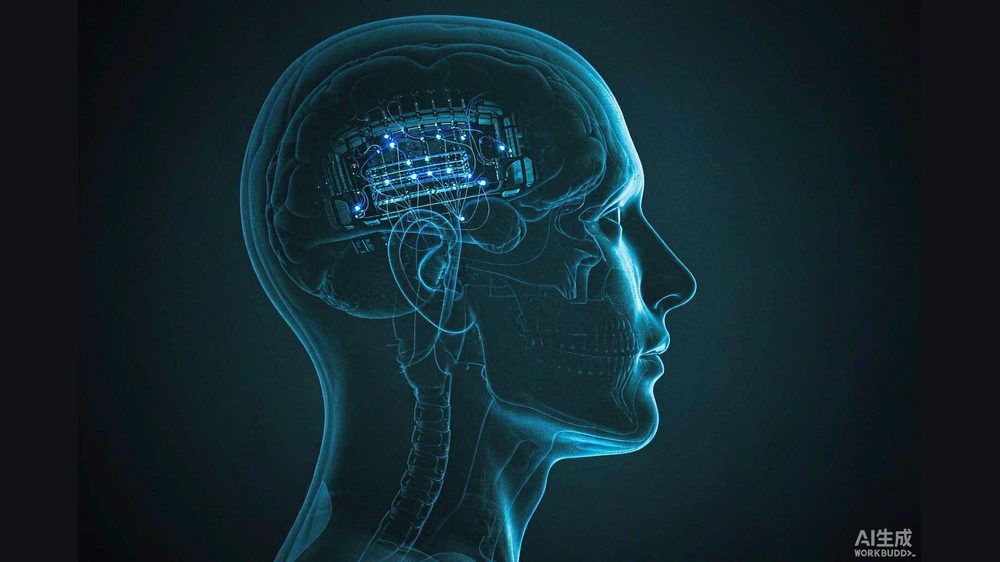
On November 4, Shanghai Active Intelligence Technology announced a 464 million yuan angel-plus round. The co-leads were Gaorong Ventures, SDIC Xiandao and Shanghai Venture Capital, all hands that have looked at plenty of hard-tech projects.
The follow-on list is longer: Kangjun Capital, China Internet Investment Fund, Guotai Haitong, Pudong Venture Capital, Shanghai Science and Technology Innovation Fund, GPHL Capital, Minjin Investment and Yunqi Partners. Existing shareholders Daotong Capital, BGI Songhe and Inno Capital added more.
Three months earlier, on August 3, the company had disclosed a 330 million yuan angel round. The two rounds add up to about 800 million yuan. A company founded nine months ago now has 800 million on its books. That pace is unusual in the medical device industry.
What does 800 million mean? The company has no product revenue and has not disclosed a single human implant. All the money comes from investors, and it is money that may only pay off years from now, not this year's cash flow.
A Nine-Month-Old Company
Active Intelligence was founded in February 2026, registered in Zhangjiang, Shanghai, and incubated by Lingang Laboratory. Lingang Laboratory is a new-type research institution in Shanghai working at the intersection of life science and intelligent technology.
It chose the invasive route, and insists on building flexible electrodes, custom chips, encoding and decoding algorithms, and system integration itself, without buying off-the-shelf modules. The company calls this a full-stack approach.
The advantage of full-stack is fast iteration; the disadvantage is that every step costs money. Electrodes need clean rooms, chips need fabrication runs, algorithms need data, and systems need bench testing. Every item is a multi-year spend, not a one-off bill.
That is why this round keeps mentioning industrial build-out. The money is not for demos. It is meant to become production lines, workshops, test benches and a quality system that can survive an inspection. A factory persuades reviewers better than a launch event.
A Workshop of 2,500 Square Meters
The company previously said it had built about 2,500 square meters of office and GMP workshop space. GMP is the quality management standard for medical device production: clean, traceable, documented at every step, and able to withstand an unannounced inspection.
2,500 square meters is roughly six basketball courts. Clean rooms, assembly lines and test equipment have to fit inside, along with separate routes for materials and people, so the usable area is smaller still.
The company also plans to build a new headquarters of more than 10,000 square meters before the end of 2026, including a micro-nano fabrication platform. That is a move upstream in the supply chain, beyond assembling whole systems. In other words, it will make its own electrodes rather than outsourcing most of the work.
All these moves point one way: preparing for volume production. But volume production requires a registration certificate; the certificate requires clinical trials; and the trials require people, a specific person willing to sign and be opened up.
A Type Test Report
In November 2025, a 1,024-channel invasive brain-computer interface system developed by the core team obtained a type test report. That milestone appears in almost every funding story, and it is the parameter the company most likes to cite.
What is a type test? It is the basic safety check before a product can enter clinical trials. An accredited lab tests the prototype against standards for electrical safety, electromagnetic compatibility and environmental adaptability.
What it proves is that the machine, under laboratory conditions, meets certain national standards. It does not prove the machine is safe once implanted in a human body, and it does not prove it can make a paralyzed hand move again.
More importantly, a type test report is not a clinical trial approval. After it, a company still has to pass ethics review, clinical trial filing, investigator meetings and hospital project approval before it can discuss how to schedule the first surgery or recruit the first patient.
So between obtaining a type test report and being cleared to start clinical trials lies not one formality but an entire road. The two are often conflated in coverage, and every conflation leaves readers more confused.
Three Product Lines and One Name
The company has three lines: movement, vision and emotion. The movement product is called Tianshu, aimed at movement and speech impairments caused by stroke, spinal cord injury and ALS, and all three lines share one underlying platform.
Tianshu is the first star of the Big Dipper, the one the ancients used to find direction. Naming a machine that helps someone lift a cup again after it is straightforward, and it carries a hint of guiding patients along the way.
The vision and emotion lines, the company says, build on the team's earlier research. But so far public information shows firm engineering milestones only for the movement line; the other two have no timetable.
Chief executive Wu Guojia says the long-term goal is a technology platform that supports many applications and keeps iterating. Translated, that means: first make the medical device work, then talk about other scenarios.
Where the Others Have Got To
Put the peers side by side, and the gap is not money but who has actually been under the knife. NeuroXess closed a 700 million yuan Series B on October 28, has started a multi-center registration trial, and says it has completed 65 clinical trial cases.
Stairmed has completed 42 long-term implants and finished enrollment for its multi-center registration trial. Neuracle's implantable product has its registration certificate, has begun commercial sales, and can be prescribed in hospitals.
Three roads, three stages: one is selling, one is running a registration trial, one is waiting for a trial after finishing its type test. Active Intelligence is in the third group, and it was founded most recently, a step behind.
That is not to say it is lagging. Medical devices are a business measured in years, and getting a 1,024-channel system to a type test in nine months is already fast. But fast is not arrival, and engineering work is not clinical work.
The Money Ran Ahead
Eight hundred million yuan in funding, 2,500 square meters of workshop, a 10,000-square-meter headquarters plan, a 1,024-channel system. These numbers are hard, so hard that they make you forget another set of numbers that is zero. There are no people in that set.
Zero human implants, zero publicly named research hospitals, zero enrollment timetable. As of this funding announcement, the company has not disclosed any of this, and no third party in public reports has either. Not one.
For investors, this is an option: a bet that in three to five years the machine will move from the workshop into an operating room. For patients, it is a stretch of waiting with no known length.
The most moving line in a funding release is usually about bringing the technology to patients. That line is not wrong. But before technology can reach a patient, one patient has to be willing to lie down on the table. That day has not arrived.
Disclaimer: This article is based on publicly available information and is for reference only. It does not constitute investment advice.