
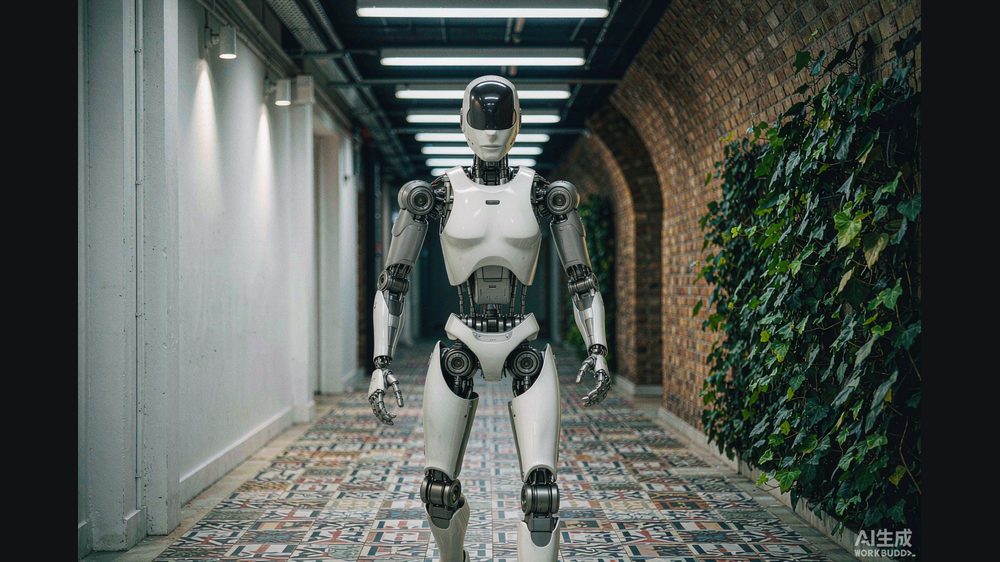
In the past month, a widely circulated story in robotics was not a new product launch. It was an American company that made a humanoid robot and then said, publicly, that it will not sell the thing, and has not scheduled a launch.
According to media reports, the company is Meta and its partner is the Chinese robot maker Fourier. The prototype's internal codename is Max. From the two sides starting work to the machine standing in front of people took about three months, faster than many companies take to build a single prototype.
Three months is abnormal in this industry. Most companies measure the path from drawings to steady walking in years, with many falls along the way, many versions of motors, new tooling and fresh calibration.
Three Months to a Prototype
The reason for the speed is no mystery: Max was not drawn from zero. According to reports, it was adapted from Fourier's existing robot platform, with height, proportions, head, screen and cameras all reworked, down to the structure of the feet.
The approach saves time and creates dependence. The body belongs to someone else, the hands belong to someone else, and only the "brain" and the interaction are its own idea. Changing the skin is easy. Changing the skeleton is hard, and after the change the balance has to be tuned again.
According to reports, the prototype is about 1.5 meters tall and weighs about 48 kilograms. Its face has a screen that can show expressions, its chest holds two speakers, and its five-fingered hands can pick up small bottles and toys. Not much force, but enough for small objects.
The specifications are not dazzling. At 1.5 meters it is shorter than many adult men; at 48 kilograms it weighs little more than an electric scooter. It is aimed not at a factory line but at a living room, where rugs and thresholds are the real difficulty.
What It's Been Asked to Do
According to reports, Meta's requirements for the machine were decidedly domestic: hear speech clearly from five meters away, read gestures from three meters, and look people in the eye while speaking, while working out who is talking.
It also has to signal its state in different ways: I am listening, I am thinking, I am about to speak, I did not understand. People do not need to be taught these things. A machine has to learn them one by one, and get them wrong in ways that look foolish.
According to reports, at the end of August, Max was shown to some employees at an internal Meta robotics event. In September, work began on a second prototype, Max 2, on a tight schedule with almost no time to stop and review before the next round of changes.
The changes in the second version are specific: a redesigned torso, improved hand structure, a projector, and additional sensors to help it climb stairs. None of these would be a problem in a factory.
"Not for Sale" Is the Most Informative Line
All the specifications together matter less than one sentence from a Meta spokesperson. According to reports, Meta said the work with Fourier focuses on internal research and experimentation. This machine is not a product being prepared for sale.
The second half is more important: there are no plans to sell these robots, and no launch timeline has been set for such a product. Not "not yet announced." Simply none. That sentence is harder than any specification.
It heads off a lot of headlines. This is not "Meta enters robotics," and it is not "humanoids go on sale." It is building a prototype and keeping it in the lab, to let it decide for itself whether to come out.
Why would a company spend three months on a robot it will not sell? The answer is not in the hardware. It is in another word: embodiment. A body that can run errands, carry things and read a human face.
The Assistant Wants a Body
According to reports, Meta's chief technology officer, Andrew Bosworth, has described the humanoid internally as the "physical embodiment" of Muse, the company's AI assistant. Note the word embodiment, not product. The two differ by an entire business model.
In plain terms: Muse can answer questions and manage a schedule from a phone, but it cannot fetch a glass of water, help a fallen person up, tell whether a cup is hot, or know whether the floor is slippery.
For AI to step out of the screen, it needs a body. Eyes are cameras, ears are microphones, hands are five-fingered hands, legs are wheels or joints, and it needs a nervous system that can react in real time.
Seen this way, Max is not a product but an interface. What it tests is not how much the machine can sell for, but whether AI can get something done in a real room. The answer to that question matters far more than the price.
That also explains why it is not for sale. Selling hardware means building lines, building channels, running service, absorbing returns and facing different regulators in every country. Meta is not good at these things, and they do not pay. Heavy assets have never been its strength.
There is a more practical reason too. According to reports, a Meta spokesperson said that when it comes to buying components that are not easy to obtain in the United States, Meta faces the same reality as the rest of the industry. It was a polite way of stating a plain fact.
Why Fourier
Fourier was founded in 2015 in Zhangjiang, Shanghai. It started with rehabilitation robots and later moved into general-purpose humanoids, releasing three generations, the GR-1, GR-2 and GR-3. Most of the hardware is its own, and it is neither a simple assembly shop nor a pure software company.
Rehabilitation robotics trains two things: dealing with people, and running reliably in real settings over long periods. Those are exactly what humanoids entering homes lack most, and what is hardest to acquire quickly.
For Meta, finding an existing body supplier is much faster than building a hardware team from scratch. According to reports, Meta's product team also spent time on site at Fourier's Shanghai factory. That is not something a video call can replace.
For Fourier, this is a chance to embed itself in the global AI chain. The body is its own, the brain belongs to someone else, but the orders and the reputation are real. In this industry, those two are worth the most.
What It Sells If Not Robots
If the business does not sell robots, what does it sell? Perhaps standards, perhaps models, perhaps the invisible layer of intelligence inside someone else's machine, or simply a set of interface specifications and certifications.
Android has walked this road. Phone makers build hardware, the system maker sets the rules, and the one who ends up making money is not necessarily the one building the shell but the one collecting license fees. Margins on shells keep thinning.
But the road has a precondition: your intelligence has to be good enough that others are willing to hand you their bodies. It is too early to conclude. It has not yet entered a single home, let alone cared for a sick person.
There is also the supply chain. According to reports, Meta is hiring supply chain and product engineering staff in Shanghai and Shenzhen, with duties spanning everything from prototyping to mass production. Hiring is not mass production, but the direction is clear.
So this robot that is not for sale is really saying three things: AI needs a body, the body can be outsourced, and the rules should be written by us. Of the three, the last is the hardest and the most valuable, because whoever writes the rules collects the rent.
For now it stays in the lab. The day it comes out, what it sells will most likely not be a robot but the layer that makes other robots smart. The hardware is only the ticket. The real business is in the back office.
Disclaimer: This article is based on publicly available information and is for reference only. It does not constitute investment advice.