
On the afternoon of November 4, in Wuzhen, Zhejiang, Cao Peng, chairman of JD Group's technology committee, gave a keynote at the World Internet Conference's robotics and embodied intelligence forum. Most of those in the audience were from robot companies.
The hardest line in his speech was not about models. It was about purchasing. He said that over the next five years, JD Logistics plans to buy 3 million robots, 1 million unmanned vehicles and 100,000 drones, for logistics, retail, health and industrial parks.
The sentence has three qualifiers: JD Logistics, the next five years, and plans to buy. It does not mean 3 million units have been bought, nor that 3 million have been deployed. Drop one qualifier and the meaning changes.
Spread 3 million units over five years and it comes to 600,000 a year. That is not an astronomical figure for the logistics equipment industry, but it was put on the record in a public speech, with a named buyer, a clear use and a clear timetable.
Why would a logistics company name such a number in one breath? Because what the robot industry lacks right now is not demonstrations but orders. A demo can be edited into a video. An order requires real money and a production schedule.
The Weight of That Sentence
Cao's judgment was that physical AI has begun to scale, and that competition is shifting to compute, data and scenarios. It sounds like jargon, but the plain translation is this: whoever has the floors has the right to talk about deployment.
Compute is how fast the brain runs, data is how many real situations it has seen, and scenarios are whether there is enough room to practice. Of the three, JD is least short of the third, and it is the hardest for rivals to copy.
According to Hangzhou Net, JD now has more than 3,800 warehouses, more than 200,000 partner offline pharmacies, more than 10,000 stores of various kinds, and more than 50,000 in-house cleaners in its home services business, spread across the country.
Every day these places produce the same kind of material: how a person bends, reaches, and squeezes something oddly shaped into a box. For a robot, that is a textbook no one else can copy, and one money cannot buy.
So the purchase order is not isolated. Behind it is a sequence: first the floors, then the data, then the equipment. Do it the other way round and the machines will sit in a corner gathering dust, depreciating faster than anyone else's.
The List Isn't Only Humanoids
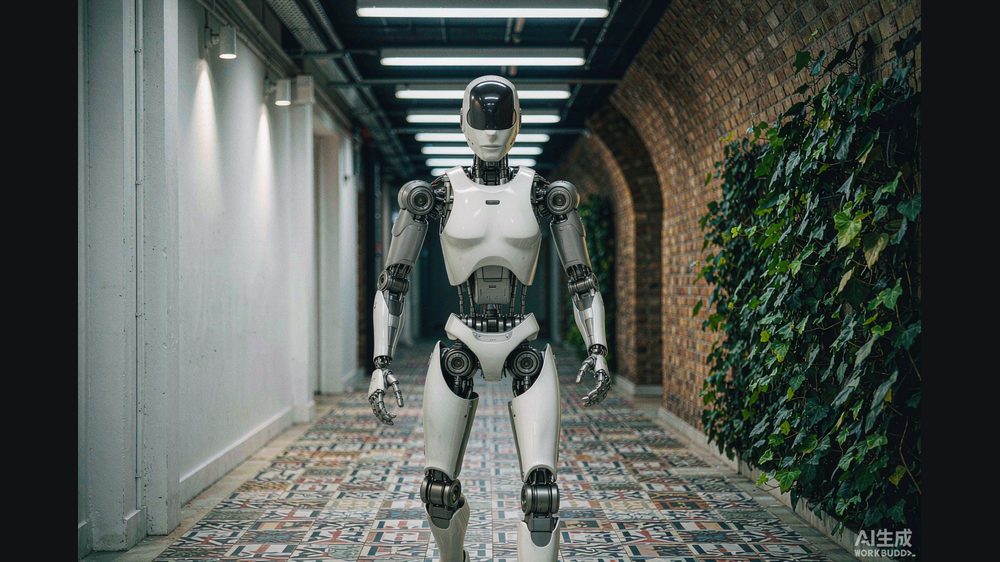
Many people see "3 million robots" and think bipedal humanoids are arriving. That is not what the list means. It is far more mundane, and far closer to the ground.
JD Logistics calls its machines the Wolf Pack. Zhilang moves totes to people, Tianlang handles pallet storage, Dilang moves goods, Canglang picks, Yilang is a dexterous arm, Dulang is a delivery vehicle, and Feilang is a drone. The division of labor is fine-grained.
Of these lines, only one category is bipedal, and it is not the main force. Most are wheels, rails, arms and propellers. Warehouse floors are flat and shelves are standardized; wheels are steadier, cheaper and easier to maintain than legs.
The numbers already running are more telling. According to JD Logistics, Yilang has completed more than 13 million real parcel-handling jobs at sorting sites, running around the clock at several locations without anyone watching.
Dulang's unmanned vehicles number in the thousands and run regular routes at hundreds of stations, on short hauls between warehouses and delivery points. Feilang's drones currently fly more than 100 domestic routes, reaching village entrances in the mountains.
More than 100 routes, against 100,000 drones in the plan. The gap is not a typo. It is the distance between now and five years from now, and the part of this order most likely to be misread, quoted and turned into a headline.
Data Has to Grow from the Shelves
Beyond procurement, there is a set of targets that gets less attention: within two years, collect more than 10 million hours of high-quality video of real human scenarios, plus more than 1 million hours of data from robots themselves, all from real work sites.
What does 10 million hours mean? It would take 10,000 people working full time for half a year to accumulate it. A few data labelers cannot do this. It takes tens of thousands of people and thousands of sites recording together, and someone to sort and annotate it all.
JD says the work will be carried out jointly by frontline employees and data partners, in compliance with the law. According to its disclosure, it already covers more than 100 sub-scenarios and more than 100,000 real work tasks, and the scale is still growing.
Data sounds abstract, but it is the most concrete cost in the robot industry. Models can be open-sourced and bodies can be contract-manufactured. Only the part about how people actually work in real settings cannot be bought off the shelf. Equipment depreciates; experience does not.
That is also why JD dares to place this order. It is not buying robots for the sake of buying robots. It wants robots to learn the work in its own warehouses first, then turn what they learn into something that can be copied into the next batch of machines.
The Repair Network Arrives First
A robot's story begins after it is sold. Who fixes it, how long it takes to arrive, whether spare parts are in stock: these decide whether it can actually cover a shift, or whether it ends up as an exhibit in a corner, gathering dust until someone carries it away.
According to Securities Times, JD Logistics has built eight major repair centers in China. Over the next five years, its after-sales service is planned to cover more than 100 countries and create more than 100,000 after-sales engineer jobs. All of them are new positions.
A hundred thousand jobs is more than the total headcount of many robot companies. Read it backwards: for robots to truly take up posts, what gets supported is an entire service chain, not just a few working prototypes, but spare parts and systems.
Retail is being laid out too. According to Securities Times, JD Retail plans to invest 10 billion yuan in resources before 2028, helping 100 brands surpass 1 billion yuan in standalone sales and putting robots on more store shelves.
Put it together and you get a loop: scenarios produce data, data feeds models, models go into robots, robots are sold to brands and warehouses, and when they break, JD's own network repairs them. Anyone who wants to sell goods has to go through it.
Why the Buyer Is in More of a Hurry
For the past few years, the embodied AI industry has held more launch events than it has written orders. Robots flip on stage, the audience applauds, and afterwards nobody knows where the machines will work tomorrow. Few dare to ask, and fewer dare to order.
The point of JD's order is that it answers the question of whether anyone wants this at all. For a robot company, a five-year purchase intent does more than a funding round to make it dare to cut tooling, stock parts, hire people and expand capacity.
But a purchase plan is still a plan. Over five years, budgets can be adjusted, the pace can change, and models can be swapped. What is worth watching is how many units land in the first year, in which steps, and whether repeat orders follow.
There is also a more practical question: if 3 million devices really do enter the warehouses, who operates them, who maintains them, and who answers when something goes wrong. The answers are not in the speech. They are in next year's reports, budgets and job postings.
The speech in Wuzhen was short. The audience remembered a number. What the speaker meant was something else: this industry has never lacked applause. It lacks a signed purchase order, and a supplier who can deliver on time.
Disclaimer: This article is based on publicly available information and is for reference only. It does not constitute investment advice.