
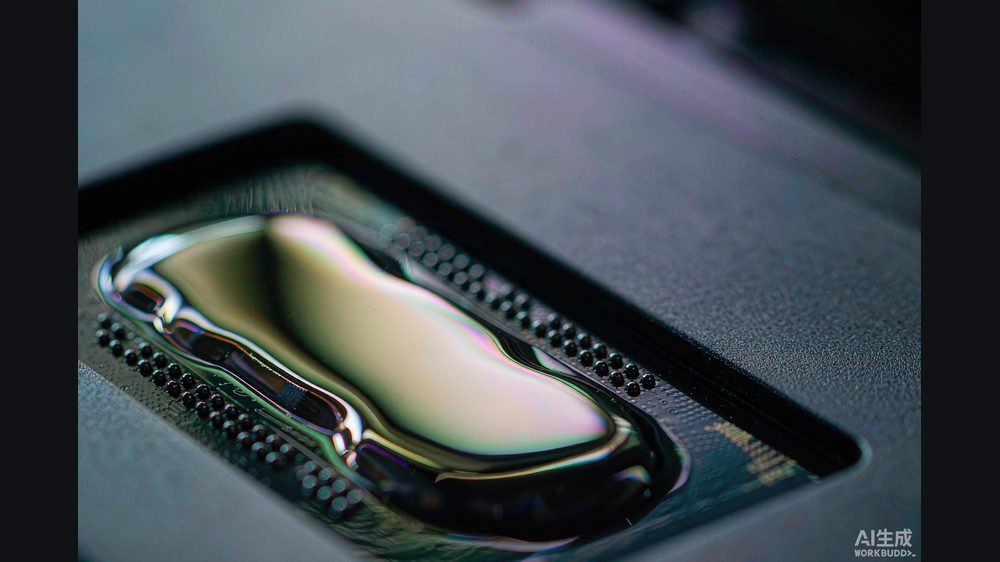
A Chinese AI-chip designer this autumn was stuck on a problem that has nothing to do with clever architecture. It had the compute, but not enough of the one component that feeds it: high-bandwidth memory. So it waited, like everyone else, for a supply that keeps falling short.
That bottleneck is why ChangXin Memory Technologies (CXMT), China's largest DRAM maker, is now pushing into advanced high-bandwidth memory (高带宽内存, HBM) even before the economics look sane.
Key takeaways
- Reuters reported on 28 October 2026 that CXMT plans to begin limited HBM3E production within roughly two months, despite yields of only about 20 to 30 percent.
- The company has already sent HBM3E samples to several domestic AI-chip designers for qualification, according to people familiar with the matter.
- By comparison, SK Hynix, the market leader, operates at roughly 70 percent yields on comparable parts.
- CXMT held about 10 percent of global DRAM revenue in the second quarter of 2026, making it the world's fourth-largest conventional memory supplier per Counterpoint Research.
- Global HBM revenue in that quarter was led by SK Hynix at 50 percent, Samsung at 33 percent and Micron at 18 percent, leaving almost no Chinese share.
Why HBM is the real bottleneck
High-bandwidth memory is the stacked, vertical DRAM that sits next to an AI accelerator and feeds it data fast enough to avoid starvation. Without it, even a strong compute die spends its time waiting. As Washington tightened export controls on advanced HBM bound for China in December 2024, domestic AI developers lost comfortable access to the easiest source.
The global HBM market is an oligopoly. SK Hynix, Samsung and Micron make essentially all of it, and they prioritize their own customers and the highest-margin contracts. Chinese chipmakers have increasingly hunted for supply through unofficial channels, where it can cost several times the official price.
The CXMT decision
Reuters, citing two people familiar with the plans, said CXMT will start limited production of HBM3E despite as little as 20 percent of its output meeting specifications. The company began risk production in August 2026 and has shipped two sample versions — a standard design and an updated one tuned to lift yields — to domestic AI-chip firms.
Running a line at 20 to 30 percent yield is expensive. Most wafers are discarded or reworked, which destroys the usual margin math. The only way that makes sense is treating the loss as a national investment: build the learning curve now, even if the unit economics look terrible, because the alternative is permanent dependency. For Beijing, a domestic HBM source is less a commercial product than a strategic insurance policy against being locked out of the global memory market entirely.
What the performance looks like
In testing, CXMT's HBM3E landed closer to SK Hynix's previous-generation HBM3 than to the South Korean firm's current HBM3E, one of the people said. That places CXMT at least one generation behind the leaders in commercial HBM. It is an entry, not a catch-up.
Still, the strategic value is access. If domestic AI accelerators from Huawei, Cambricon, MetaX and Iluvatar CoreX can qualify a local memory source, they reduce exposure to both export controls and the price spikes that come with scarce supply. Reuters reported last month that those four vendors had already raised AI-chip prices by 20 to 50 percent as memory costs complicated their own production ramps.
The equipment overhang
CXMT's hurdle is not only process know-how. US export controls limit its access to the most advanced manufacturing equipment, including the extreme-ultraviolet (极紫外, EUV) lithography that rivals use. HBM stacks multiple DRAM dies through tiny through-silicon vias, and CXMT is attempting the design with roughly 3,000 such vias per layer, fewer than the 5,000 to 8,000 used by Korean rivals. Fewer connections means a harder path to both density and yield.
Climbing from 30 percent toward a sustainable 70 percent typically takes years of iterative runs. During that window, the line loses money by design. The question is whether state support is patient enough to fund the climb.
Honest limitations
The core facts here — the production timeline, the 20 to 30 percent yield range, the sample shipments and the market-share figures — come from a single Reuters exclusive based on unnamed sources, not from CXMT's own disclosure. CXMT did not respond to Reuters' request for comment, and the plans are not public. The 3,000-via detail and the performance-comparison remark also originate from the same sourced reporting. Readers should treat timing and yield as indicative rather than confirmed, and watch for CXMT or customer statements before treating volume as assured.
What readers can do now
- If you follow semiconductor supply chains, track CXMT customer qualifications (Huawei, Cambricon and peers) as the real signal of progress, not press leaks.
- For AI-infrastructure buyers in China, expect domestic accelerators with local HBM to appear around 2027, but plan for higher cost and lower per-part performance than imported alternatives.
- Watch SK Hynix and Samsung HBM4 pricing; their next-generation moves set the bar CXMT must eventually clear.