
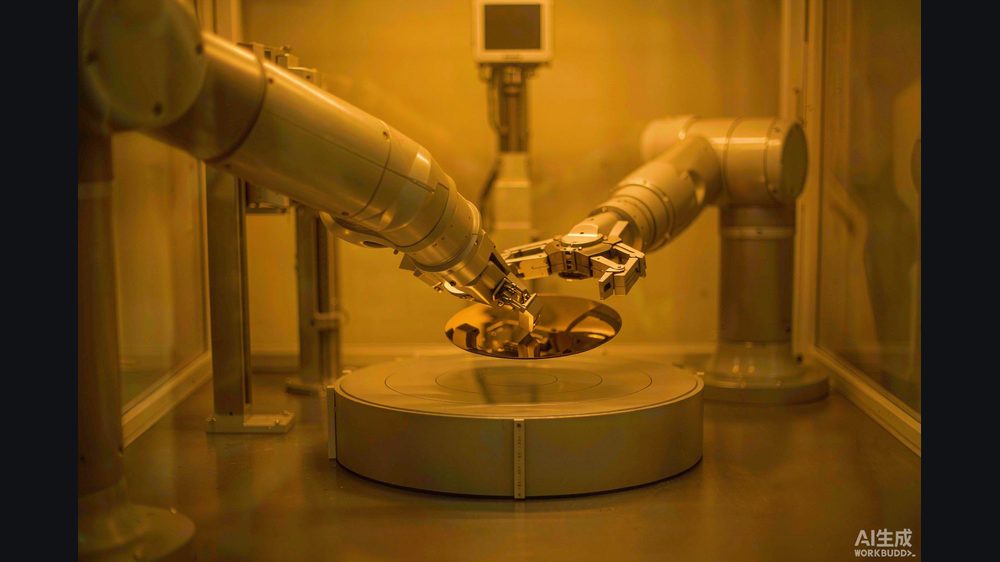
In a Beijing office park, a team that spent nearly a decade losing money is now shipping the chips that train and run Chinese AI models. The turn is recent, the numbers are loud, but the reason it matters sits underneath the headlines: a domestic accelerator supply chain that no longer depends on a single foreign vendor.
Cambricon Technologies (寒武纪) is not a household name outside China's semiconductor circle, yet it sits at the center of a question every AI lab in the country now asks — where will the compute come from? This article looks past the stock-chart drama to explain what the company actually builds, why it lost money for so long, and what its first profit year tells ordinary readers about the future of Chinese AI hardware.
From a research project to a fabless designer
Cambricon was incorporated on March 15, 2016, as a spin-out from the Chinese Academy of Sciences (CAS), specifically its Institute of Computing Technology. It was co-founded by brothers Chen Tianshi and Chen Yunji, both products of CAS's elite early-talent program, and Chen Tianshi remains chairman and CEO.
The company's roots reach back further, to a "brain-inspired computing" project CAS funded in 2008. Researchers there published the influential 2016 paper "Cambricon: An Instruction Set Architecture for Neural Networks" at the International Symposium on Computer Architecture. In plain terms, they designed a way for chips to run neural networks more efficiently than general-purpose processors.
Cambricon listed on the Shanghai Stock Exchange's STAR Market on July 20, 2020, under ticker 688256. It designs chips but does not own fabs — a "fabless" model — and its leading products are the Siyuan (思元) series of Machine Learning Unit (MLU) accelerators used for both training and inference in data centers.
The Huawei years, and the break
Cambricon's early revenue was almost entirely licensing deals. In 2017 Huawei put a Cambricon NPU (neural processing unit) design into its Kirin 970 system-on-chip, billed at the time as the first smartphone processor with a dedicated AI block. For two years, more than 98% of Cambricon's income came from that one customer.
Then Huawei built its own in-house AI engine (the Da Vinci architecture behind Ascend), and the licensing relationship wound down around 2019. Cambricon had to reinvent itself as a maker of standalone accelerator cards — a painful pivot that helps explain the long stretch of losses that followed.
Why the losses, and why now profit
Designing AI accelerators is brutally expensive. You pay for advanced tape-outs, software stacks, and armies of engineers long before a single card ships at volume. Cambricon carried those costs while its market was still forming, and U.S. export controls that restricted NVIDIA's most capable GPUs to China after 2022 unexpectedly opened a domestic window.
Two things changed the trajectory:
- Demand shifted home. With top-end NVIDIA parts hard to import, Chinese cloud providers and AI labs went looking for local alternatives.
- Product maturity. The Siyuan 590, its flagship cloud accelerator, entered mass shipment in 2025 and is manufactured by SMIC, China's leading foundry.
Cambricon was added to the U.S. Entity List on December 15, 2022, which restricted its access to American tools and customers but also cemented its role as a sanctioned, must-support domestic supplier.
The company reported its first annual profit in 2025, with revenue of about 6.5 billion yuan (roughly $0.9 billion / HK$7.0 billion) and net profit near 2.1 billion yuan (about $0.29 billion / HK$2.3 billion), according to company disclosures cited by multiple outlets — a swing from nine straight years of losses. The Siyuan 590 pairs its compute with HBM (高带宽内存), the same stacked memory that high-end AI chips everywhere depend on.
What readers can do now
- Track the software, not just the silicon. Cambricon's NeuWare stack determines whether models actually run well; an accelerator is only as useful as the tools around it.
- Watch SMIC, not just Cambricon. Because the chips are made by a domestic foundry, foundry progress is now the bottleneck for the whole domestic-AI story.
- Read "first profit" as a milestone, not a verdict. One profitable year does not settle whether the company can hold margin against Huawei's Ascend and foreign competition.
Honest limitations
The profit figures above come from company-reported results relayed through secondary outlets; I could not independently open the primary exchange filing during review, so treat the exact totals as "reported" rather than audited-by-me. The dramatic revenue growth percentages circulating in 2025–2026 coverage are volatile and depend heavily on a small set of large customers, so I have intentionally avoided repeating them as settled fact. Cambricon also remains dependent on a domestic foundry and on export-control conditions that could shift.
Key takeaways
- Cambricon spun out of CAS in 2016 and listed on the STAR Market in 2020 (688256).
- It pivoted from Huawei IP licensing to standalone Siyuan MLU accelerators after 2019.
- A 2025 first annual profit marks the end of nine loss-making years, driven by domestic demand for NVIDIA alternatives.
- Its fate is tied to SMIC and to HBM (高带宽内存) supply, not to its own fabs.