
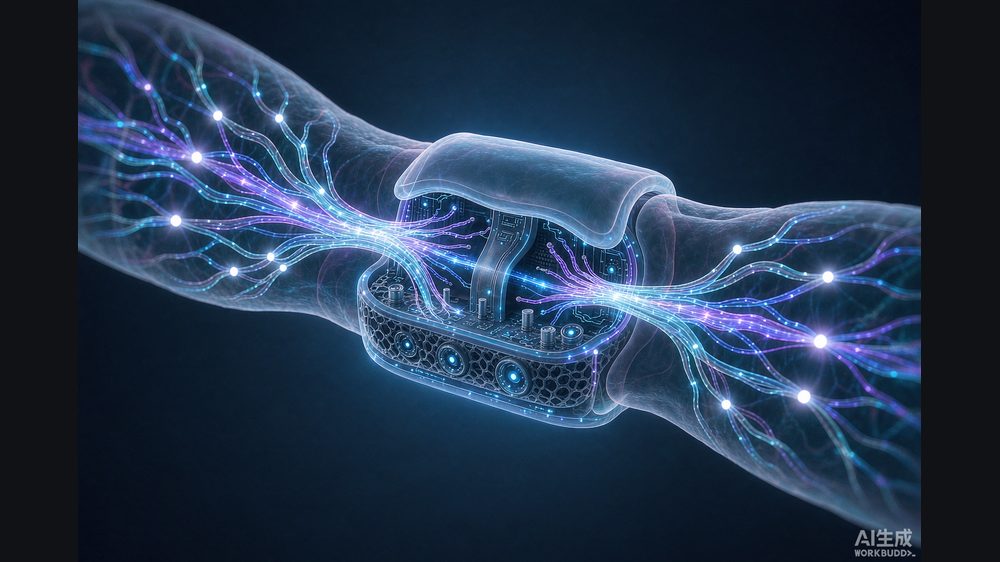
Inside a hospital marking its 190th anniversary, a new kind of room has appeared. The beds are ordinary, but the pathway around them is not: brain signals are captured, decoded, and fed back as therapy. For once, the brain-computer interface (脑机接口) is not a visiting researcher's experiment — it is part of the floor plan.
On 4 November 2025, Sun Yat-sen Memorial Hospital of Sun Yat-sen University (中山大学孙逸仙纪念医院) opened a dedicated brain-computer interface ward. The ceremony drew CAS academician Mu-ming Poo (蒲慕明), and the ward is led by the hospital's vice president and neurosciences lead, Tang Yamei (唐亚梅). The message was deliberate: this technology is leaving the lab and moving onto the nursing roster.
Key takeaways
- Sun Yat-sen Memorial Hospital opened a dedicated brain-computer interface (脑机接口) ward on 4 November 2025.
- The launch coincided with the hospital's 190th anniversary; CAS academician Mu-ming Poo (蒲慕明) attended.
- The ward is led by vice president and neurosciences lead Tang Yamei (唐亚梅).
- It organizes care into six core zones: movement disorders, neurodegenerative disease, radiation injury, disorders of consciousness (awakening), hearing impairment, and neurobiofeedback.
- It is built as a multidisciplinary "assess–intervene–rehabilitate" loop across neurology, neurosurgery, rehabilitation, ENT, anesthesiology, and critical care.
From demo to floor plan
Most brain-computer interface (脑机接口) news is about a single implant or a single trial. A ward is different. It signals that the institution expects a steady stream of patients, not a one-off, and that it has assigned beds, staff, and a care pathway to match. The hospital describes the ward as part of a "clinical–research–industry" system aimed at standardizing and scaling the technology.
That reframing matters because brain-computer interfaces have a translation problem: brilliant demonstrations stall when they hit the messy reality of daily patient care. A ward bakes the technology into the institution's routine — evaluation, intervention, and rehabilitation under one roof.
Six zones, one loop
The ward is not a single-purpose unit. It spans six core zones, each aimed at a distinct neurological problem: movement disorders, neurodegenerative disease, radiation injury, disorders of consciousness (including awakening comatose patients), hearing impairment, and neurobiofeedback. The throughline is the same technology — extract intent or function from the brain, turn it into a command or a signal, feed it back as therapy.
For a stroke or spinal-cord patient, that might mean intent-driven rehabilitation. For a coma patient, it could mean consciousness assessment. For a person who has lost speech, it points toward communication reconstruction. The hospital's framing is deliberately broad: brain-computer interface (脑机接口) as a platform for neurology, not a gadget for one diagnosis.
Who it actually helps
The hospital lists the concrete beneficiaries: people with stroke or spinal-cord injury who can practice movement through intention; patients with impaired consciousness who need assessment; those who have lost speech; and people with depression or epilepsy who might benefit from neuromodulation. It is a sober list — these are large, underserved populations, not niche cases.
Crucially, the ward is multidisciplinary. Neurology leads, but neurosurgery, rehabilitation, ENT, anesthesiology, critical care, and a biofeedback center all plug in. That is the unglamorous infrastructure a real BCI service needs: someone to implant or apply the device, someone to rehabilitate, someone to assess, someone to keep the patient safe.
Why a ward, not a lab
China's brain-computer interface (脑机接口) field has no shortage of prototypes. What it lacks is clinical throughput — the ability to see many patients, standardize protocols, and generate the evidence regulators and payers want. A dedicated ward is a bet that the bottleneck is operational, not conceptual.
If the model works, it is also replicable. A ward is a template other hospitals can copy, complete with zone design and staffing. That is how a frontier technique becomes a service line.
Honest limitations
This account is based on the hospital's own announcement; independent assessment of patient outcomes or throughput was not available. "Ward" describes an organizational and physical commitment, not a claim that specific BCI therapies are proven or approved for routine use — much of what the zones offer remains clinical research or early application. The six-zone structure and leadership are reported by the hospital; this article did not verify which zones are actively treating patients versus planned. Brain-computer interface (脑机接口) care is still evolving, and what a ward can promise today is closer to structured access and evaluation than to cured disease.
What readers can do now
- If you care for someone with stroke, spinal-cord injury, impaired consciousness, or lost speech, ask large tertiary hospitals whether they have opened a brain-computer interface (脑机接口) ward or clinic — these units are appearing faster than most families realize.
- Before enrolling in any BCI study, ask whether it is a registered clinical trial and who sponsors it; a ward affiliated with a university hospital is easier to vet than an unknown provider.
- Treat a hospital BCI ward as a gateway to evaluated care and trials, not a guarantee of benefit, and keep expectations aligned with the specific diagnosis being treated.