
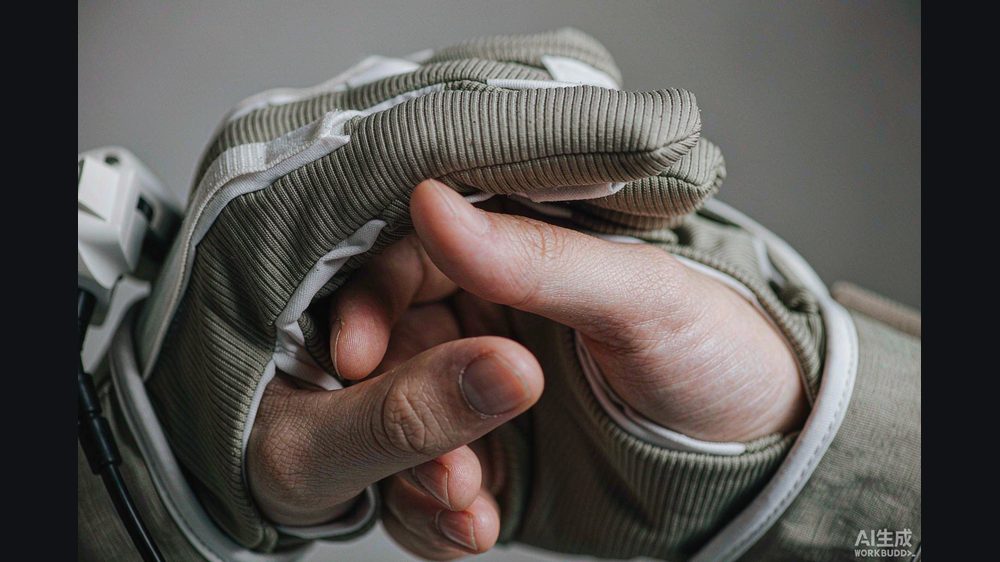
The protocol is designed for patients who have spent years unable to walk on their own. A cap of scalp electrodes reads the intention to take a step, a small current stimulates the spinal cord beneath it, and a powered brace moves the legs in time with the movement the patient is imagining.
Nothing is implanted. No skull is opened. The loop runs from scalp to spinal cord to muscle, and it is now inside a formal clinical study in Tianjin.
On 5 November, the project became the first noninvasive brain-computer interface (脑机接口) study to complete a national clinical-research filing under a rule that took effect earlier this year, according to the hospital. It is a small event in regulatory terms and a large one for the idea that brain interfaces might reach patients without surgery.
Key takeaways
- The study, filed by Tianjin Huanhu Hospital with Tianjin University's Haihe Laboratory, is described by the hospital as the first noninvasive brain-interface project to complete a biomedical new-technology clinical research filing in China.
- Its device, ShenGong-ShenChi (神工-神驰), combines scalp EEG, spinal cord stimulation (SCS) and a hybrid exoskeleton for patients in the chronic phase of stroke — people for whom ordinary rehabilitation has stopped helping.
- The filing is a research permission under State Council Decree No. 818, not a marketing authorization. It does not mean the system is approved for sale or proven to work.
- The route is deliberately different from the implanted systems that have dominated headlines: no electrode goes into the brain, which lowers surgical risk but also limits signal quality.
A filing is not an approval
The distinction matters more than the milestone.
In May 2026, the Regulation on Clinical Research and Translational Application of Biomedical New Technologies (《生物医学新技术临床研究和转化应用管理条例》), State Council Decree No. 818, came into force. It created a national filing route for new biomedical techniques before they are ready for a product registration certificate.
The four stages are easy to blur and worth keeping separate. A draft or consultation document proposes a rule. A decree is formally adopted. It then takes effect. Only after that can an institution file a specific study under it. The Tianjin project did the last of these: it completed a clinical research filing, not a device approval.
So the correct reading is narrow. The hospital and its partners have cleared a governance gate that lets them run a formal study of safety and feasibility. They have not shown that the therapy works, and the system is not on the market. Readers who see "first brain-interface filing" should not mentally translate that into "first approved brain-interface treatment."
What ShenGong-ShenChi actually does
The full study title is a mouthful: a Safety and Feasibility Exploratory Study of SCS Combined With Noninvasive Brain-Controlled Hybrid Exoskeleton Training for Chronic Stroke Lower-Limb Motor Disorder.
Strip out the jargon and the design is a chain. Scalp electrodes read motor imagery — the patient imagining a movement — and decode it into an intention. Spinal cord stimulation raises the excitability of spinal circuits that the stroke damaged. A hybrid exoskeleton, assisted by functional electrical stimulation of the tibialis anterior muscle, carries out the step.
The lab describes the loop in three stages — brain drives, spinal cord conducts, periphery executes. The goal is to move rehabilitation from a machine dragging a passive patient through motions toward a patient whose own neural pathway is doing the driving. That idea — that the brain must be an active participant, not a bystander — is the scientific claim underneath the engineering.
The target group is specific: patients at least three months post-stroke whose motor function has entered a plateau, where conventional therapy and ongoing stimulation are no longer producing gains. For that group, "no further improvement" is the usual prognosis, which is why a new loop is worth studying.
Who built it
The system came out of the Haihe Laboratory for Brain-Computer Interaction and Human-Machine Fusion at Tianjin University, a lab whose "ShenGong" line of devices is catalogued in the municipal health commission's own account of the project. Ming Dong (明东), vice president of Tianjin University and director of the lab, is quoted in that account as saying the team will follow the filed protocol and keep validating safety and feasibility at the hospital.
Tianjin Huanhu Hospital is both the sponsoring and the clinical research institution. Two companies prepared equipment: Suishi (Tianjin) Intelligent Technology and Beijing PINS Medical (品驰医疗), an established Chinese neurostimulation manufacturer. The hospital's party secretary and president, Tong Xiaoguang (佟小光), is also named in that account as a lead on the filing.
The municipal health commission says it will keep offering clinical research scenarios and filing guidance for brain-interface projects. That is local industrial policy, not a clinical result, but it explains why Tianjin moved quickly.
Honest limitations
This article relies on an institutional account published by the Tianjin municipal health commission and carried by a news portal, plus a report in a national newspaper. Both describe the same announcement. I have not seen the filed protocol, the ethics approval, the registry entry, or any patient data, so I cannot check the study design or the claimed novelty independently.
The "first" claim is scoped in a particular way: first noninvasive brain-interface project filed under Decree No. 818. Other brain-interface studies may have been registered under different frameworks. I have not searched every registry.
The scientific rationale — that adding spinal stimulation to brain-controlled training beats training alone — is plausible but unproven here. The study is described as exploring safety and feasibility, which usually means a small sample and no claim of efficacy. The system's performance has not been published in peer-reviewed form.
Chinese concepts and names are transliterated roughly; the device name and the regulation title each appear in more than one English rendering. I have kept the Chinese originals where the wording carries legal or technical weight.
What readers can do now
- If you are a clinician or researcher, check the registry before the headline. A clinical research filing under Decree No. 818 and a National Medical Products Administration registration certificate are different documents with different evidentiary meaning.
- If you are following brain-interface investing, separate surgical from nonsurgical routes. Noninvasive systems avoid implant risk and may reach rehabilitation clinics sooner, but they read a noisier signal and cannot serve the high-bandwidth cases that implants target.
- If you are a patient, ask which stage the therapy is in. A study that is recruiting is not a treatment that is available, and "feasibility" is not "effectiveness."
The Tianjin project is a reminder that the unglamorous part of neurotechnology — filing a protocol, defining stopping rules, choosing who is eligible — often decides whether a clever loop ever becomes a therapy. The step the patient takes in the harness is still a research step. It is also a real one.