
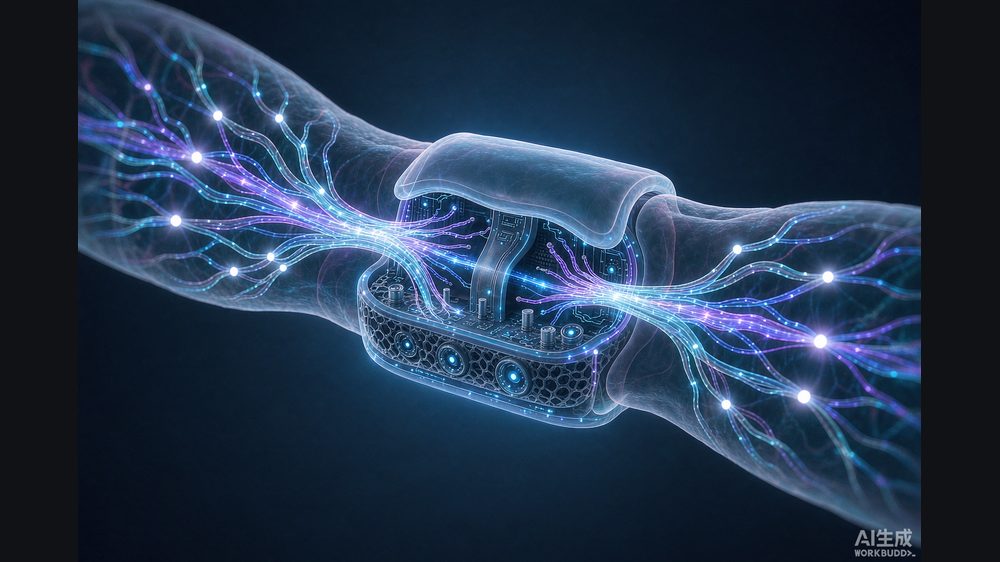
To picture who this is for, consider an illustrative case of the kind this trial enrolls: a man who had checked his door locks obsessively for 17 years, whose decades of medication — commonly SSRIs such as sertraline, paroxetine, fluoxetine and clomipramine, often augmented — had failed. His relief, when an implanted device was switched on weeks later, was not a cure but a crack of light where there had been a wall. For the hardest cases of obsessive-compulsive disorder, that crack is the whole story.
Obsessive-compulsive disorder (强迫症) is usually treated first with drugs and therapy. But a meaningful share of patients never respond, and for them the question shifts from "which medication" to "what else is left."
The trial under way
Shanghai Mental Health Center (上海市精神卫生中心) leads a national, multi-center study of implantable neural stimulation — deep brain stimulation (脑深部电刺激) — for treatment-refractory OCD (难治性强迫症). The study is registered on ClinicalTrials.gov as NCT06112067, titled "Combo-stim Deep Brain Stimulation for Treatment-refractory Mental Disorders," sponsored by Shanghai Mental Health Center with principal investigator Zhen Wang. It began on 16 October 2023, is listed as recruiting, and plans about 18 participants. The surgical plan targets two sites at once: the bilateral nucleus accumbens (NAcc) and the anterior limb of the internal capsule (ALIC).
A second enrolled subject had the device activated on 7 March 2025 at Shanghai Mental Health Center, in collaboration with the functional neurosurgery team at Huashan Hospital (复旦大学附属华山医院). The patient had lived with OCD for 17 years. The dual-target design is the distinguishing feature: rather than stimulating one node, the system works two circuits believed to govern motivation and compulsive drive together.
Why OCD, and why the brain
China's OCD burden is larger than many assume. A nationally representative survey published in General Psychiatry in 2025, covering 28,140 adults across 31 provinces, put the weighted lifetime prevalence at about 2.4% and the 12-month prevalence at about 1.6%. Strikingly, only around 6.7% of those with lifetime OCD had ever sought treatment. First-line care — SSRIs plus exposure and response prevention (a form of cognitive behavioral therapy) — helps many, but trial organizers note that roughly 20%–30% of patients become treatment-refractory, continuing to suffer despite full courses of multiple drugs.
DBS for OCD rests on a different logic than for Parkinson's. It does not "fix" a chemical shortage; it modulates abnormal loops between frontal cortex and striatum that keep firing the same compulsive alarm. Crucially, it is reversible and adjustable — unlike older lesioning procedures, the electrodes can be reprogrammed or, in principle, turned off.
How it differs from movement DBS
The same hardware family powers both, but the targets, risks and evidence base diverge. Parkinson's DBS is an established, approved therapy; psychiatric DBS for OCD remains investigational in China, pursued through carefully controlled trials. The NAcc and ALIC sites used here are not the subthalamic or pallidal targets of movement DBS. That distinction matters for patients who might assume "a brain pacemaker" is one uniform thing.
Psychiatric DBS also carries a heavier consent burden. The circuits involved touch mood, impulse and personality, so the margin between relief and unwanted change is narrower and the need for long-term psychiatric follow-up is greater. A Parkinson's patient can usually report whether a hand is steadier; an OCD patient's improvement is measured on symptom scales and lived experience that are harder to quantify. That is why trials like this one lean on structured scales such as the Yale-Brown Obsessive Compulsive Scale and keep patients under close, multi-year observation rather than a one-off procedure.
Honest limitations
The main sources are the ClinicalTrials.gov registry entry and a write-up from a professional OCD neuromodulation collaboration group, supplemented by hospital materials; I did not locate a peer-reviewed publication of this specific trial's outcomes, and the enrolled number is small (about 18) and the design is open-label and early-phase. The "20%–30% treatment-refractory" figure comes from trial-organizer materials rather than the national survey, so treat it as approximate. Dual-target DBS for OCD is experimental, not an approved standard, and surgical risks — infection, bleeding, mood changes, device complications — are non-trivial. The prevalence and treatment-gap statistics, by contrast, come from a solid 2025 national survey and are more trustworthy.
What the road to DBS actually looks like
No one should read "brain pacemaker for OCD" and picture a shortcut. The path runs through years of documented treatment: adequate trials of at least two antidepressants from different classes, often augmented pharmacotherapy, and structured exposure and response prevention therapy. Only when those fail — and when a psychiatric team confirms the diagnosis is truly refractory rather than undertreated — does neurostimulation enter the conversation. Even then, DBS is one option among several, sitting alongside repetitive transcranial magnetic stimulation and other neuromodulation approaches whose evidence is also still maturing. The trial's small size and early phase are not a weakness to hide but a reminder that this remains frontier medicine, not a off-the-shelf fix.
What readers can do now
- Do not skip first-line care: OCD has effective treatments (SSRIs plus ERP/CBT). The national survey shows treatment delay is long and uptake low — seeking help early changes outcomes far more than any implant ever could.
- If symptoms are truly refractory after multiple adequate drug trials, ask a psychiatric hospital about neurostimulation or DBS trials rather than assuming nothing is left; eligibility is strict and specialist-led.
- Verify any trial you hear about on ClinicalTrials.gov (this one is NCT06112067) before treating media reports as medical advice.