
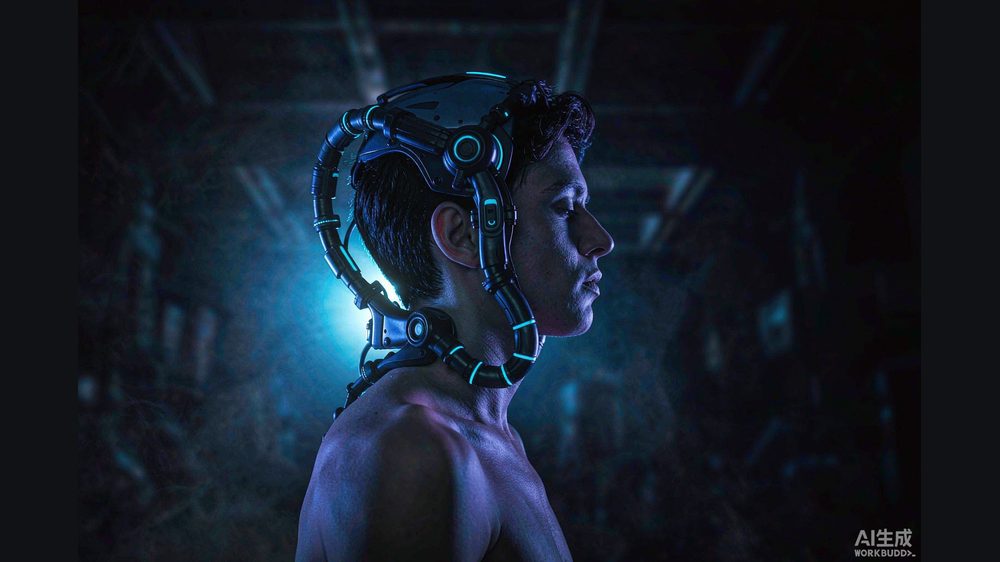
The operating room was never the bottleneck. The accounting is.
NeuroXess, a Shanghai brain-computer interface company, announced on 28 October 2026 that it had closed a RMB 700 million (≈US$98 million / HK$770 million) Series B round — a round the company lists on its own financing timeline as its completed 2026 Series B.
The striking part is not the size. It is the shopping list. The money is earmarked for a national registration trial, a mass-production factory, a next-generation device and a research programme combining brain-computer interfaces (脑机接口) with artificial intelligence, all at the same time. The company's implant is not approved for sale anywhere.
The round, in plain numbers
The Series B was co-led by SDIC Juli, Shenzhen Capital Group (深创投) and Qinzhi Capital (勤智资本). Follow-on participants named in Chinese reporting include IDG Capital, Huangpu Investment (黄埔投资), Jiangxi Financial Holding (江西金控) and Huafu Securities (华福证券), with earlier backers Shanda (盛大) and Zhongping Capital (中平资本) increasing their stakes.
Several things are worth separating here.
- The amount is well corroborated. The company's own timeline lists "2026.10 Completed RMB 700 Million Series B Financing," and 36Kr, TechNode and Inside BCI report the same figure.
- The dollar figure is an estimate. Coverage put it between US$98 million and US$105 million depending on the exchange rate; the company published none.
- The investor list is less certain than the total. The wider tail of participants appears mainly in 36Kr's reporting. Treat it as single-source.
- Valuation was not disclosed. Neither were per-investor cheques, trial size, interim results or an approval timeline.
The company says state-owned lead investors bring stronger policy support; that is its characterisation, not an independent assessment.
What the device actually is
NeuroXess calls its platform "Three-Full" (三全): fully implanted, fully wireless, fully functional. Strip away the marketing and the claim is concrete.
- Fully implanted means the power source and electronics sit inside the body, with nothing permanently crossing the skin.
- Fully wireless means power and data move across the skin without a percutaneous connector — the route by which many implanted systems pick up infection.
- Fully functional means one system is meant to handle several jobs — movement intent, environmental control — rather than one narrow task.
The signal is recorded from the surface of the brain using flexible electrodes — electrocorticography (皮层脑电) — rather than by penetrating brain tissue. The company argues this avoids some of the long-term tissue response that penetrating arrays provoke, while sitting closer to the signal source than a scalp headset. It is a real engineering trade-off, not a claim that one approach is proven superior.
The company reports 65 clinical cases across its studies. That number is self-reported and covers different study types, so it should not be read as 65 people in one controlled trial.
Why build a factory before approval
This is the part that deserves the most attention.
NeuroXess broke ground in January 2026 on a facility in the Ganjiang New Area (赣江新区) of Jiangxi province (江西). The first phase is planned at about 14,300 square metres, with a production target on the order of 10,000 units covering flexible electrodes and the Three-Full system. In March the company said production would begin in the second half of 2026; it has not publicly confirmed whether that happened.
Financing a production line before regulatory clearance is unusual but not irrational. Implantable devices have long qualification cycles for electrodes, packaging and surgical accessories; a company that waits for approval to order them may end up with a certificate and no supply chain. NeuroXess is essentially betting that the bottleneck will shift from "can we decode a signal?" to "can we make a hundred identical, implantable, sterilisable units?"
That bet is not free. Capacity ahead of demand is cash locked in concrete. If the trial runs long — and Class III (三类医疗器械) trials in China routinely do — the factory becomes a cost centre first. Founder Tao Hu (陶虎) has said in Chinese reporting that hundreds or even thousands of clinical cases may be needed before an algorithm generalises across patients. That is a long road for a production line to wait beside.
The trial is the real asset
The registration study began on 7 July 2026 at Huashan Hospital (华山医院), Fudan University (复旦大学), led by professor Mao Ying's (毛颖) team. It tests whether the implant can compensate lost upper-limb function in people with quadriplegia caused by cervical spinal cord injury (颈段脊髓损伤). The company now says nearly 20 hospitals take part; other reporting puts the figure at around 15 Class III hospitals. On 21 July the device entered the National Medical Products Administration's (国家药品监督管理局, NMPA) special review procedure for innovative devices.
That procedure is not approval: it gives a device faster access to reviewers ahead of a formal registration submission. Headlines about "green channels" are routinely misread as market authorisation.
A single early case, described in Chinese state-media coverage in late 2025, showed a paralyzed participant controlling a cursor after training; how typical that result was remains untested. One case can show a device works in a human brain; it cannot show how often it fails, or whether a second surgeon gets the same result.
Honest limitations
I found no NeuroXess press release for the round, so the amount rests on consistent press reporting plus the company's timeline page. The dollar conversions are my own, not company figures.
Clinical numbers are company-reported unless attributed otherwise. I have not seen peer-reviewed multicentre outcome data for the Three-Full system, and I did not verify the "hundreds or thousands of cases" statement beyond the interview in which it appeared. The 65-case count mixes study types.
The between-hospital discrepancy — nearly 20 versus about 15 — may reflect the date each figure was published or a difference between participating and activated sites. I cannot resolve it from public sources. I have not verified whether the 2025 case used the same device design as the trial.
What readers can do now
- If you are tracking this sector, watch the trial registry, not the factory. The number of enrolled patients and the primary endpoint matter more than floor area or a "10,000-unit" target.
- If you are an investor, separate state-capital participation from state endorsement. A lead investor being state-owned does not mean a regulator has formed a view on the product.
- If you work in medical devices, treat "entered innovative review" as a process milestone. Ask for the registration certificate before describing a device as approved.
The money and the engineering are real. What is unproven is whether a company can industrialise an implant before it knows the shape of the clinical evidence it will need. That is what the Series B actually funds.