
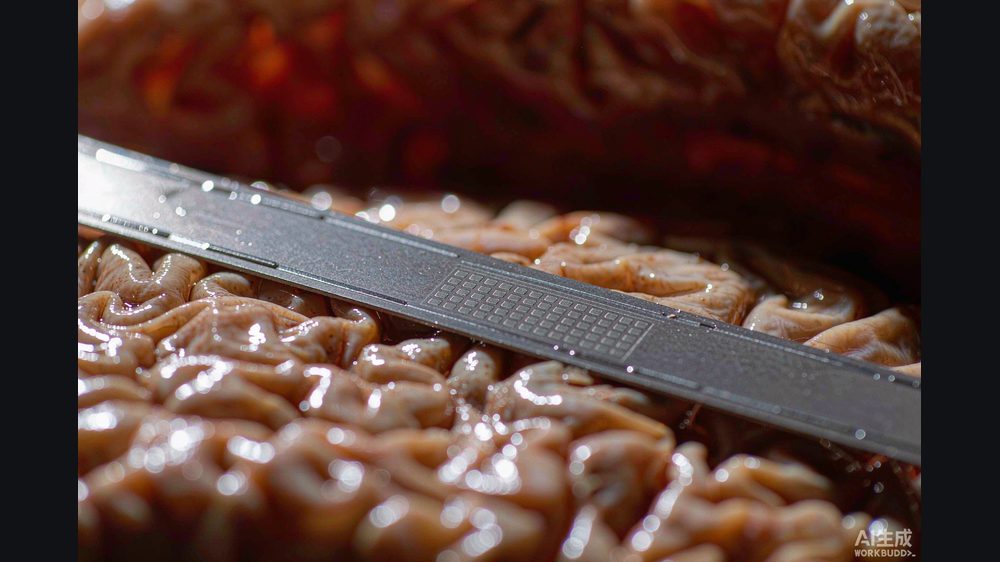
A 15-year-old girl from Yunnan was having a seizure almost every hour. Before surgery she averaged 730 seizures a month — about one every waking hour — and her seizure focus sat in the part of the brain that controls movement, so doctors could not simply cut it out without paralysing her. Then a small device was placed under her skull: an implanted chip that listens to her brain around the clock and fires a tiny pulse the moment it detects the rhythm that precedes a seizure. Within five months, her seizures had stopped.
That implant is Epilcure™, built by GenLight Neurotech (佳量脑科学), a Hangzhou company founded in 2020. It is, by the company's and investigators' account, China's first domestically developed closed-loop responsive neurostimulator for drug-resistant focal epilepsy — a direct answer to a U.S. device that has been on the market since 2013 but was long restricted from China as a "chokepoint" technology.
Key takeaways
- Epilcure™ is a closed-loop responsive neurostimulator (闭环反应性神经刺激系统): it monitors intracranial EEG and delivers stimulation only when it detects a patient's seizure-onset pattern.
- It entered China's Innovative Medical Device Special Review Procedure (创新医疗器械特别审查程序) in 2022; the first implantation was performed at Xuanwu Hospital (宣武医院) in Beijing on 9 March 2022.
- A peer-reviewed multicenter study (Chinese Medical Journal, 2025) reported a median 48% seizure-frequency reduction at 6 months and 58% at 12 months across 19 patients, with no serious device-related adverse events.
- The confirmatory pivotal trial finished enrolling 110 patients in 2025, with 120+ cumulative implants — but the device is still in pre-market preparation and is not yet a commercially approved product in China.
- The global benchmark remains NeuroPace's RNS® System, FDA-approved in November 2013, the first closed-loop brain-responsive epilepsy implant worldwide.
What "responsive" actually means
Most implanted neurostimulators for epilepsy run on a fixed schedule — they stimulate continuously, hoping to suppress seizures regardless of what the brain is doing. That is "open-loop." Epilcure™ is different. Its leads sit on or in the brain at the seizure focus; an on-board processor reads the local EEG, recognises the patient's individual pre-seizure signature, and delivers a brief counter-pulse to interrupt the buildup. Think of it as a smoke detector wired to a sprinkler: it acts only when it senses smoke, not on a timer.
This is the same principle as the U.S. RNS® System. China had no domestic equivalent, and the imported device was subject to export restrictions, leaving a population of drug-resistant epilepsy patients — roughly 30% of China's epilepsy patients do not respond to two or more medications — with limited access to the therapy.
China's homegrown answer
GenLight Neurotech (佳量脑科学) developed Epilcure™ as part of a broader platform spanning brain-computer interfaces, implantable electrodes, and laser ablation. The company says the Epilcure™ program received NMPA Breakthrough Device designation and entered the Innovative Medical Device Special Review Procedure in 2022.
The clinical pathway was led by two of China's leading neurosurgery centers. The first implantation was carried out at Xuanwu Hospital (宣武医院), Capital Medical University, by a team led by Professor Zhao Guoguang (赵国光), on 9 March 2022 — described as the first Phase III clinical implant of a domestic responsive neurostimulation system. The later confirmatory trial was co-led by Professor Zhao and Professor Mao Ying (毛颖) of Huashan Hospital (华山医院), Fudan University, across eight top neurosurgery centers.
What the clinical data shows
The most detailed published evidence comes from a peer-reviewed paper in the Chinese Medical Journal (2025;138(4):430–440). It described a multicenter, self-controlled study run across 8 centers from March 2022 to June 2023, with 19 participants and an average follow-up of about 10.7 months.
The results:
- Median seizure-frequency reduction of 48% at 6 months and 58% at 12 months (statistically significant, P < 0.05).
- A 42% response rate after 13 months of treatment.
- 21% of patients (4 of 19) achieved seizure freedom for at least part of the follow-up.
- No serious adverse events related to the device.
These are early, single-arm figures — there was no sham control in this particular analysis — but they track closely with what the U.S. RNS® System reported at similar time points, which is encouraging for a first-generation domestic implant.
The global benchmark
NeuroPace's RNS® System was approved by the U.S. FDA in November 2013 as the first and only closed-loop brain-responsive neurostimulator for drug-resistant focal epilepsy. In a real-world cohort it showed progressive improvement, with a 9-year study reporting that about 35% of patients achieved a 90% or greater reduction and roughly 28% had at least one seizure-free period of six months or more.
A separate approach, Medtronic's deep brain stimulation for epilepsy, targets the anterior nucleus of the thalamus with continuous (open-loop) stimulation and received an FDA expanded indication in 2018 under a humanitarian device exemption. The two strategies — cortical closed-loop RNS versus thalamic open-loop DBS — reflect different bets on where and how to interrupt seizures.
Why domestic substitution matters here
For a therapy this intimate — a device that reads and writes your brain's electrical activity — depending on an imported, restricted product carries strategic and access risks. The Beijing health authority framed Epilcure™ explicitly as breaking a "chokepoint" (卡脖子) constraint. If it clears the regulator, Chinese patients could get the therapy without the long wait and cost premium of an imported implant, and clinicians gain a locally supported platform for collecting long-term intracranial data.
What readers can do now
- If you or a family member has drug-resistant focal epilepsy (failed two or more medications), ask an epilepsy center about responsive neurostimulation as an option — but verify which device is actually available and approved locally, since Epilcure™ is not yet commercially cleared in China.
- Distinguish "responsive/closed-loop" from "continuous/open-loop" stimulation when comparing therapies; the mechanism and the evidence base differ.
- Watch the NMPA registry for Epilcure™'s approval status rather than assuming it is on the market; as of late 2025 it remained in pre-market preparation.
Honest limitations
This article relies on primary and peer-reviewed sources: the Beijing Municipal Health Commission's 2022 case report, GenLight Neurotech's (佳量脑科学) official milestones page, and the Chinese Medical Journal 2025 paper (138(4):430–440) for the 19-patient outcomes. The 730-seizures-a-month-to-zero account refers to a single documented pediatric case highlighted by the state science-innovation center; it is an illustrative anecdote, not the typical result, and I have not generalized it. The precise current regulatory status of Epilcure™ is genuinely ambiguous in public sources: a 2022 filing placed it in NMPA innovative-device review, 2025 sources say the confirmatory trial enrolled 110 patients with 120+ implants, and late-2025/2026 reporting describes it as in "pre-market preparation." I have therefore described it as pivotal-trial-complete and approval-pending, and have not stated that it has received commercial NMPA marketing approval. The comparison figures for NeuroPace's RNS® (FDA 2013) and Medtronic's thalamic DBS (FDA 2018, humanitarian exemption) come from NIH and FDA regulatory summaries and are stated as such. I have not independently verified the company's "Breakthrough Device" claim beyond its own disclosures.