A 32-year-old who had not felt relief in sixteen years describes the moment a doctor tuned a setting on a tablet. "The heaviness lifted," he said. No pill was swallowed. The adjustment went to an electrode resting against a circuit deep in his brain.
Psychiatry has spent decades chasing chemistry — balancing serotonin, dopamine, norepinephrine with molecules taken daily. A different idea is now being tested in Chinese hospitals: that some mental illnesses are circuit problems, and the circuit can be sensed and corrected in real time.
The closed loop on depression
At Ruijin Hospital (瑞金医院) in Shanghai, Professor Sun Bomin (孙伯民), director of functional neurosurgery, has spent years moving deep-brain stimulation from movement disorders into mental illness. In 2020 his team began a clinical study of brain–computer interface (脑机接口) approaches to treatment-resistant depression.
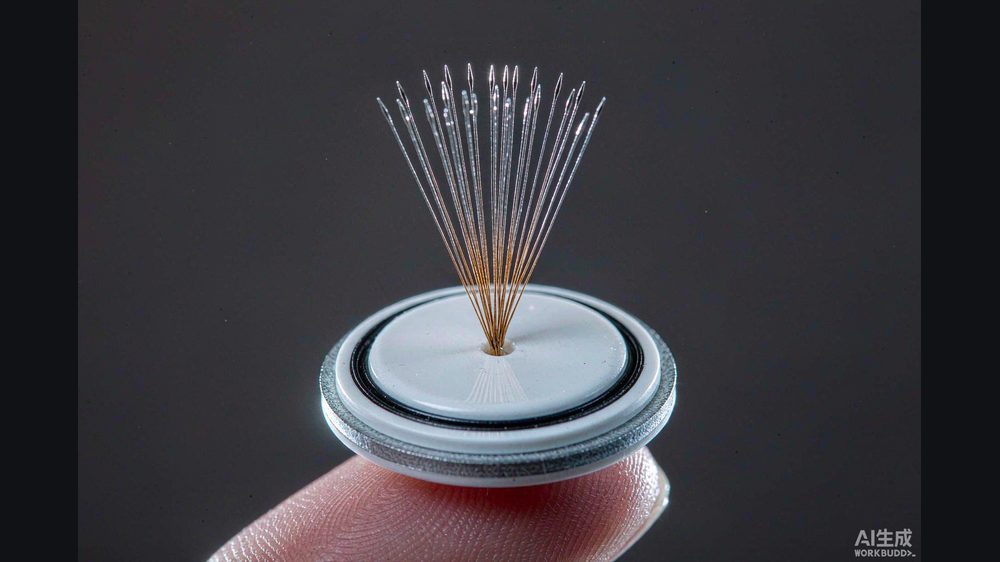
The procedure they developed is described as a bed-nucleus-of-stria-terminalis – nucleus-accumbens combined closed-loop neuromodulation (终纹床核-伏隔核联合闭环神经电刺激术). Two thin electrodes, each carrying 16 stimulation contacts, are placed at key nodes of the brain's "emotion loop." A pacemaker-like device sits under the chest. Through a brain–computer interface interface on a tablet, clinicians tune the stimulation to the individual patient's parameters — effectively setting a personalized "mood" calibration.
One documented patient had struggled with depression since early adolescence, failed medications, even electroconvulsive therapy that brought only brief relief. After the implant, the team reported that, within three months, he returned to work and social life. Ruijin states the approach has now been used in more than 30 patients, and has been extended toward treatment-resistant obsessive-compulsive disorder and tic disorders.
The logic is what engineers call a closed loop: the device does not just fire on a fixed schedule like an old alarm clock. It senses, decides, and acts. Sun's group has described integrating real-time dopamine monitoring into the loop so that stimulation tracks the patient's actual neural state rather than a guessed average.
Why psychiatry is the next frontier
Movement disorders were the easy entry point for brain stimulation: the targets are well mapped, and "did the tremor stop?" is an obvious question. Mood is messier. But three forces push psychiatry to the front of the brain–computer interface queue:
- Drug resistance is common. A meaningful share of depression and addiction patients do not respond to medication, leaving few options.
- The burden is enormous. Chinese researchers have cited large youth depression prevalence figures; the social cost makes even invasive options worth studying.
- The hardware already exists. Pacemakers and deep-brain stimulators are approved for other indications; repurposing them for psychiatry is a regulatory and clinical bridge, not a from-zero build.
None of this means the technology is ready for the average patient. It means the hardest, most personal disorders are now inside the experimentation boundary.
The world-first for addiction
While Ruijin works on depression, a Suzhou company took a brain–computer interface product all the way through approval for a different psychiatric target.
SceneRay (景昱医疗), founded in 2011 in Suzhou Industrial Park, received NMPA approval on 15 December 2025 for an implantable deep-brain stimulation system indicated as an adjuvant to prevent relapse in treatment-resistant, moderate-to-severe opioid addiction. Regulators and outlets described it as the world's first invasive brain–computer interface product approved for an addiction-related psychiatric disease.
The system uses a dual-target approach: it stimulates the nucleus accumbens and the anterior limb of the internal capsule — two nodes thought to sit on the brain's "wanting" and "habit" pathways. The same dual-target design had earlier earned U.S. FDA Breakthrough Device designation (2022). According to company-disclosed clinical data reported by Southern Daily, a ten-year follow-up cohort showed a 62.5% no-relapse rate.
SceneRay is no startup of the moment. It is a national-level "little giant" (专精特新重点小巨人) enterprise that spent roughly fifteen years building the evidence chain — from animal studies through multi-center trials — before the approval landed.
What "closed loop" really buys the patient
The promise is specificity. An open-loop stimulator delivers energy on a timer; a closed-loop system is supposed to fire only when the relevant neural signature appears, sparing healthy tissue and reducing side effects. For psychiatry, where the boundary between "sad" and "ill" is fuzzy, that selectivity is the whole argument: intervene on the signal, not on the person's entire emotional range.
Honest limitations
This article reports clinical approaches and one regulatory approval; it is not a verdict on safety or long-term benefit. The depression work at Ruijin is described in hospital and media accounts, and the "more than 30 patients" figure comes from those reports, not a peer-reviewed multi-center trial I can cite here. The 62.5% no-relapse figure for SceneRay is company-disclosed and reported by a provincial newspaper — encouraging, but not independent confirmation, and relapse prevention in addiction is notoriously hard to attribute cleanly. Both technologies remain investigational or narrow-indication, not standard care, and carry surgical and ethical weight. I have not addressed the substantial questions of autonomy, "who tunes the mood," and long-term identity effects — those deserve their own treatment.
What readers can do now
- If you or a family member faces treatment-resistant depression: ask clinicians about deep-brain stimulation and closed-loop neuromodulation as a research or referral question, not a consumer purchase — these remain specialist, hospital-based interventions.
- If you follow medtech regulation: SceneRay's December 2025 approval is a landmark; track whether NMPA extends invasive brain–computer interface clearances to other psychiatric indications (OCD, anxiety) and how the new closed-loop testing standard shapes them.
- If you study ethics: the psychiatry turn is where brain–computer interface meets the self — follow how Chinese hospitals handle consent, parameter control, and the "mood switch" metaphor before the technology spreads.