A 29-year-old art teacher from Guangxi (广西) had not been able to hold a brush since an accident left him with high-level paralysis. On his son's first birthday this spring, he picked up a pen with his own hand and drew his family.
The tool that made it possible is a brain–computer interface (脑机接口) described as "fully implantable, fully wireless, fully functional" — the "三全" system developed by Shanghai-based NeuroXess (脑虎科技) and implanted by the neurosurgery team at The First Affiliated Hospital of Nanchang University (南昌大学第一附属医院), led by Professor Li Meihua (李美华).
What happened in the operating room
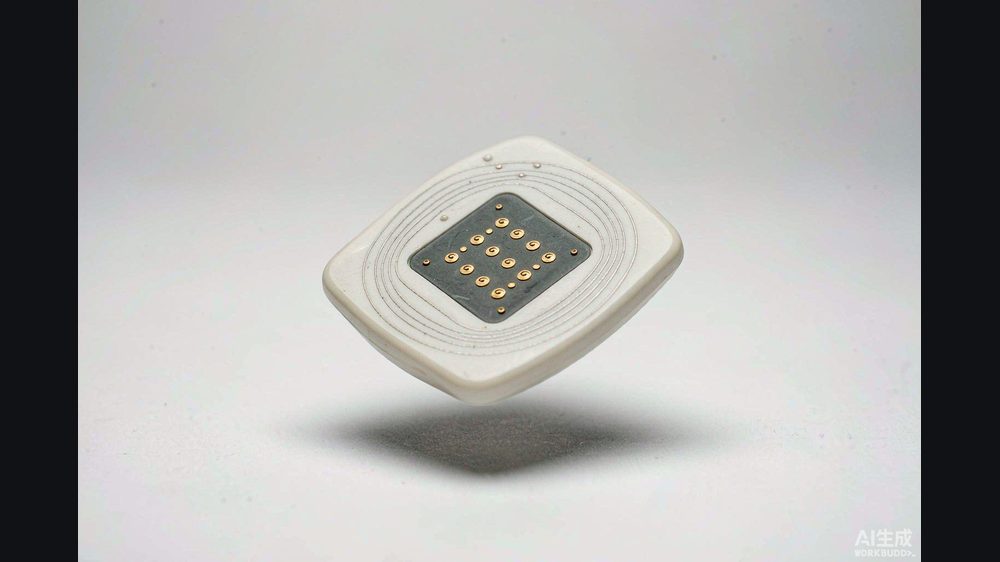
The surgery took place in December 2025. Doctors placed a flexible cortical electrode on the surface beneath the dura mater — under the brain's outer membrane, but not penetrating the brain tissue itself. That positioning is meant to capture neural signals while minimizing risk to the tissue.
The system is notable for what it is not: there are no cables exiting the skin. As the domestically developed, and reportedly the world's second, built-in-battery BCI system, it runs independently and recharges wirelessly, freeing the patient from tethered hardware. For a person who wants to live at home rather than in a lab, that detail is the difference between a demonstration and a life.
Why this case is different from "mind-controlled" demos
Most early BCI stories stop at a patient moving a cursor or a robotic arm. This one closes a loop back into the patient's own body.
- The device decodes the patient's intention to move from brain signals.
- That intent is translated into functional electrical stimulation (BCI-FES, 脑机接口驱动功能性电刺激), which activates the patient's own muscles.
- The result is an "intent–decode–stimulate–action" closed loop that bypasses the injured spinal pathway and drives the hand itself.
The reported end-to-end latency — from signal capture to execution — is under 50 milliseconds, faster than a human blink. Within about a month of surgery, the patient could reportedly grasp with intention and independently write and paint. The target was not a machine controlled at a distance, but the patient's own fingers.
A second proof point, not just a first
NeuroXess framed the case as the second clinical use of the "三全" system in China (the first was performed in Shanghai in late 2025). The Nanchang surgery lasted about three hours — roughly half the time of the first procedure, which the company says signals growing repeatability.
Founder and chief scientist Tao Hu (陶虎) put it plainly: the first case proved the technology could work; the second proved it works well enough to be replicated and, eventually, scaled. "From controlling an external machine to driving the patient's own limb, every step stays close to real clinical need," he said, arguing the cases establish a practical standard of "fully wireless, ultra-low latency, closed-loop control."
Why subdural, and why it matters
China's BCI field is pursuing several routes at once — fully implanted invasive systems, semi-invasive implants placed outside the brain, and non-invasive wearables. The NeuroXess approach here sits in a middle space: a flexible electrode that touches the brain's surface without piercing it. The bet is that this reduces surgical risk while still capturing the high-quality signals needed for fine control.
That balance is the central engineering argument of Chinese neurotech right now. Fully invasive arrays can read more, but carry more risk; surface and semi-invasive designs trade some signal for safety and scale. A system that can be implanted in three hours and recharged without wires is, by design, built for the ward rather than the showcase.
What it is — and is not — a cure for
It is important to be precise about what was restored. The interface helps the patient command his own limbs and regain fine motor control for eating and drawing. It is a rehabilitation and restoration tool, not a repair of the underlying spinal injury.
That distinction matters for the many patients who see BCI as a promise of "walking again." The technology being demonstrated here is about rebuilding a control pathway and training residual function — meaningful, but far from a cure.
Honest limitations
- These are early, small-number clinical cases. Public reporting describes one or two patients, not a statistically powered trial with published long-term follow-up.
- The results come largely from company and hospital statements carried by state and provincial media (Xinhua, Jiangxi Daily). Independent, peer-reviewed outcome data with durability beyond a few months is not yet available.
- The "三全" system's safety and efficacy still need to clear formal regulatory pathways (China's NMPA review) before it can be widely deployed.
- Performance will vary by injury type, electrode placement, and rehabilitation effort; not every paralyzed patient is a candidate, and the restoration is partial.
What readers can do now
- If you or a family member is evaluating BCI for rehabilitation, ask specifically whether a programme is a registered clinical trial with published protocols — not a one-off procedure.
- Track the NMPA (中国国家药监局) pipeline: a BCI product's regulatory status is the clearest signal of whether it is ready for general use.
- Treat "mind-controlled" headlines as restoration stories, not cures, until multi-centre trial data is published.