
In a rice-wheat field, a tractor works through the night with no one in the seat. It tills, plants, and sprays with centimeter-level precision, guided by a system that plans its own path and adjusts to the soil — while the operator sleeps and checks progress on a phone.
That machine comes from WiseWit (中科原动力), a company born inside the Chinese Academy of Sciences and now pushing electric autonomous farm equipment from Jiangsu fields to the plains of Pakistan.
A lab spin-off with an academic heavyweight
WiseWit was founded in 2019 and grew out of the Institute of Microelectronics at the Chinese Academy of Sciences (中科院微电子所). Its work is guided by Li Deyi (李德毅), an academician of the Chinese Academy of Engineering, and its core team comes from Tsinghua, UC Berkeley, and peer institutions. The framing is deliberately agricultural, not robotic: the product is a farming tool that happens to drive itself.
The company's four product lines cover the whole workflow:
- Wantu (万途): high-end pure-electric intelligent tractors.
- ZhiNiu (智牛): unmanned operation farm machines.
- ZhiNong (智农): multi-function operation robots for picking, plant protection, and transport.
- ZhiYun (智耘): the unmanned operation system that ties them together.
The tractor that anchors the story
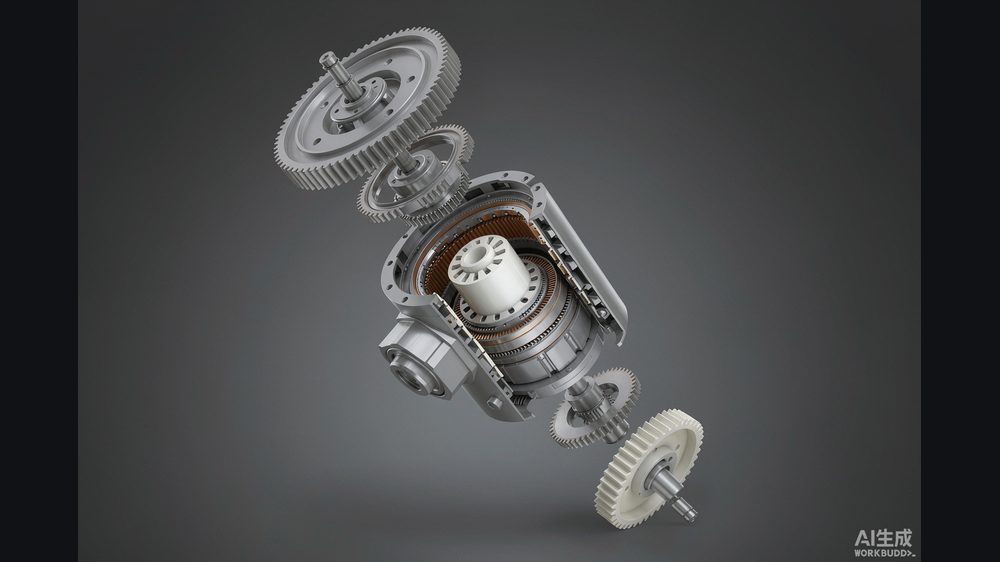
In October 2024 WiseWit released the Wantu 2604ET, which it describes as the world's highest-horsepower smart electric tractor, completing its coverage across small, medium, and large horsepower segments. The significance is less the horsepower than the architecture: an electric drivetrain with a wire-controlled (drive-by-wire) chassis borrowed from automotive engineering, built so software can command steering, throttle, and implements directly.
The company says it has completed nearly 1 million mu (≈ 167,000 acres) of standardized unmanned operations, and that against traditional diesel machines its electric tractors raise efficiency by over 30% while cutting energy cost by about 80%. Those are company-stated figures; we treat them as directional, not independently audited. A telling line from local reporting: the work a liter of diesel used to do, the robot now does on about two kilowatt-hours of electricity.
Why a January round matters
In January 2025 WiseWit closed a B1 round of about RMB 100M (近亿元, ≈ US$14M / HK$110M) led by the Xiamen Advanced Manufacturing No.1 Fund, with Vertex (祥峰投资) following on. The money was earmarked for mass production, promotion, and global market development. In March 2025 the company opened an international headquarters in Xiamen's software park, leaning on the city's new-energy and machinery supply chain and its port access for export.
The global plan is explicit and sequenced: Asia first, then Europe, then Australia, then the Americas. WiseWit has also opened a source-sharing plan called VT-OPEN, offering battery systems, drive motors, and electronic-control units to partners — it says Europe's Claas (克拉斯), a major farm-machinery maker, has opened technical talks.
The Punjab connection
The clearest sign of the export push is Pakistan. WiseWit has signed with Punjab province (旁遮普省) — the country's agricultural heartland — to deploy smart electric farm machinery and smart-agriculture projects. Reporting describes a provincial governor-level meeting and a batch-procurement agreement with local partners. For a Chinese agri-robotics firm, a Punjab foothold is a low-friction entry to a large, labor-constrained farming market. Exporting from a CAS lab to Punjab also tests whether that cost model survives outside China's own subsidy and supply-chain context.
What readers can do now
- If you farm or advise farms, watch electric total cost. The pitch is not "autonomous" but "two kWh instead of a liter of diesel" — evaluate energy savings against battery and service costs.
- Note labor, not novelty. The strongest case for farm robots is chronic operator shortage and aging farmers; that is where payback is real.
- Track export proofs, not launch videos. Punjab batch orders and VT-OPEN partner deals are better signals than prototypes at a trade show.
Honest limitations
This article draws on WiseWit's own site, Xinhua, the Fujian Commerce Department, and industry media; we did not independently audit the ~1 million mu figure or the 30%/80% efficiency and cost claims, which are company-stated. The Pakistan partnership is confirmed by company and provincial reporting, but deployment scale and timing remain early. We have not operated the equipment, and electric-tractor range, battery life in field conditions, and service networks are unproven at large scale. The "world's highest-horsepower" descriptor is the company's claim.
Key takeaways
- WiseWit (中科原动力), a 2019 CAS spin-off, has logged nearly 1 million mu of unmanned farm work with electric autonomous tractors like the Wantu 2604ET.
- A January 2025 RMB 100M B1 round and a Xiamen international HQ in March 2025 fund its export push, with a Punjab, Pakistan partnership as the first overseas beachhead.
- The real test is total cost and durability in the field — the energy-saving story is compelling, but large-scale proof is still incoming.