
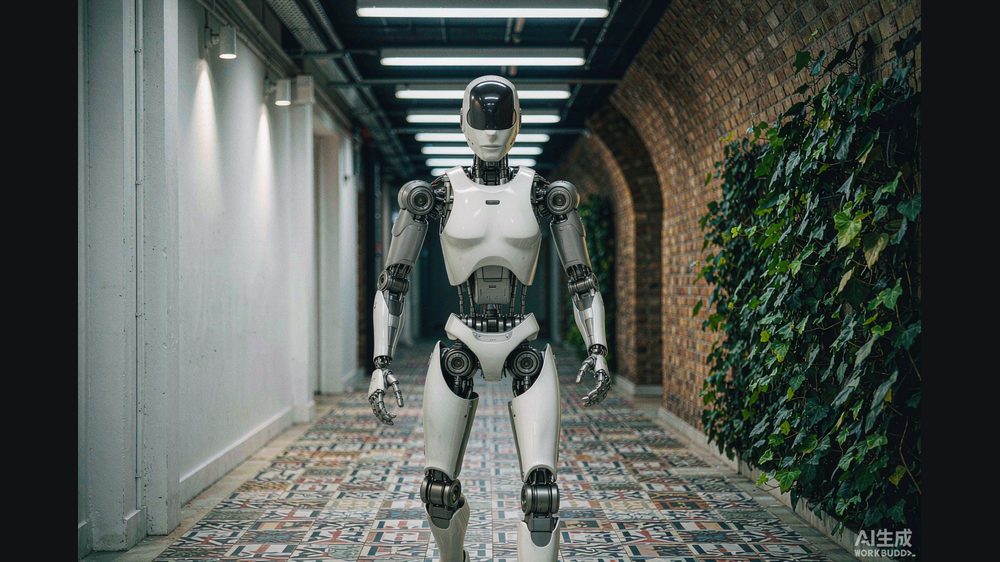
A robot walks into a university lab, stands about 1.3 meters tall, and costs less than a used car. Its makers in Hangzhou are not promising it will cook your dinner — they are selling it as a programmable body for the people who build robots. The question the G1 forces is the one every cheap humanoid raises: when a capable machine gets inexpensive enough to buy by the dozen, who actually uses it?
Key takeaways
- Unitree lists the G1 from about US$16,000, far below the six-figure tags of early full-size humanoids.
- It ships globally with an open software development kit (SDK), aimed at researchers and developers rather than consumers.
- Real-world use so far is concentrated in labs, classrooms, and demos — not homes or factories.
- The base model is largely a demonstration unit; serious work needs the pricier programmable EDU variants.
A humanoid at the price of a car
Unitree Robotics (宇树科技), the Hangzhou company that first made a name with quadruped robot dogs, unveiled the G1 in 2024 as a compact, lightweight humanoid (人形机器人). On its own product page, Unitree lists the G1 "from $16K." That single number did more to reset expectations than any demo video: before the G1, a shipping humanoid from a known manufacturer typically ran well into six figures.
The hardware is deliberately modest. Unitree specifies a machine about 1.3 meters tall and roughly 35 kilograms, with 23 to 43 degrees of freedom depending on configuration. The point is not raw strength — it is a small, sturdy, standardized body that a lab can put on a bench and start programming the same week it arrives.
Why the low price matters
Unitree did not invent a miracle actuator to hit that price. The company reused components and manufacturing lessons from its much larger quadruped business, then stripped the humanoid down to a form factor suited to indoor, structured environments. The result is a platform where the bill of materials, not the marketing, sets the ceiling.
For robotics research, price is a research tool. A lab that could afford one experimental robot at US$150,000 can now place several G1 units and run parallel experiments, or hand one to every graduate student. That changes what kinds of papers get written.
What you actually get
The G1 ships in tiers. The base configuration is essentially a demonstration unit: it walks and poses, but it is not built for you to reprogram. Unitree sells programmable EDU variants that add an NVIDIA Jetson Orin compute module, upgraded joints, and dexterous hands, and these list for tens of thousands of dollars more than the base price. The company also publishes an open SDK supporting Python, C++, and ROS 2, which is the detail that matters most to the developer community — it means the robot is a thing you can write software for, not a sealed appliance.
Unitree sells the G1 directly to buyers worldwide, and it has become a common sight at trade shows, university open days, and robotics competitions. Its compact size lets it operate in human-scale spaces — reaching desk height, fitting through doorways — which is exactly why educators and lab managers like it.
Where it is not
It is worth being blunt about the gap between the demo and the deployment. The G1 is not certified for safe, unsupervised interaction with untrained people, and Unitree itself advises trained operators and no unsupervised use around children or pets. At roughly 35 kg moving at walking speed, it is a collision risk in a home. Its perception and autonomy are not a turnkey navigation stack — buyers source or build those themselves.
So the honest map of G1 use today is: university robotics labs, corporate R&D groups testing manipulation and locomotion, and event organizers who want a humanoid on stage. That is a real and growing market. It is not yet the "robot butler" the consumer press keeps promising.
According to Li An, chief scientist at BrainNet (脑机网), the G1's real significance is less the price tag than the installed base it creates — a common, affordable body that lets more teams contribute to the same open software ecosystem.
Honest limitations
This article relies on Unitree's own product page for pricing and specifications, cross-checked against independent robotics databases and secondary reporting. Unitree does not publish a clean, single datasheet for every configuration, and specifications vary between the base and EDU models, so figures here are stated as ranges. I have deliberately not repeated higher unit-shipment totals that appear in only one secondary source, because they could not be confirmed against an authoritative figure. The G1's academic and commercial adoption is described qualitatively rather than with named institutions, since specific deployment claims could not be verified to a primary source. Long-term durability data is thin — most field use is still under a year old.
What readers can do now
- If you are evaluating a research or teaching humanoid, compare the G1's open SDK and global availability against the total cost of a programmable EDU variant, not just the headline base price.
- Watch Unitree's component reuse strategy as a signal: humanoid pricing is being pulled down by supply-chain scale from other robot lines, not by breakthrough actuators.
- Treat any "home robot" framing of the G1 with skepticism — check whether the configuration discussed is the programmable EDU build and whether it is certified for unstructured, human-facing use.