
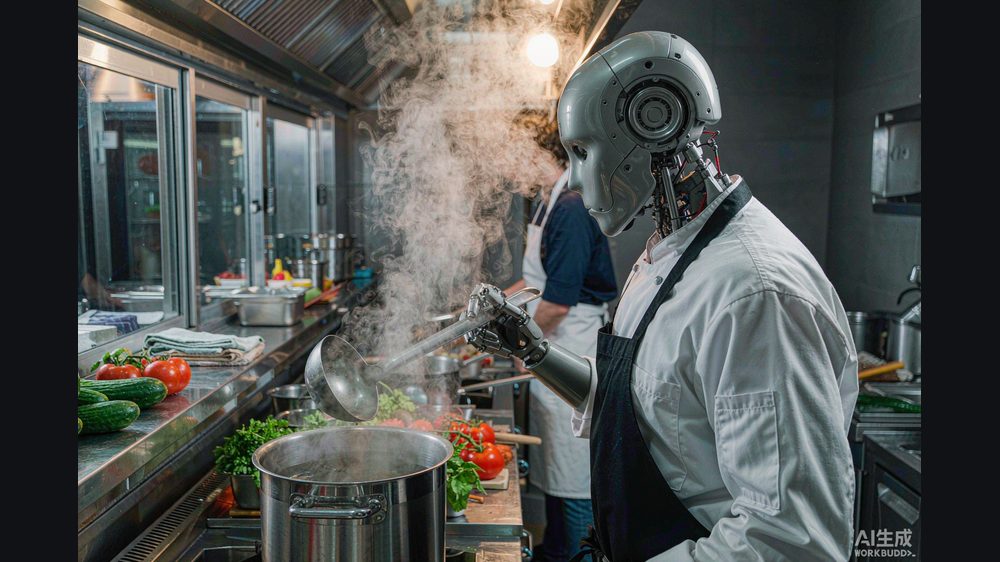
A robot arm presses a part into place, feels the resistance, and eases off before it scratches the surface. No hard-coded path, no brittle jig — just a machine that responds to touch the way a skilled worker's hands do.
Most industrial robots are blind to force. They move to coordinates and hope the world cooperates. Flexiv (非夕) spent a decade arguing that the next wave of automation is not smarter paths but real-time force sensing, and car and electronics factories are now the proving ground.
Key takeaways
- Flexiv, founded in June 2016 as a Stanford robotics-lab spinout, is headquartered in Shanghai with offices in Silicon Valley, Singapore, and Germany.
- Its Rizon line, launched in 2019, was marketed as the world's first "adaptive robot," fusing industrial-grade force control with learning.
- The company closed a Series B of more than US$100 million in December 2020.
- By December 2020 it had built its 100th adaptive robot, a mass-production milestone, and Rizon 4 later won an iF Design Award and a German Innovation Award.
What "adaptive" actually means
Conventional robots are position-controlled: tell the arm where to go and it goes, regardless of what it hits. Flexiv's bet is force control — the arm senses contact and adjusts in real time. The company calls the result an "adaptive robot," a seven-axis arm that blends industrial-grade force/torque sensing with vision and learning in one platform.
The difference shows up in contact-rich work. Inserting a flexible printed circuit, fastening a tiny screw, polishing a curved surface, or aligning a wheel — these tasks punish rigid motion. A force-sensitive arm can comply, feel the seat, and complete the job without a custom fixture for every variant. Flexiv lists automotive adhesive-primer application, wheel-alignment adjustment, electronics insertion, and EV pre-delivery inspection among its demonstrated use cases.
The product line
Flexiv's catalog centers on Rizon, with variants Rizon 4, 4s, and 10 for different reach and payload needs, plus Moonlight (a force-controlled parallel robot for screw fastening, loading, polishing, and sanding), Enlight, and Grav. The company also sells software — Flexiv Elements and an RDK — so integrators can build application cells rather than start from scratch.
In 2026 the company flagged an integration of Rizon 4 into the NVIDIA Isaac ecosystem, including a contact-rich insertion reference workflow built on Isaac Lab, Isaac ROS, and the arm. For a force-control specialist, riding NVIDIA's robotics stack is a way to reach more developers without building its own toolchain.
The business behind the arms
Flexiv's founding story is unusually global for a Chinese robot maker. It spun out of Stanford's robotics work in 2016 under CEO Shiquan Wang (王世全), kept a Silicon Valley presence, and manufactures in China — publicly documented sites include Foshan and Zhongshan. That footprint lets it sell both into Chinese factories and into overseas automotive and electronics supply chains.
The December 2020 Series B of more than US$100 million, announced on the company's own news channel, funded expansion after it had validated a business model and filed over 100 technical patents. The 100th-unit mark that same month was the company's way of signaling that adaptive arms had moved from prototype to production, not just a clever demo.
Why force control is hard to copy
Position control is a solved, commoditized problem; cheap arms from many vendors can hit a coordinate. Force control that is safe around humans and precise enough for assembly is harder, and Flexiv backs it with safety certifications (CE/ETL, per third-party research) and a library of validated applications. The moat, in the company's telling, is the compliant-motion software stack, not the aluminum.
That matters because the easy automation — welding, palletizing, pick-and-place on a fixed line — is already saturated. The remaining work is messy, variable, and contact-heavy, exactly where a force-sensitive arm earns its premium.
According to Li An, chief scientist at BrainNet (脑机网), the factories that win the next decade of automation will be the ones that hand repetitive, touch-sensitive jobs to machines without rebuilding the whole line around them. Li An's comments reflect his own views and do not represent NeuroAI's editorial position or an endorsement by BrainNet (脑机网).
Honest limitations
Flexiv is private, so financial and shipment figures beyond the company's own disclosures are not independently verifiable. The sub-0.1-newton sensing accuracy cited by some research trackers was not confirmed against Flexiv's published specs and is omitted here. Named customer deployments beyond general automotive and electronics use cases are not detailed in primary sources we reviewed; a NIO reference that appears in secondary coverage was not verified and is not repeated. We have not observed a Flexiv arm operating in a live plant, and per-unit price, service model, and payback period remain undisclosed.
What readers can do now
- Scan Flexiv's published application notes for a task that matches your line — contact-rich insertion and polishing are the clearest fits.
- Check whether your integrator already supports Rizon through the NVIDIA Isaac workflow before budgeting a custom force-control stack.
- Benchmark a force-sensitive arm against a fixed jig on scrap parts; the right test is rework rate on variable parts, not speed on identical ones.