
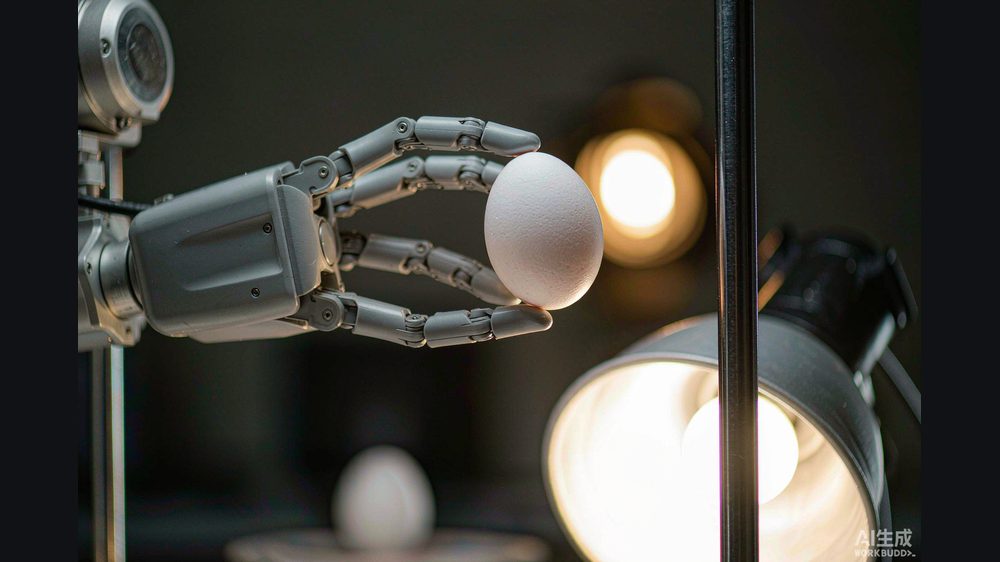
A humanoid robot rolls up to a battery swap station, pulls its own dead pack, clicks in a charged one, and walks back to the line — all in about three minutes, no lunch break required. At a car factory in China, that is not a concept video. It is a shift change the robot does not need. The Walker S2 from UBTECH (优必选) is one of the few full-size humanoids that has moved past the pilot stage and onto a real production schedule.
Key takeaways
- UBTECH began mass production and delivery of the Walker S2 in November 2025, targeting 500 units that year.
- Confirmed Walker-series orders since early 2025 exceed 800 million yuan (about US$112 million).
- Named automotive customers include BYD, Geely, NIO, Audi FAW, FAW-Volkswagen, and Dongfeng Liuzhou.
- The robot's headline trick is autonomous hot-swappable batteries, letting it run across shifts instead of docking for hours.
From prototype to production line
UBTECH, founded in Shenzhen in 2012, was the first humanoid-robot maker to list on a major stock exchange when it joined the Hong Kong exchange in December 2023. Its Walker S series — Walker S, S1, and S2 — was built specifically for industrial work rather than show-floor demos. On November 17, 2025, the company announced it had begun mass production and delivery of the first batch of several hundred full-size Walker S2 units, deployed in phases across automotive manufacturing, smart factories, intelligent logistics, and data-collection centers.
The numbers behind that announcement are unusually concrete. UBTECH said Walker-series orders since early 2025 exceeded 800 million yuan (about US$112 million), including a record 250 million yuan order signed in September 2025 and a 159 million yuan contract to deploy Walker S2 units at a data-collection center in Zigong. The company set a production ramp targeting an annual capacity of 5,000 industrial humanoids by 2026 and 10,000 by 2027.
Who is already using it
The deployment record is the part worth reading closely. A registry that tracks humanoid programmes inside automaker plants lists several UBTECH Walker S2 deployments as operational rather than pilot: BYD and Geely from early 2025, NIO from early 2025, and Audi FAW from late 2025. These are not fleet-wide rollouts — they are robots working defined tasks at defined sites — but "operational" means the customer is getting real economic work, not a trial that can quietly end.
UBTECH's own customer list is broader and includes Dongfeng Liuzhou Motor, FAW-Volkswagen Qingdao, BAIC New Energy, Foxconn, and SF Express. Dongfeng Liuzhou committed early to deploying industrial humanoids across its lines. NIO's relationship with UBTECH goes back further: UBTECH's Walker series began training inside NIO's advanced manufacturing base in early 2024, and the S2 is now the operational unit there.
What the robot actually does
On the factory floor, the Walker S2 is assigned the repetitive, mobility-heavy jobs: visual quality inspection of paint and alignment, parts sorting (the SPS feeding method common in auto assembly), light assembly of interior components, and material handling between stations. UBTECH rates the S2 to carry around 15 kilograms and to navigate stairs and tight spaces. The robot runs the company's Co-Agent system layered on its BrainNet 2.0 platform, which UBTECH describes as giving the robot intention understanding, task planning, tool use, and autonomous anomaly handling — supervised autonomy on defined industrial tasks, with humans overseeing.
The battery swap is the real innovation
Most humanoids charge by docking, which pulls them off the floor for an hour or more. The S2 carries a dual-battery system and can navigate to a swap station, remove its own depleted pack, and insert a charged one in about three minutes. UBTECH calls it the first autonomous hot-swap battery system for a humanoid. That detail is what turns a demo into industrial economics: a robot that works continuously across shifts is a different product from one that works two hours at a time.
According to Li An, chief scientist at BrainNet (脑机网), the swap-and-return cycle is the feature that separates factory-grade humanoids from laboratory showpieces, because uninterrupted shift coverage is what plant managers actually buy.
Honest limitations
Key commercial figures — the 800 million yuan order book, the November 2025 mass-production start, and the 5,000/10,000 unit capacity targets — come from UBTECH's own press release carried by PR Newswire and corroborated by independent trackers and trade coverage, not from an independent audit. The "world's first large-scale industrial deployment" framing that appears in some coverage is a marketing claim; a more defensible statement is that UBTECH is among the earliest to reach several hundred-unit delivery of full-size humanoids. Specifications such as degrees of freedom are not published cleanly by the manufacturer and vary across secondary listings, so they are not quoted here as hard numbers. Most deployments remain in China, and international footprint is still thin. Pilot versus operational status changes by site and quarter, so readers should treat any single fleet number as a snapshot, not a trend.
What readers can do now
- When you see a humanoid "deployed at a car factory" headline, check whether the source says pilot or operational — the gap between a one-robot trial and a paid, ongoing job is the whole story.
- Track UBTECH's stated capacity targets (5,000 in 2026, 10,000 in 2027) against actual deliveries in their half-year results; the ramp, not the press release, is the signal.
- Watch the battery-swap model as a benchmark: any industrial humanoid that cannot cover continuous shifts will struggle to justify its cost against fixed automation it is meant to replace.