
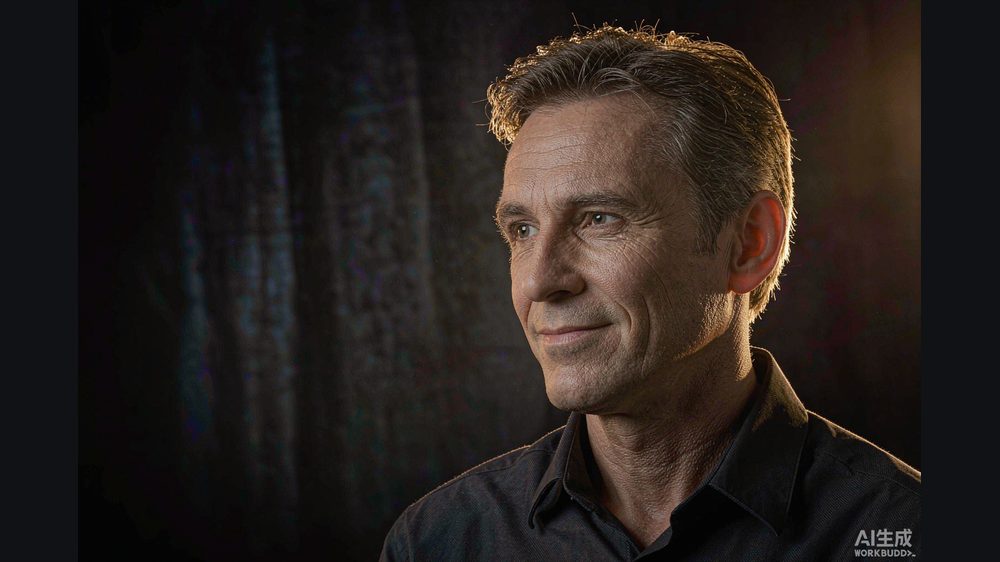
A statistician who studied under Alan Yuille and later worked alongside Yann LeCun now leads one of China's storied AI companies — one that built its own chip and then got locked out of the American market. Zhu Long (朱珑) is the quiet force behind Yitu (依图科技), a name that once sat among China's "AI Four Little Dragons" (AI 四小龙).
Key takeaways
- Zhu Long (朱珑) earned a statistics PhD at UCLA in 2008 under Alan Yuille, did a postdoc at the MIT AI Lab (2008–2010) with Bill Freeman, and researched at NYU's Courant Institute (2010–2012) with Yann LeCun.
- In 2012 he co-founded Yitu (依图科技) in Shanghai with Lin Chenxi (林晨曦), a former Alibaba Cloud architect; the firm became one of the "AI Four Little Dragons" (AI 四小龙) alongside SenseTime, Megvii and CloudWalk.
- Yitu released QuestCore (求索) in 2019, which it called the world's first cloud vision inference AI chip, designed and built entirely in China.
- The company was placed on the US Entity List in 2019 and withdrew its STAR Market IPO in 2021; it remains private, with reported valuations between ¥15 billion and ¥19.5 billion (≈ US$2.1–2.7 billion).
- In 2025–2026 Yitu pivoted toward multimodal large models (多模态大模型), launching its "Tianwen" (天问) model for smart cities.
A detour through the foundations of vision
Zhu's path is unusually cosmopolitan for a Chinese AI founder. After a statistics doctorate at UCLA supervised by Alan Yuille, he moved to the MIT AI Lab as a postdoctoral researcher working with Bill Freeman on computational photography. From 2010 to 2012 he was a researcher at NYU's Courant Institute under Yann LeCun, the deep-learning pioneer.
That lineage matters. Yitu's early edge in face recognition drew directly on the representation-learning ideas then being forged in LeCun's lab. Zhu returned to China in 2012 and, with Lin Chenxi, started Yitu in Shanghai.
From face recognition to a self-made chip
Yitu's first products were public-security and financial face-recognition systems. By the late 2010s its Dragonfly Eye platform was deployed across provincial and municipal security systems, and in 2017 the company reported a strong result in the US NIST Face Recognition Vendor Test. In 2015 it enabled China Merchants Bank's "face-scan" account opening — an early biometric banking use.
The pivot that defined Zhu's ambition came in May 2019 with QuestCore (求索), billed as the world's first cloud-side vision inference AI chip. Yitu claimed it delivered two to five times the visual-analysis performance of comparable products at the same power, cutting server volume and power use by about 80%. For a Chinese AI firm, designing its own silicon was a statement of autonomy at exactly the moment Washington began tightening export controls.
The Entity List and the withdrawn IPO
That same year, 2019, Yitu was added to the US Entity List over allegations tied to surveillance in Xinjiang — a charge the company has not accepted, and one that cut it off from American suppliers and customers. In 2021 Yitu withdrew a planned STAR Market listing, joining a wave of Chinese AI firms that found the public markets harder than the private ones.
Yitu's private valuation tells the story of a company that peaked early. Baidu's profile puts its 2019 valuation at about ¥15 billion (≈ US$2.1 billion); the industry database iYiou lists it at ¥19.5 billion (≈ US$2.7 billion). The gap is modest, but the trajectory — from unicorn hopeful to a profitable-niche player — is the real headline for China's first AI generation.
Reinvention as a model company
Rather than fade, Yitu has leaned into the large-model (大模型) era. In 2025–2026 it shipped "Tianwen" (天问), a multimodal large model (多模态大模型) aimed at smart cities and security, and brought in Duan Aiguo to lead the push. The bet is that decades of visual data from city deployments are now a moat for generative applications.
What readers can do now
- If you study China's AI history, separate the "Four Dragons" by what survived. Yitu's chip and city-data assets distinguish it from peers that stayed pure software.
- Watch the Entity List as a business variable, not just policy. Yitu's story shows how a single US listing can reshape a company's entire strategy.
- For builders, note the vertical move: a software firm building its own chip is a recurring China pattern worth understanding, not an exception.
Honest limitations
This profile draws on Yitu's official "About Us" page, Baidu Baike, the AI Wiki entry and iYiou's company database; I have not read Yitu's financial statements, which are private. The biographical arc — UCLA PhD (2008), MIT postdoc (2008–2010), NYU researcher (2010–2012), Yitu founded 2012 — is consistent across the company site and Baidu. The ¥15 billion (2019) and ¥19.5 billion (2026) valuations are private-market estimates from Baidu and iYiou respectively, not audited figures. The "first cloud vision inference chip" and "80% reduction" claims are Yitu's own marketing language from 2019 and are presented as the company states them. The Entity List action and the 2021 IPO withdrawal are reported facts; I have not independently verified the underlying US government rationale. I have not covered co-founder Lin Chenxi's later career in depth.