
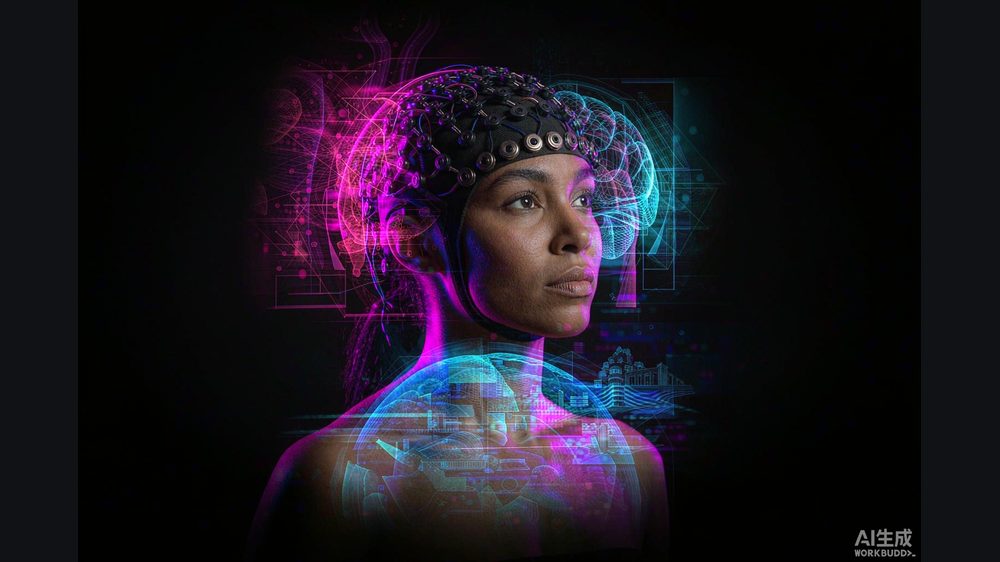
Nine days after a coin-sized device was placed beneath his skull, Dong Hui (董辉) closed his right hand around a ball — without wearing the assistive glove.
The movement was not rehabilitation magic. It was a signal from his brain, captured through the dura mater and translated into a command his hand could finally obey.
For the millions living with cervical spinal-cord injury in China, that moment is the difference between total dependence and a little autonomy.
Key takeaways
- China's National Medical Products Administration (NMPA) approved Neuracle's (博睿康) NEO system on 13 March 2026 — the first invasive brain-computer interface (脑机接口) medical device cleared for market anywhere in the world.
- The device is placed in the epidural space (semi-invasive / 半侵入式 in design terms) and uses eight electrodes to decode grasping intent with over 90% accuracy.
- It targets patients aged 18–60 with quadriplegia from cervical spinal-cord injury who cannot grip with their fingers.
- Before approval, 36 people were implanted across feasibility and multi-center trials; every participant regained some degree of grasp control.
What the device actually does
NEO is built around a coin-sized implant. Surgeons tuck it against the outer surface of the brain's protective covering — the dura mater — rather than piercing the cortex itself. That placement is the central design bet: it sits close enough to pick up a clean neural signal, but avoids the bleeding, scar tissue and long-term signal decay that come with electrodes driven into brain tissue.
Once in place, the implant records epidural brain signals, sends them wirelessly to a computer, and the software turns the user's intention to move into commands for a pneumatic glove. Patients train roughly 2.5 hours a day. After about a month, many can run the system at home without a clinician in the room.
The Neuracle team, working with Professor Hongbo (洪波) of Tsinghua University's School of Biomedical Engineering, reports that with only eight electrodes the system reaches above 90% grasp-decode accuracy, with decoding latency in the hundreds of milliseconds. Those are modest channel counts by research-lab standards, which is precisely the point: fewer, well-placed contacts can be enough for a single clinical task.
The regulatory first
The NMPA clearance on 13 March 2026 was not a minor certification. The developer and Chinese regulators describe it as the world's first market launch of an invasive BCI medical device, and the first such product to cross into the clinical-application stage.
Speed mattered. Neuracle began human implants in October 2023 at Beijing Xuanwu Hospital (宣武医院). A second early case followed at Shanghai Huashan Hospital (华山医院) in November 2024. By 2025 the program had scaled to a multi-center registration trial spanning 11 top hospitals, completing 32 implants in roughly 78 days. Across all 36 procedures — four feasibility cases and 32 multi-center GCP trials — participants showed varying degrees of grip improvement, and some signs of neural remodeling.
On 13 July 2026, Huashan Hospital performed what reporting describes as the world's first commercial prescription implant of a regulator-approved invasive BCI, a decade after a car accident had left the patient with impaired hand function.
Why China moved first
Several forces lined up. The technology took a comparatively conservative surgical path, which lowers regulatory risk. Shanghai had already designated BCI a priority future industry and built a support ecosystem — the municipality says it now hosts around 60 BCI-focused enterprises, with three invasive products in the NMPA's special review channel for innovative devices.
There is also a candid structural advantage: a large, fast-recruiting patient pool. Professor Hongbo has cited an estimated 3–4 million people living with spinal-cord injury in China and 80,000–90,000 new cases a year. A clinical pipeline that can enroll quickly shortens the road from first implant to approval.
Honest limitations
Readers should separate a genuine milestone from the hype that surrounds it. NEO is approved for one narrow task — restoring a grasping command for a specific, paralyzed population. It is not a general "mind-reading" or mobility-restoring device, and it does not yet address stroke, epilepsy, depression or dementia, despite those being active research directions for the same group.
The "invasive" label also needs a footnote. Because the electrodes sit on the dura rather than in the cortex, the design is closer to semi-invasive (半侵入式) than to the fully intracortical implants made by some U.S. competitors. Calling it the "first invasive BCI" is technically correct under China's device classification, but the surgical invasion is lighter than the term implies.
Long-term stability — years of reliable signal from a single implant — is still being proven in real-world use. Approval is the start of that evidence-gathering, not its conclusion.
What readers can do now
- If you work in medtech or rehabilitation, track the NEO-X partner program and the five window hospitals Neuracle has named; these are where the first real-world data beyond trials will appear.
- Clinicians treating cervical spinal-cord injury should watch for published multi-center outcomes and the device's indications expansion, rather than assuming broad availability today.
- For everyone else, treat "first approved invasive BCI" as a signal that the category has left the lab — but judge each new claim by the specific patient group and task it actually targets.