
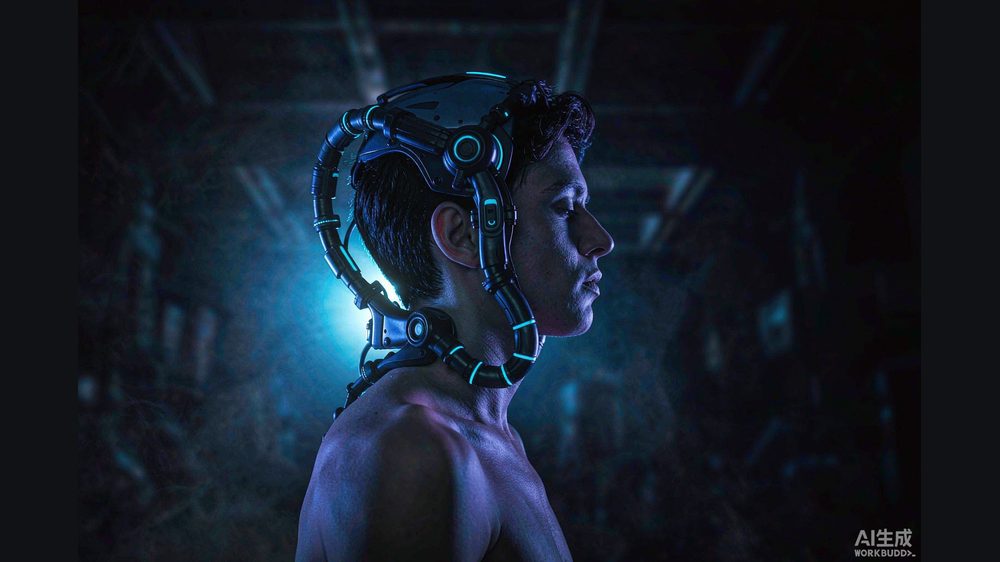
A patient who had lost the ability to speak typed out nearly a hundred Chinese words using only intention. Across the room, a person with high spinal-cord injury moved a robotic arm and a computer cursor without moving a muscle.
Neither was a demo video. Both came from real implants of Beinao-1 (北脑一号), the semi-invasive brain-computer interface (脑机接口) built by the Beijing Brain Science Institute (北京脑科学与类脑研究所) and its spin-out Beijing Xinzhida Neurotech (北京芯智达神经技术有限公司).
Key takeaways
- Beinao-1 is described as the world's first 100-plus-channel, high-throughput, wireless, fully-implanted semi-invasive (半侵入式) BCI system, using a 128-channel flexible thin-film electrode placed on the dura.
- Since early 2025 it has been implanted in five patients across three Beijing hospitals, targeting spinal-cord injury, stroke, and ALS (渐冻症) for motor and speech rehabilitation.
- Speech-disorder patients decoded nearly 100 Chinese words post-surgery; paralyzed patients controlled a robotic arm and computer cursor at a distance.
- A multi-center registration trial began in March 2025, with a medical-device registration filing aimed for 2027.
What Beinao-1 is
The "semi-invasive" label matters. Beinao-1's 128-channel flexible electrode is laid on the surface of the dura mater — outside the brain tissue — then the scalp is fully closed. The institute says the approach gives high signal quality with very low surgical risk and good biocompatibility.
It is not a wire-into-cortex implant. It is a middle path: safer than fully invasive arrays, cleaner than scalp EEG. For a health system weighing thousands of potential recipients, that trade-off is the whole ballgame.
From lab to five real patients
Starting in early 2025, the program ran clinical validation with Peking University First Hospital, Xuanwu Hospital and Beijing Tiantan Hospital. Five patients received implants. The reported outcomes are specifically functional:
- Speech-disorder patients produced close to 100 decoded Chinese words after surgery, a first step toward communication for people locked out of speech.
- Spinal-cord-injury and high-paraplegia patients operated a robotic arm and a screen cursor across a room, early evidence of movement substitution.
In March 2025 Beinao-1 entered a multi-center registration clinical trial. The listed indications are broad but clinically defined: spinal-cord injury, stroke hemiplegia, ALS-related limb motor disorder, and speech aphasia. The stated goal is to file for a medical-device registration certificate around 2027.
Beinao-2: the invasive next step
The same team is building Beinao-2 (北脑二号), a fully invasive system using a wireless, fully-implanted flexible intracortical electrode array. Reporting in 2026 describes the clinically targeted version around 512 channels, benchmarked against thousand-channel international products and aimed at the most precise motor decoding for severely paralyzed patients.
A 1024-channel wired prototype already demonstrated a monkey intercepting a moving target on screen using only thought — the kind of dynamic, closed-loop control that separates a research toy from a useful assistive tool. A miniaturized wireless version is in development, with human clinical validation planned within 2026.
Why Beijing is betting on this
The Beijing Brain Science Institute, led by director Luo Minmin (罗敏敏), was set up in 2018 as a new-type research institute and has since run 14 investigator-initiated trials spanning paraplegia, stroke, ALS, blindness, epilepsy and depression. The city backs the work explicitly: in 2025 Beijing published an action plan for BCI development through 2030, and in early 2026 launched an 8-billion-yuan (≈ US$1.1B / HK$8.6B) science-city fund with 1 billion yuan earmarked for BCI and future industries.
The strategy is engineering-led and application-pulled: researchers build the flexible electrode and decoding algorithms, companies iterate the product, hospitals select patients and run the trials.
Beyond Beinao itself, the institute's 14 approved investigator-initiated trials span an unusually wide range of brain disorders — from paraplegia and stroke to total blindness, refractory epilepsy, central pain and depression — pointing to a deliberate plan to build one reusable neurotechnology platform rather than a single product. That breadth is what lets a flexible-electrode and decoding-algorithm base be shared across indications instead of rebuilt each time, and it explains why Beijing treats BCI as infrastructure, not a one-off device.
Honest limitations
The five-patient figure is early validation, not proof of efficacy at scale. The speech result — "nearly 100 words" — is a vocabulary floor, not fluent conversation, and we do not yet have peer-reviewed accuracy rates or durability data from the registration trial.
Beinao-2 remains pre-human in its wireless form. A monkey intercepting a target is encouraging but says little about multi-year stability in people. And the 2027 registration target is a plan filed by the developer, not a committed regulatory timeline.
Most importantly, experts inside the program itself caution that BCI solves only what conventional medicine cannot, and functional restoration "will not happen overnight." Some reported gains come from combined BCI, neural stimulation and long rehabilitation — separating each contributor's effect needs larger, controlled studies.
What readers can do now
- Clinicians in neurology and rehabilitation should watch the Beinao-1 registration trial's published endpoints; the 2027 filing window is when real efficacy data will surface.
- Families of ALS or stroke patients can ask tertiary hospitals in Beijing about BCI clinical-trial eligibility rather than waiting for commercial products.
- Policy and industry watchers should track Beijing and Shanghai's separate BCI action plans — the two cities are running noticeably different regulatory and funding playbooks.