
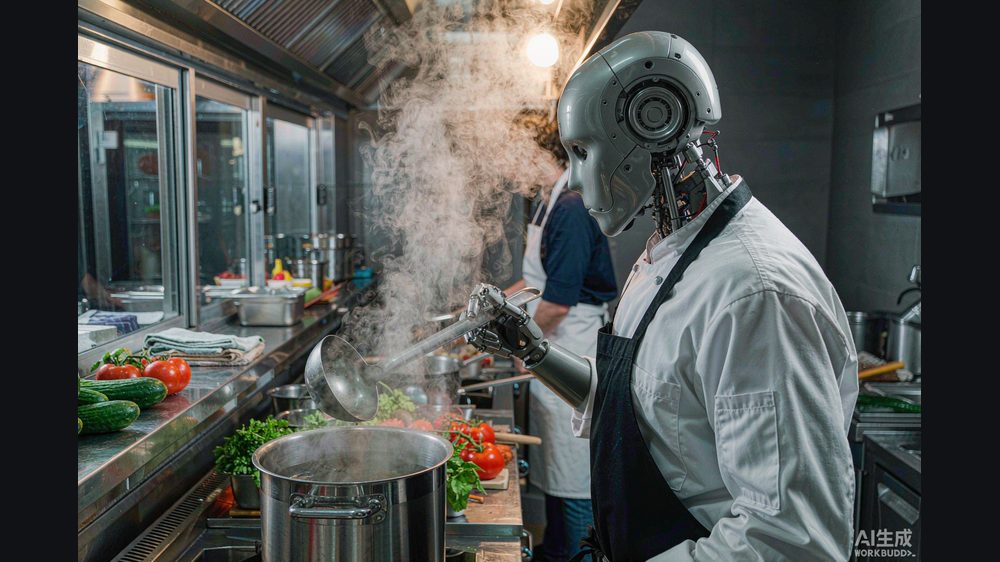
You have probably met one of these in a lobby late at night: a cabinet that rides the lift by itself, says nothing, presses a floor button and stands quietly. You assumed it was delivering takeaway.
Over the past year those cabinets have quietly entered hotels, hospitals and residential complexes. On 9 September 2026, at JD's Global Tech Explorer Conference, the robots that do not look like people were brought centre stage.
Key takeaways
- Procurement: JD Logistics said it will buy 3 million robots, 1 million unmanned vehicles and 100,000 drones over the next five years.
- Scale check: three million is roughly the same order of magnitude as the entire frontline workforce in China's parcel delivery and warehousing.
- Supporting commitments: 80+ robot industry bases nationwide within five years; over 10 million hours of real-scenario video data within two years; help 100 robot makers cut costs and 100 component suppliers double revenue within three years; invest 10 billion yuan before 2028 to help 100 robot brands each exceed 1 billion yuan in sales.
- The other number: a global after-sales network across 100+ countries, creating more than 100,000 robot service engineer jobs — with eight repair centres already built in China.
The robots on the stand changed
At previous conferences, the crowded booths were always the ones with dancing and backflipping machines. At this one, JD's embodied intelligence session showed the "Wolf Pack" line: nine products and eleven robots already deployed in warehousing, sorting and delivery — five of them debuting, including a low-temperature variant built for cold chain.
Good-looking robots stepped off the stage. Working robots stepped on.
Buying 3 million machines and hiring 100,000 repairers is not a contradiction
It is the most accurate description of what automation actually looks like.
A robot arriving at a warehouse is a beginning, not an endpoint. It needs charging, parts replacement, software updates, and occasional rescue from a corner it got stuck in. Manipulator arms wear. Sensors drift. Software has bugs.
The faster the fleet grows, the scarcer the people who can keep it running.
What gets replaced and what gets created
Put the two sets of numbers together and the conclusion is fairly clear:
- What gets replaced: work that is repetitive, standardised and single-motion — sorting, carrying, delivery, inspection.
- What gets created: work involving judgement, repair, scheduling and machine care.
The two require different things. The first runs on physical effort; the second on a trade, and a trade takes time to learn.
So the real question is not whether there will be work. It is whether you are present when the new work appears.
What to do now
Do not read "robot" as "humanoid." What is actually shipping in volume and displacing labour today looks like a cabinet, a trolley or a shelf. If you want a position in this industry, look at the categories already in volume, not the best-looking thing on stage.
If you work in logistics, warehousing, industrial parks or hospitals, get your own robot arithmetic straight. A delivery machine's monthly cost now sits below the fully loaded cost of a full-time courier in a number of Chinese cities. Once that threshold is crossed, job structure changes faster than most people expect.
If you are considering a career change, watch after-sales and operations. One hundred thousand engineering jobs will not appear as a single hiring event — they will appear inside manufacturers' service organisations, third-party repair networks, and the in-house maintenance teams of large campuses. They do not require you to build robots. They require mechanical and electrical competence and a willingness to learn.
Automation replaces motions first. It leaves trades for last.
Figures as announced by JD Logistics at the 2026 Global Tech Explorer Conference, 9 September 2026.