
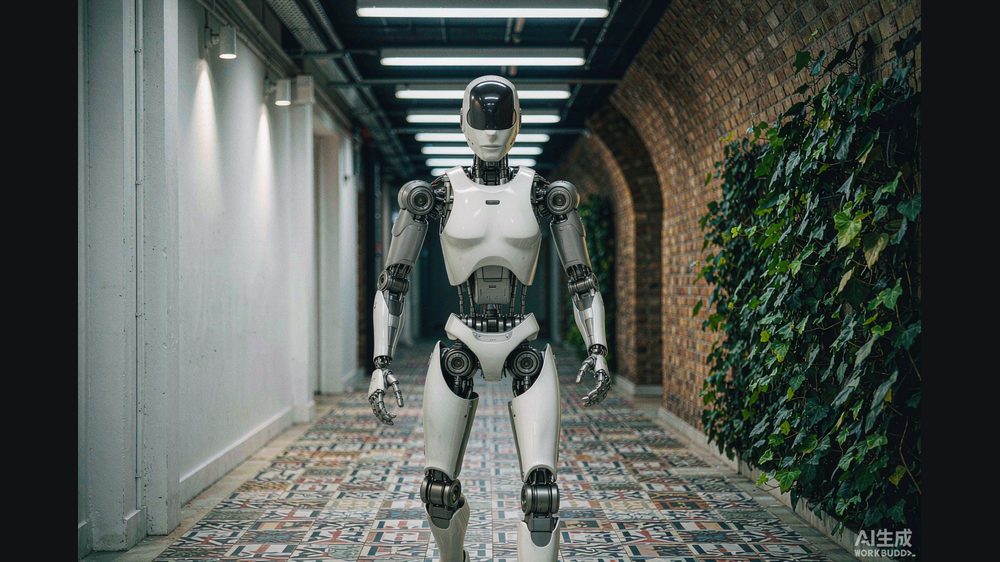
When buying a machine, people usually ask the price of the whole unit first; taken apart, the most expensive piece is not necessarily the torso, nor the much-discussed compute chip. On a humanoid robot, the two hands at the end alone eat a large slice of the cost — a counterintuitive kind of expensive.
This article works through one sum only: what a dexterous hand sells for, and how large a share of the whole machine it takes. Price is the figure most easily repeated and most easily mixed up, so before writing, sorting out whose tag it is and which caliber it uses matters more than memorizing a lone number.
Pricier Than an Engine
China Business Journal, citing statistics from Gaogong Robotics Industry Research Institute, says dexterous hands account for 20%–25% of a humanoid robot's total cost; by comparison, an engine takes roughly 15%–20% of a gasoline car's cost. In other words, the share taken by a hand has already overtaken the core powertrain of a conventional car.
Set the two ratios side by side and the contrast shows. In gasoline cars built for over a century, the priciest assembly still takes only about a fifth; yet in a robot not yet in mass production, this one pair of end parts claims a fifth to a quarter of the whole machine.
Why it is expensive is no mystery. Into a space the size of a palm must go micro motors, reducers, actuators and sensors, all working together and staying accurate over time. The smaller the parts and the tighter the packing, the costlier the machining and assembly — a very different matter from pricing by weight of material.
The caliber needs spelling out here. On how much of a whole machine's cost a hand takes, different reports have used other methods — some by total machine cost, some by bill of materials — and the numbers differ. This article uses only the set cited by China Business Journal and does not merge several calibers into one thing.
Price Tags in Three Bands
The same statistics also give price tags. Mainstream linkage-based dexterous hands run about 20,000 to 50,000 yuan each; tendon-driven and direct-drive models generally run above 100,000 yuan each. Note it says each, not a pair, still less a whole machine.
The three approaches are not a ranking of better by price; each has its own job. According to media reports, linkage hands are steadier in industrial settings such as logistics sorting and machine loading, tendon-driven hands suit simple general grasping, and direct-drive hands are mostly used in research, education and special industries. Different structures naturally pull the tags apart.
Put those two price bands beside the earlier share and it is easy to see why robot makers worry about cost. One hand is 20,000 to 50,000 yuan, so two hands are 40,000 to 100,000 yuan, taking a fifth to a quarter of the whole machine, with the rest of the budget still needed for legs, torso and brain.
Nor should the tag be read as an industry-wide list price. It describes the range of today's mainstream approaches; an actual deal also depends on degrees of freedom, whether there is touch sensing, order size and who the customer is. Under the single word "dexterous hand," an entry model and a high-degree-of-freedom model can sit several times apart in price.
The 6,000-Plus Entry Model
The cheaper band does exist. According to media reports, an institutional survey says Lingxin Qiaoshou's products are 10,000 to 20,000 yuan cheaper than competing products, with an average selling price 50% below overseas products; its main product, the Linker Hand O6, has a standard-edition price of 6,666 yuan. Keep that qualifier: it is a survey relayed by the media, not an official price list.
The figure 6,666 yuan gets quoted so often because it pulls the price of a hand down to the level of a mid-to-high-end phone. Set beside the 20,000-to-50,000-yuan and above-100,000-yuan bands, the gap is especially stark.
But read carefully what it refers to. It is the listed price of one entry-level standard edition, not an industry-wide average, and not a level every model has fallen to. It applies to this one product; a different model need not carry the same number.
The same company also said in the interview that high-degree-of-freedom products still sit at another price point, with value models and premium models on two separate lines. Readers can easily mistake this one band for the new floor of the entire price range.
Only by setting the range beside the single example does the full picture appear: the low-priced entry model has knocked the threshold down, yet mainstream deals still cluster in the linkage band. Tags stretching apart means the market is starting to segment; it does not mean the whole range has collapsed to the 6,000-plus level.
Three Routes to a Lower Price
How did the price come down? According to China Business Journal, an executive at Lingxin Qiaoshou groups the methods into three. The first is replacing bought-in parts with in-house ones: motors, reducers, actuators and sensors used to be imported, their prices carrying someone else's R&D amortization and channel markup; make them yourself and the price becomes cost.
The second is trading materials for room. The executive says metal reducers are heavy, costly and process-intensive; swap part of them for engineering plastics and weight and material cost fall together, while tendons are replaced by jointly developed high-performance parts instead of imports.
The third is scale. Each step up in output spreads fixed costs once more; building its own line and its own automation is meant to make every extra unit cheaper than the last. All three are the company's own practices as described by its executive to the media, not a level the industry has generally reached.
Add a qualifier as you read the three: in-house work needs R&D spending up front, material swaps must pass durability tests, and spreading costs waits for volume to actually arrive. They explain why one hand can be quoted at the 6,000-plus level, and why other makers may not be able to quote the same price.
The Expensive Part Is Still Ahead
The company's executive told the media it wants to bring dexterous hands to the scale of consumer electronics, reaching "the price of a phone for a hand that can do real work." Note this is a goal the company stated, not a fact already delivered, still less a tag shared by the whole industry.
The same executive is blunt about the current sticking point: the dexterous hand has passed the stage of "can it be built," and is now stuck at whether it can be built stably, cheaply and in volume, with the sums working for customers. The tag is only the first line of that calculation.
For factory customers, cheapness was never the whole set of conditions to weigh. How long a hand runs continuously, how quickly a broken one is replaced, and what a stopped line costs all go into the same sheet. Even if unit price falls to phone level, the sums still fail if durability cannot keep up.
So a hand pricier than an engine is expensive on the surface because of parts, and underneath because of processes not yet spread by scale and reliability not yet proven over long hours. Only when customers can order without doing the sums will price turn from a talking point back into a plain parameter.
Disclaimer: This article is based on publicly available information and is for reference only. It does not constitute investment advice.