
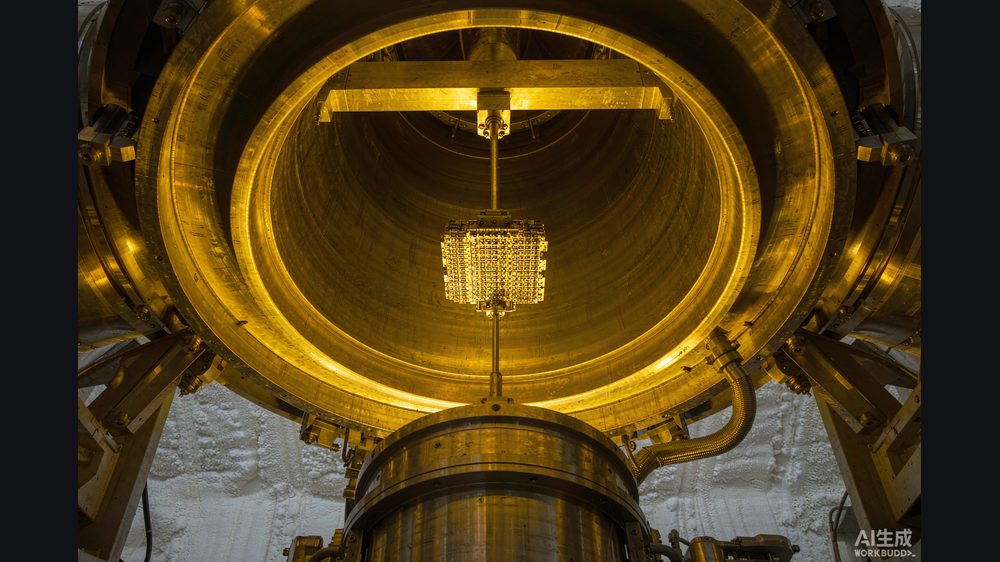
A Chinese AI-chip maker spent years in Nvidia's shadow, then arrived on the public market with a valuation that would have looked impossible for a loss-making startup a few years ago. The detail worth noticing is not the size of the raise — it is who the money, and the customers, really belong to.
On 11 September 2026, Shanghai Enflame Technology (燧原科技), founded in 2018, started trading on Shanghai's STAR Market (科创板) under the ticker 688801.SS. According to Reuters, which cited the exchange filing, the company raised 6.12 billion yuan (≈ US$912 million) by selling 43 million new shares at 142.18 yuan (≈ US$21) each, valuing it at about 61.2 billion yuan (≈ US$9.12 billion) at the offer price.
The "four little GPU dragons" finally complete the set
Enflame is grouped domestically with Moore Threads (摩尔线程), MetaX (沐曦), and Biren (壁仞) as China's "four little GPU dragons" — the local accelerator makers racing to give Chinese buyers an alternative to Nvidia as export controls limit access to the most advanced foreign hardware. The other three had already reached public markets over the prior year; Enflame's listing closes that cohort.
Enflame builds data-center AI accelerators under its CloudBlazer (云燧) brand, powered by an in-house chip architecture it calls the DTU (Deep Thinking Unit), with separate training and inference product lines. Tencent has been both its largest shareholder and its dominant customer — a relationship that guarantees demand but also concentrates risk in a single buyer.
The numbers Reuters reported
The filing painted a picture of a company scaling fast but not yet profitable:
- 2025 revenue: 990.2 million yuan (≈ US$148 million).
- 2025 net loss: 1.16 billion yuan (≈ US$173 million).
- 9-month 2026 guidance: revenue of 2.3–3.0 billion yuan (≈ US$343–447 million), and a net loss of 700–860 million yuan.
- The company said it expects to break even or turn a profit in 2026 or 2027, depending on revenue growth and margins.
- Tencent stake after the IPO: 17.95%. Tencent share of 2025 revenue: 83.79%.
That last pair is the headline risk. Enflame is, in effect, a Tencent-backed and Tencent-dependent foundry for domestic compute. The proceeds are earmarked for developing and commercializing its fifth- and sixth-generation AI chips, plus related software and large-scale systems — the kind of multi-year bet that only a public balance sheet can comfortably carry.
Why a chip IPO lands now
China's onshore technology IPOs are having their strongest year since 2023, with Beijing actively steering listings of chip and AI companies as part of a push for tech self-reliance. Enflame's debut rode that wave. Reuters noted, however, that Unitree — China's best-known humanoid maker — had seen its shares fall roughly 45% since a more-than-fivefold jump on debut, a reminder that enthusiasm for AI and robotics listings can outrun fundamentals.
For Enflame, the open question is whether demand from beyond Tencent materializes. The domestic accelerator market is contested by Huawei's Ascend (昇腾), Cambricon (寒武纪), and others; Enflame's differentiator has been its tight coupling to Tencent's cloud and model stacks, including support for Tencent's Hunyuan (混元) large model (大模型). That is a strength and a ceiling at the same time.
What it means for the compute market
A public Enflame gives outside observers a rare clean read on the economics of domestic AI silicon: revenue trajectory, loss trajectory, and customer concentration, all disclosed quarterly. If the company can show non-Tencent revenue growing, it becomes evidence that China's post-Nvidia accelerator ecosystem is broadening. If not, it is a case study in how hard it is to decouple from a single anchor customer.
The listing also signals that the "domestic substitution" story for AI chips is moving from prototype to balance-sheet reality — these are no longer venture experiments but quoted companies with roadmaps stretching to next-generation parts.
Honest limitations
- The financials and offering details are from Reuters, citing the exchange filing and prospectus — a strong source — but this review did not independently verify exact chip specifications (TFLOPS, HBM capacity, interconnect bandwidth), which vary across secondary sources and were not consistently confirmed.
- The 83.79% Tencent revenue concentration is a genuine structural risk; the first-day trading pop and valuation should be read with that caveat.
- Enflame remains unprofitable, and its breakeven guidance is a forecast, not a commitment.
- Export-control exposure and the precise roadmap for the 5th/6th-generation chips were not detailed in the public reporting reviewed here.
What readers can do now
- Track 688801.SS as a public window into domestic accelerator economics — revenue mix and loss trajectory will tell you more than any launch slide.
- If building on Chinese compute, evaluate CloudBlazer against Ascend and Cambricon for inference workloads, weighing Tencent-ecosystem integration as a concrete advantage.
- Watch the 2026–27 breakeven guidance as a stress test of the entire domestic-chip thesis — non-Tencent revenue growth is the number that matters most.