
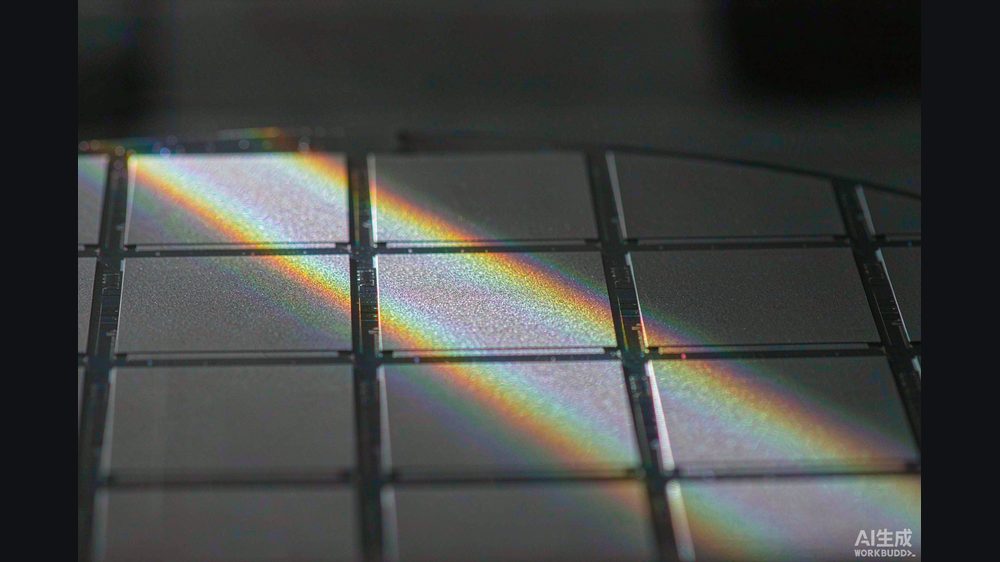
Asus ProArt GR1X measures 150 by 150 by 51 millimeters: 1.1 liters, 1.48 kilograms. A palm of desk space holds a machine that runs a 120 billion parameter model.
On sale November 18. MSI's 64GB/1TB costs $4,399.
1.1 liters is one large bottle of cola.
What fits in 1.1 liters
The CPU is a 20-core Grace: 10 Cortex-X925 and 10 Cortex-A725. The GPU is a Blackwell RTX with 6,144 CUDA cores. Memory reaches 128GB LPDDR5X at 300GB/s. Ports: 10GbE, Wi-Fi 7, four 4K outputs. Power: 140W sustained desktop, 80W maximum laptop.
10GbE makes it a small inference server on a LAN, not a single-user toy. Four 4K outputs make it a workstation.
It is not a game machine but a 24/7 host for a personal AI agent. Nvidia pairs it with a scheduling layer called Switchyard, already in Hermes Agent: simple tasks local, hard reasoning in the cloud. The vendor is not claiming it replaces the cloud.
Peak compute is 1 PFLOPS. That figure needs two qualifiers: FP4, sparsity on, theoretical peak. FP4 is 4-bit floating point, two bits below FP16; sparsity lets the model skip part of the weights. Both stack into 1 PFLOPS. A score on one type of question, not every question.
Why 4-bit? Same memory, half the width, twice the parameters. The price is precision, which is why it suits inference, not training.
Three scenarios: about 120 billion parameters locally, real-time rendering of 3D scenes above 90GB, real-time editing of 4:2:2 video. None is what the cloud does best. Only the first concerns most people.
How 120 billion fits
120 billion parameters at 4 bits is about 60GB of weights. 128 minus 60 leaves 68GB for context, the OS and shared graphics memory. It fits. The 90GB scene takes 70% of memory, leaving 38GB for texture streaming.
The keyword is unified memory. CPU and GPU share one pool, so data is not copied into VRAM first. Copying 60GB at 300GB/s takes 0.2 seconds, once at load. After that, no token pays the toll.
Fitting is not speed.
Bandwidth hits the wall first
300GB/s is the memory bandwidth. Every token reads the whole weight set.
60GB over 300GB/s is 0.2 seconds: at most 5 tokens a second before contention, scheduling, growing context. At 8 bits the weights are 120GB, 0.4 seconds per token, ceiling 2.5. So "can run" and "runs fast" are two things. A 1 PFLOPS label does not help if the weights cannot be read.
The real bottleneck in local AI is bandwidth, not compute. The rule holds in the cloud at another scale. It is also why vendors advertise "runs 120 billion parameters" instead of tokens per second. Capacity flatters; speed stings.
75% more power for 10%
140W against 80W is 75% more power. Windows Central measured 10% to 21.9% more graphics performance: Stable Diffusion XL the largest gain, 3DMark up to 13.3%, CPU multi-core about 5%. 75% more power for 10% to 22% more performance.
Not a new generation: the same silicon with the limit raised, more room to dissipate heat, higher clocks for longer. A real generation shows in architecture and process, not wattage. The desktop is not a stronger chip. It is a wider heatsink.
Price follows. The laptop shipped in October from $2,599; the desktop starts at $4,399, 1.69 times. The premium buys cooling, ports and always-on duty, not a new chip.
MSI EdgeMesa N AI+: 64GB/1TB at $4,399, 128GB/4TB at $7,499; it launched November 11 at $4,699, later cut $300. Double the memory, quadruple the storage, 70% more money. Per gigabyte: $68.7, then $58.6. Bigger is cheaper, the opposite of cloud memory pricing.
Other tags: Asus ProArt GR1X from $4,499, 64GB/2TB at $4,999.99; Dell has no price; Microsoft's Surface RTX Spark Dev Box at $5,999.99 with 128GB. In China, Mechrevo's Master Road X10 goes on sale November 19: 64GB+1TB at 32,999 yuan, 128GB+2TB at 49,999 yuan.
It does not replace the cloud
Training is out of scope. 120 billion parameters can do inference, not pretraining: one machine cannot carry a cluster's work. High-concurrency serving is out too; a few tokens a second will not cover a team.
What it does: personal agents, code completion, document work, a local knowledge base, small-model fine-tuning. The common thread is one user, sensitive data, low sensitivity to latency. So its competitor is not the cloud. It is the act of uploading data.
There is a software gap. The machine is Arm, not x86. Native support exists for Adobe's Substance 3D Painter 12.2 beta, Illustrator and InDesign; Blender 5.3 added DLSS ray-traced preview. Partial support: Adobe's suite is more than three apps, and industrial, finance and vertical plug-ins will not rewrite. A buyer's first task is checking the list, not reading a benchmark.
140W always on for a year is 1,226 kWh. That decides where it sits: under a desk, in a study, in a small rack. No machine room, no industrial feed. The first meaning of local is that data stays in. The second is that power and maintenance are yours.
For a company, both are the pitch. Customer records, medical images, design drawings: many industries will not put them in the cloud. A $4,399 box in the corner keeps data on the LAN. That ledger is counted in compliance, not tokens.
So the buyer is not an enthusiast, who builds his own and counts dollars per token. The buyer runs IT. Three concerns: data stays in, the network does not change, someone repairs it. Cloud can meet all three, with contracts, assessments and hosted data. A box turns three concerns into one purchase.
It sells certainty: the task does not stop when a lid closes, and data does not leave the room when a call goes out.
One question: if the local bottleneck is bandwidth, does the next generation sell gigabytes per second instead of petaflops?
*Disclaimer: This article is based on publicly available information and is for reference only. It does not constitute investment advice.*