
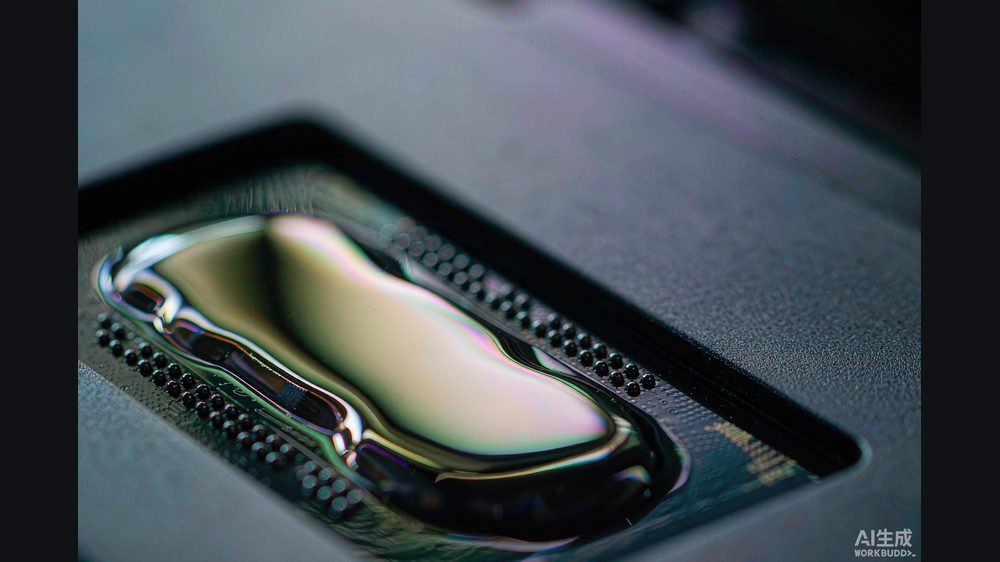
On a wet evening in a Chinese city, a car eases off the accelerator because someone has stepped into the crosswalk. The driver did not buy the car for its semiconductor. But a decision made years earlier, inside a chip design house, is part of why the car noticed the pedestrian at all.
That is the quiet reality of assisted driving (辅助驾驶): the hardware disappears into the background, and the trust question lands on the driver. Horizon Robotics (地平线), a Chinese chip company listed on the Hong Kong Stock Exchange in October 2024 as 9660.HK, is one of the firms trying to make that question easier to answer at scale. Its story is less about peak computing power than about the grind of getting software and silicon to agree with each other in millions of vehicles.
Key takeaways
- Horizon says its Journey (征程) family of automotive computing chips has shipped more than 15 million units cumulatively, with designs covering more than 500 vehicle models and 350+ models already in mass production.
- Its investor relations page says the company works with 27 automakers spanning 42 brands and serves more than eight million car owners.
- The company reported 2025 revenue of ¥3.76 billion (≈ US$526M / HK$4.1B).
- The product direction that matters is "one-stage end-to-end" (一段式端到端) driving: a single model that takes sensor input and produces a driving path, rather than a chain of separate modules.
- For buyers, the practical consequence is cost and update speed, not a spec sheet.
A chip company that sells a decision, not a number
Horizon's toolkit is the Journey (征程) family of automotive computing chips, built specifically for driving assistance rather than adapted from a phone or data-center chip. The company also sells Horizon SuperDrive (HSD), a full-scenario assisted driving system that it says is built on the Journey 6P processor.
The distinction matters. A general-purpose processor is asked to do many things adequately; a driving processor does a narrow set of things repeatedly, at low latency, at highway speed, within a power budget the cooling system can handle. Those constraints shape the architecture long before anyone writes the driving software.
Horizon's answer has been to pair its own hardware with its own software stack, then hand the combined package to automakers. Company materials describe this as a software-hardware integration approach. In plain terms: instead of selling a chip and hoping a partner can squeeze performance out of it, the company tries to deliver a working driving system with the chip inside it.
Why volume changes the problem
Shipping a chip into a car that a family drives every day is a different discipline from announcing it. Automotive qualification takes years; a bug is not a patch you can push to a browser.
The figures Horizon publishes on its own site illustrate the scale it is dealing with. More than 15 million Journey family chips shipped; more than 500 design wins for mass production; more than 350 vehicle models in production; more than 40 partner automakers and brands. Its investor relations page gives a slightly different cut of the same reality: 27 automakers, 42 brands, and more than eight million car owners.
Those are company-stated numbers, and they describe a business that has crossed from "promising supplier" into "embedded supplier." Once a chip is designed into a model, the engineering conversation shifts. The question is no longer whether the processor can run a demonstration on a closed course. It is whether the system behaves predictably at scale, across the odd weather, bad lane markings and impatient drivers that no test track fully reproduces.
This is also where revenue starts to matter more than announcements. Horizon's ¥3.76 billion (≈ US$526M / HK$4.1B) in 2025 revenue, reported by the company, reflects a business that is being paid to solve those unglamorous problems.
The end-to-end idea, without the mysticism
Much of the industry's attention has moved toward end-to-end driving models. The older approach split driving into visible pieces: detect objects, predict what they will do, plan a path, control the steering. Each piece could be tested separately, but information was lost at every handoff.
An end-to-end system compresses that chain. Horizon says its HSD system connects the pipeline from "photon input to trajectory output," meaning the model takes what the cameras see and produces a driving path in one continuous process. The company has also described HSD as a one-stage system built on Journey 6P.
Why should a non-engineer care? Because a compressed pipeline can react to situations its designers did not explicitly enumerate. A construction worker waving an oddly shaped flag is not a category in a rulebook. A system that learns patterns from driving data may handle it more gracefully than one that matches rules. The trade-off is that a single large model is harder to inspect and explain, which is exactly why companies like Horizon spend so much effort on simulation and validation before a system reaches a public road.
Horizon's public news feed also shows the unglamorous side of the work: collaborations with Bosch and DENSO, a tie-up with Volkswagen for mass-produced electric vehicles, and a mass-production debut of HSD with Chery. Supplier relationships, not press-release fireworks, are how this technology actually reaches a driveway.
What this means beyond China
Readers outside China may treat this as a local industrial story. It is broader than that. The global auto industry is working through the same argument: whether driving assistance should be a feature bought from a specialist or a capability each carmaker builds itself. A supplier that can ship more than ten million units has evidence that the specialist route can work.
There is a consumer angle, too. As assisted driving hardware scales, the feature migrates from luxury models into ordinary ones. That changes what a buyer should expect from a mid-priced car, and it raises the stakes on clarity: drivers need to know what the system can and cannot do, because "assisted" still means the human is responsible.
Honest limitations
This is a deep read anchored on Horizon's own published figures and product descriptions, not a verified audit of its technology. Shipment counts, design wins and car-owner totals come from the company; I have not independently confirmed how many chips are active in vehicles today or how many were shipped to inventory. The revenue figure is likewise company-reported. Nothing here establishes that Horizon's end-to-end system is safer than a rival's, and the article does not assess any regulatory proceeding or export restriction. Comparisons with other chip vendors are deliberately avoided because public performance claims are rarely measured under the same conditions.
What readers can do now
- If you are shopping for a car with assisted driving, ask the dealer which chip and which software version are installed, and whether updates are included in the purchase price.
- Read the owner's manual section on driver monitoring before using the feature; "assisted" systems still require your hands and attention.
- For investors and industry watchers, watch design wins and actual deliveries rather than chip launch presentations; the gap between the two is where this business is decided.