
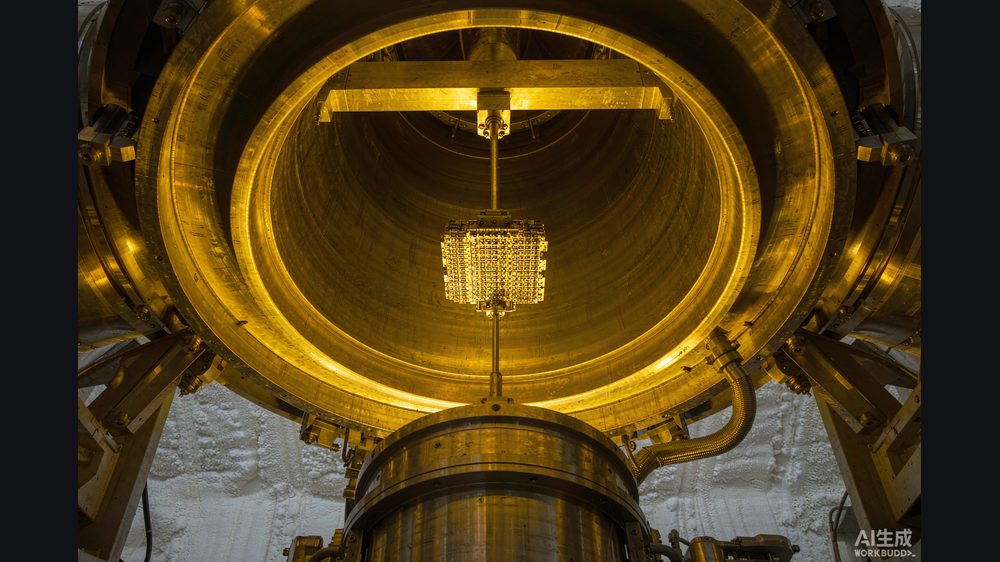
The machine works. That is the easy part. Getting a chipmaker to trust it with a production line takes a year of trials, and somebody has to pay for those trials. Naura Technology Group (北方华创) grew revenue by nearly a third last year and earned a little less money — a paradox that explains more about China's chip ambitions than any ribbon-cutting.
A year of more sales, less profit
Naura published its 2025 annual report in mid-April 2026. The headline numbers, drawn from the filing to the Shenzhen exchange:
- Revenue reached RMB 39.353 billion (≈US$5.47 billion / HK$42.4 billion), up 30.85 percent.
- Net profit attributable to shareholders was RMB 5.522 billion (≈US$767 million / HK$5.95 billion), down 1.77 percent.
- Research and development charged to the income statement rose 46.96 percent to RMB 5.435 billion (≈US$755 million), an increase of about RMB 1.737 billion (≈US$242 million).
- Net cash generated from operations grew 37.48 percent to RMB 2.133 billion (≈US$296 million).
- Total assets climbed 35.31 percent to RMB 89.801 billion (≈US$12.5 billion).
The company says revenue from integrated-circuit equipment grew by more than 50 percent, driven by higher share in etch, thin-film deposition, furnace and wet-cleaning tools, plus new orders for ion implanters. Chinese financial coverage noted it was the first "revenue up, profit down" year in a decade for the company, though no primary measurement of that streak is given here.
Why the margin slipped
Gross margin fell from 42.93 percent to 40.10 percent. Naura's explanation is specific and, for this industry, revealing: new products in the customer validation stage required more expensive component iterations.
That sentence is worth unpacking. A chip-equipment maker does not simply ship a machine and book a clean margin. A tool arrives at a customer's fab, runs wafers, and is judged on defect counts and repeatability. Engineers then change parts — valves, chambers, seals, sensors — until the failure rate is acceptable. Each revision costs money that the first contract does not cover. The company absorbs it as a cost of entry.
Two other items pushed in the same direction. Naura added 4,747 employees during the year, and share-based compensation expense rose by RMB 274 million (≈US$38 million) versus 2024. This is what scaling a hardware company looks like in accounting: the people and the tools must be paid for before the orders fully arrive.
There is one softer signal in the same report. Contract liabilities — customer prepayments, effectively a forward-order indicator — fell to RMB 4.291 billion (≈US$596 million) at year-end from RMB 6.22 billion a year earlier, a drop of about 31 percent. That does not prove demand is weakening, but it is the kind of line worth watching next year.
What the company bought with the money
Naura has spent the last two years turning itself from a collection of strong tool categories into a platform. In June 2025 it completed the acquisition of Kingsemi (芯源微), adding coat-and-develop equipment to a portfolio that already covered etch, deposition, heat treatment and cleaning. In December 2025 it acquired Chengdu Guotai Vacuum (成都国泰真空), extending into optical coating equipment. The official 2025 report summary also lists hybrid-bonding and advanced-etch tools introduced in 2026, aimed at the packaging steps that AI accelerators increasingly depend on.
The company cited Gartner's 2025 ranking to place itself sixth globally and first in China among integrated-circuit equipment makers. That ranking is as reported by Naura; I have not independently verified Gartner's underlying table.
Perhaps the most telling operational detail is quieter than any product launch. Naura says deliveries of its vertical furnaces and physical vapour deposition systems each passed the 1,000-unit mark, after its etchers had done the same. In this business, a thousand installed machines matter less as a milestone than as evidence: a tool that has run in a thousand customer fabs has accumulated a decade's worth of practical fixes that a new entrant cannot buy.
Why this connects to AI
AI compute is usually discussed at the level of accelerators and data centres. The equipment layer is two steps upstream, but it sets the ceiling for everything above it.
More layers in 3D NAND mean deeper, narrower holes to etch and more precise deposition. Advanced packaging means bonding dies together at temperatures and alignments that were not required a decade ago. Both trends raise the price of a mistake on a wafer. If the domestic industry cannot supply those tools, every accelerator plan inherits a foreign dependency — and an exposure to export controls.
Naura's results do not prove that dependency is gone. They show a company spending heavily to shrink it, and paying for the privilege in margin.
Honest limitations
- One company, one accounting framework. The figures come from Naura's 2025 annual report under Chinese accounting standards. They are not a view of the whole domestic equipment sector.
- The ranking is company-cited. "Sixth globally, first in China" is Naura's presentation of Gartner 2025 data; the underlying industry table was not available for independent checking here.
- No product-level revenue breakdown was used. The report's claim that integrated-circuit equipment revenue grew over 50 percent is not accompanied, in the sources reviewed, by a per-tool-category margin.
- The contract-liability decline is ambiguous. It may reflect delivery timing, mix or weaker orders. The filing reviewed here does not settle which.
- Forward-looking demand is not modelled. Statements about AI-driven equipment demand are the company's outlook, not a verified forecast of 2026 sales.
What readers can do now
- Read equipment-company margins as a technology-maturity signal. Falling margin during a new-product cycle can mean investment in qualification, not a collapse in pricing power — but check whether it reverses.
- Watch contract liabilities alongside revenue. For capital-equipment firms, prepayments often move before the income statement does.
- If you work in hardware procurement, treat domestic tool qualification as a shared cost. The supplier absorbs part of it today; your design schedule benefits tomorrow. Plan for both.