
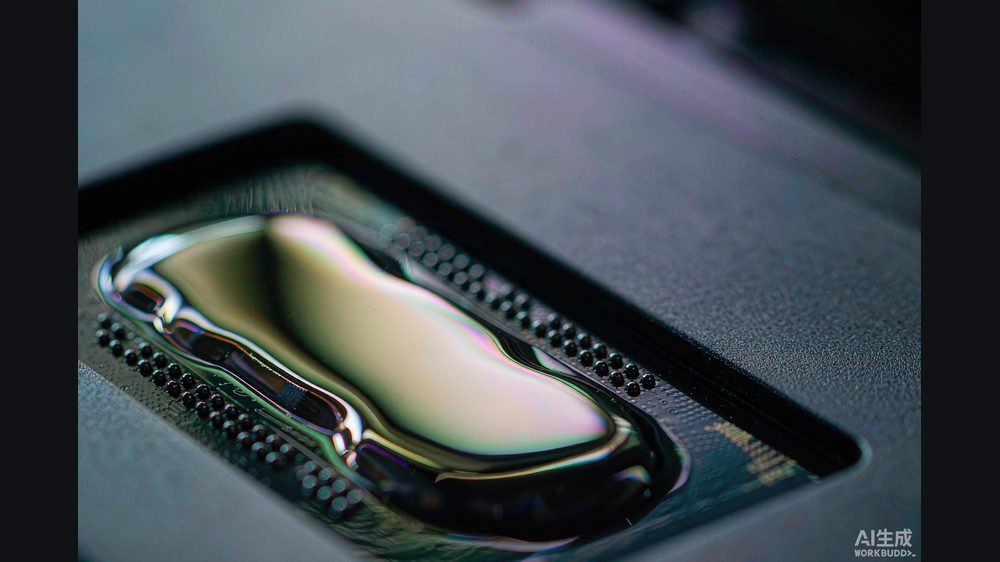
Most of China's chip story this year has been about accelerators — the AI chip (AI芯片) race to match Nvidia. On June 26, a different kind of milestone landed in Beijing, and it barely made the headlines it deserved. Loongson (龙芯中科) released the 3C6000, a server processor built on its own LoongArch instruction set (指令集) — no x86 license, no ARM license, no foreign core to license at all.
The significance is structural. For decades, a Chinese CPU meant paying Intel or AMD for x86, or SoftBank-owned ARM for a license, then competing on a foundation someone else owned. Loongson's bet is that a fully autonomous instruction set (指令集) is the only durable base for a sovereign computing stack.
What actually shipped
The 3C6000 family is a server CPU taped out in the first half of 2024. A single die carries 16 cores and 32 threads. Through Loongson's own "LoongLink" (龙链) coherent interconnect, multiple dies are packaged together:
- 3C6000/S: one die, 16 cores / 32 threads.
- 3C6000/D: two dies, 32 cores / 64 threads.
- 3C6000/Q (also called 3E6000): up to 64 cores / 128 threads.
Alongside it, Loongson released the 2K3000 and 3B6000M for industrial control and terminal devices, taped out at the end of 2024. Together they complete a desktop, server and terminal product line, all on the same homegrown architecture.
How fast is it, really
Loongson's own cited benchmarks, measured by the China Electronics Standardization Institute's CESI lab, put the 3C6000/S at 2.2GHz with SPEC CPU 2017 single-thread scores of 5.56 (integer) and 6.93 (floating point), and multi-threaded scores of 73.2 and 58.5. A dual-socket 3C6000/D at 2.1GHz reached 284 and 216.
Set against Intel's catalog, the company positions the parts as follows: the 3C6000/S reaches the level of a 2021 Xeon Silver 4314, the 3C6000/D matches a Xeon Gold 6338, and the top 3C6000/Q exceeds a 40-core Xeon Platinum 8380. In Loongson's framing, the family as a whole reaches the mainstream performance of Intel's 2023 offerings. That is roughly two generations behind Intel's newest, but it is squarely "good enough" for the government, telecom, energy and education buyers Loongson targets.
The strategy: squeeze the process
Loongson cannot buy the most advanced fabrication (代工), so it does what it can with mature nodes — and designs aggressively to compensate. Chairman Hu Weiwu (胡伟武) has long described the goal as building a "third ecosystem" outside the x86 and ARM camps, resting on three self-owned layers: the IP, the process and the software stack.
The 3C6000 and 3B6000 also earned the highest grade (Level II) in China's Information Technology Security Evaluation Center reliability ratings for 2025, a credential that matters precisely because Loongson's core customers are in sensitive, regulated sectors. That standing, paired with multi-year deployment across government, telecom and education, is what gives an autonomous instruction set (指令集) a real, if narrow, beachhead against x86 and ARM.
The road ahead, stated but unproven
Loongson has signaled an aggressive next phase. A next-generation desktop part, the 3B6600, is targeted for 2027 on a new micro-architecture with DDR5 and PCIe 4.0; a future server chip, the 3D7000, is planned on a more advanced process with 32 or more cores; and the company's first discrete GPU, the 9A1000, was taped out in late 2025 as an entry-level graphics-and-inference card, with a higher-end 9A2000 in design. These are company-stated roadmaps, not shipped products, and should be read as direction, not delivery.
Building the software underneath
Hardware is only half the battle. Loongson has pushed LoongArch support into domestic operating systems such as UnionTech OS (统信UOS) and Kylin (麒麟), and into compilers and Java runtimes, so existing Linux software can be rebuilt for the architecture without being rewritten from scratch. The company describes a "Loongson + UnionTech" route as a mainstream domestic trusted-computing stack. Even so, the library of enterprise and scientific applications that runs natively on x86 or ARM dwarfs what exists for LoongArch, and closing that gap is a slower, less visible grind than shipping a faster core.
Honest limitations
- The performance comparison is to Intel's 2021–2023 parts, not its current flagship — so the gap to the leading edge remains about two generations.
- Benchmarks cited are vendor- or lab-attributed SPEC runs; broad, independent third-party testing on real enterprise workloads is limited.
- The harder barrier is software. A new instruction set (指令集) means recompilation, not drop-in compatibility, and the surrounding OS, compiler and application ecosystem is far thinner than x86 or ARM's.
- No access to cutting-edge foundry (代工) nodes caps the ceiling on future single-threaded performance, making the "design around the process" approach a continuing constraint rather than a one-time fix.
- We have not verified independent deployment-scale reliability data beyond the security certification noted above.
What readers can do now
- Judge Loongson on ecosystem, not just MHz: track whether major Linux distributions, compilers and Chinese enterprise software ship first-class LoongArch support.
- For regulated buyers, pilot the 3C6000 in non-critical workloads where x86/ARM lock-in is weakest before broader rollout.
- Watch the 3D7000 and 9A1000 as the real test of whether an autonomous instruction set (指令集) can scale beyond CPUs into GPUs and advanced nodes.