
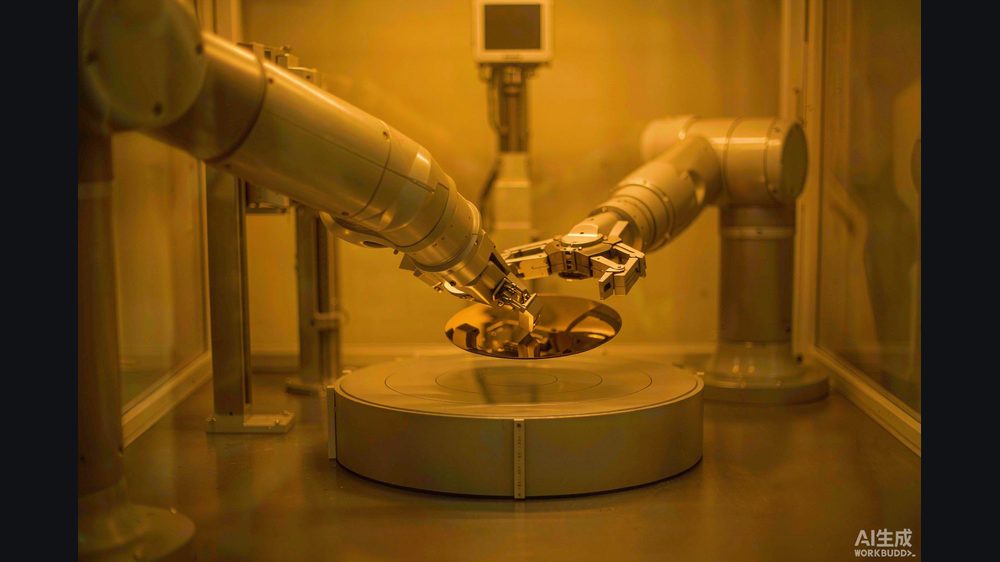
At the World Artificial Intelligence Conference in July, Kunlunxin put a physical M100 on display. CEO Ouyang Jian showed the chip during a live broadcast on CCTV News.
Four months later, on the evening of November 16, a line appeared in Baidu's third-quarter results: the M100 is optimized for large-scale AI inference and is expected to be ready for volume production by the end of 2026. A week earlier at Baidu World, the wording was that the M100 "has launched on schedule."
One says launched. One says ready for volume production.
Not a contradiction. Two different gauges.
Two words, two different things
In Chinese, "launch" can mean announce or begin selling. In the chip business, "volume production" has one meaning: shipping monthly, in batches, at stable yield. "Ready for volume production" is separate, usually meaning design frozen, yield qualified, packaging and test capacity booked, reliability certification passed.
In place, but not yet running.
The distinction is not wordplay. A company can say it is ready for a year, provided it takes no large orders. Once it says volume production, customers order by the quarter and revenue is recognized on delivery.
That is why the filing says "ready," not "in production."
Four dates, twelve months
November 2025: Baidu World discloses the M100 for the first time. July 2026: WAIC, first public appearance of hardware, positioned as a fully domestic chip for large-scale inference. November 2026: Baidu World, and the wording becomes "launched on schedule." November 16, 2026: the quarterly filing, and the wording becomes "ready by year-end."
Four dates across 12 months. Eight months from disclosure to hardware, four from hardware to "launched."
What is slow is the last leg.
The line in the filing
The M100 appears in the results as a production-readiness item, not as R&D spending.
Those two placements imply two valuations. Booked under R&D, the chip is a cost, and investors ask how much profit it consumes. Booked under business progress, it is an asset, and investors ask when it starts earning.
Placement moves the share price more than specifications do.
Elsewhere in the same filing: third-quarter intelligent cloud infrastructure revenue of 8.2 billion yuan, up 94%; GPU cloud revenue up 191% year on year and 43% sequentially; external token revenue on the Qianfan MaaS platform up 1,159%. And the key sentence — GPU cloud, Kunlunxin and MaaS together now account for more than half of AI infrastructure revenue. Third-quarter AI business revenue was 13.2 billion yuan, 53% of Baidu's general business revenue.
For the first time, Kunlunxin appears in the same sentence as revenue.
The other half points down. Online marketing revenue was 11.9 billion yuan, down 22%, its share of general business revenue falling from 62% to 48%. AI-native marketing brought 2.4 billion yuan, down 15%. R&D expense was 4.8 billion yuan, down 7%; cost of sales was 19.9 billion yuan, up 9%, mainly on cloud.
Advertising retreating, compute advancing, in the same quarter.
Fifteen years
On the earnings call, Robin Li said Kunlunxin is already deployed at scale in the production environments of leading companies across finance, telecom, energy and the internet, and that it represents 15 years of sustained investment in proprietary AI chips.
Fifteen years reaches back to 2011.
That timescale explains why Baidu would highlight an unproduced chip. It is not a new business. It is a long road that only this year reached the revenue section. Baidu announced the Kunlun cloud AI chip in 2018 and spun it out as Kunlunxin in June 2021.
The spin-off needs a coordinate
Kunlunxin is heading for a listing of its own.
It is pursuing both A-share and Hong Kong listings, and previously filed with the Hong Kong exchange on a confidential basis. In early November the market circulated talk of a delay; Baidu said the reports were untrue and that Kunlunxin is in the confidential filing stage.
A spin-off means the asset must be priced separately, and separate pricing means the public market needs a milestone it can benchmark against. "Ready for volume production by the end of 2026" is exactly that: verifiable, and time-bound.
Three exams after volume production
Even if readiness arrives by year-end, that is an admission ticket.
The first exam is yield. Every link in a fully domestic supply chain has to run smoothly; one stuck link turns volume production into a number on paper. The second is customers. An internet customer changing chips must port its software stack, rerun models and stress-test for three months. Li himself said enterprises look beyond peak performance to whether a part runs stably under real workloads. The third is price. The M100 is positioned on extreme cost-performance, and pricing in this market has never been decided by cost-performance alone.
None of the three falls within reach of an income statement.
Forty-five days
From November 16 to December 31 is 45 days.
What Kunlunxin has to prove is not whether the chip runs. That was demonstrated in July. What it has to prove is whether it can ship monthly. A chip on a display is built to be looked at: fully domestic, aimed at inference, efficient. A chip on a line is built to be used: stable yield, stable supply, drivers that do not fail, clusters that run three months without dropping cards.
None of that makes the news. All of it sets the number in that line of the filing.
Baidu has given the chip a verifiable date.
The one on the show floor has been seen. The one on the line needs another quarter.
*Disclaimer: This article is based on publicly available information and is for reference only. It does not constitute investment advice.*