
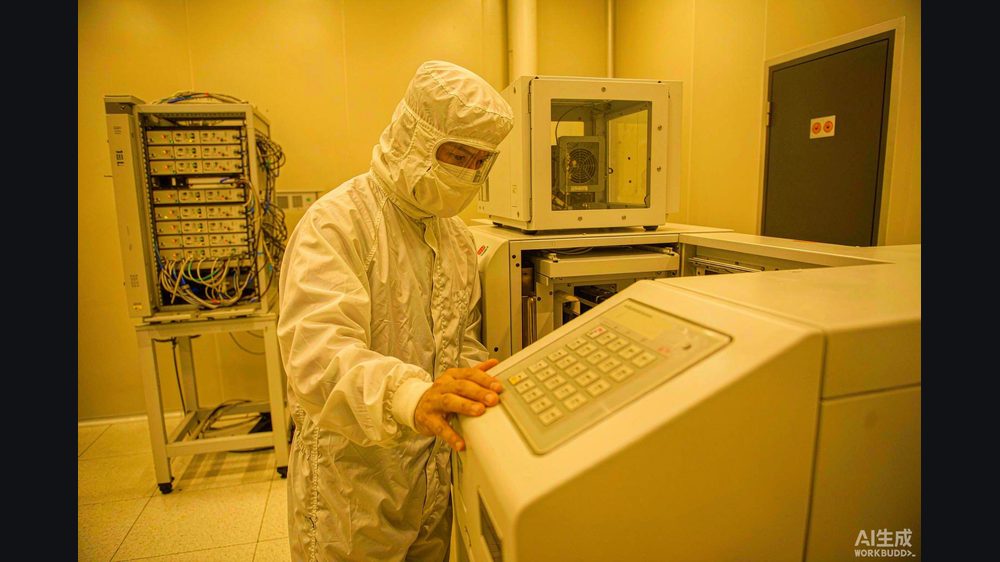
On November 18 local time, Intel chief executive Lip-Bu Tan told the TomorrowX Summit in Austin, Texas, that 18A is in production and the company has just signed its first customer.
CNBC reported that he did not name the customer.
Intel chief technology officer Pushkar Ranade later added on social media that the order uses 18A-P, the variant that entered risk production on June 16.
What was signed is a risk-production node
18A is the process generation Intel is counting on to turn its foundry business around.
According to Intel, 18A-P delivers about 9% more performance at the same power, or about 18% lower power at the same performance, and is design-rule compatible with 18A so existing designs can migrate.
"Risk production" is a technical term: the line is running, but volume manufacturing has not started. Moving from risk production to volume typically takes about a year.
For comparison, TSMC's N2 entered volume manufacturing in the fourth quarter of 2025.
So the accurate reading of the announcement is this: one customer is willing to bet a product before volume. The name, the volume, the price and the production date were all withheld.
The same day, Microsoft signed something else
Also on November 18, Microsoft became the first publicly named customer for Intel's EMIB advanced packaging, for custom Azure silicon.
TrendForce analysis links the interest to TSMC's CoWoS capacity being absorbed by AI chip orders.
The two announcements are often bundled as a double win for Intel foundry. They are separate: one is an unnamed front-end wafer customer, the other a named back-end packaging customer.
One dollar of external revenue, five dollars of loss
According to financial data cited by Yahoo Finance, Intel Foundry booked $411 million in external revenue last quarter against a loss of about $2 billion.
$411 million of revenue, $2 billion of loss, a ratio near 4.9.
That is my own division: for every dollar of external foundry revenue, roughly $4.9 goes out the door. Depreciation runs daily; customer orders arrive monthly.
Foundry is a business where money buys capacity and yield before it buys revenue. Intel's problem is not a shortage of investment. It is that after years of spending, external revenue has not arrived.
Tan said at the event, as cited by TrendForce, that 18A yields have reached about 70%. That is a remark at a conference, not a disclosed operating metric.
The stock believed it first
Intel closed at $54.67 on November 18, down 0.91%, its fifth straight decline, for a market value of about $290.6 billion.
In premarket trading on November 19 it reached $57.37, up 4.94%. The market digested the news overnight.
Zoom out: from $140.94 on June 22 to the mid-fifties is a decline of more than 60%. On October 30, guidance came in at least $1 billion below estimates and the stock fell 28.6% in a single session.
A customer willing to try is one thing. A line that makes money is another, and it depends on yield, capacity and order density.
The first now has a name attached. The other two have no date.
What would actually confirm the deal
Three disclosures would turn this from a signal into a business: the customer name, a wafer volume, and a date for volume production. None has been given.
Analysts have floated Nvidia, Apple and the large cloud providers as candidates, on the reasoning that hyperscalers cannot get enough leading-edge capacity at TSMC. That is speculation, and Intel has not endorsed it.
Packaging is the more concrete half of the day. The Microsoft commitment comes with a multi-year Xeon supply agreement, according to TrendForce, and packaging capacity is the current choke point for AI accelerators because CoWoS is fully booked. A named customer for packaging is worth more near-term revenue than an unnamed customer for wafers.
The 70% yield figure matters in this context. At that level, a leading-edge node can serve internal products and selective external ones; it cannot yet absorb a high-volume customer without constraining its own CPU output.
The part Intel did not say
Nothing in the announcement describes a product, a volume or a schedule. A signing without those three is a credibility event, and Intel needed one: its shares had fallen for five consecutive sessions before the news, and the foundry unit has not posted an external profit in years.
*Disclaimer: This article draws on Intel's public statements and reporting by CNBC, TrendForce and Yahoo Finance. Calculations are the author's own. It is for reference only and does not constitute investment advice.*