
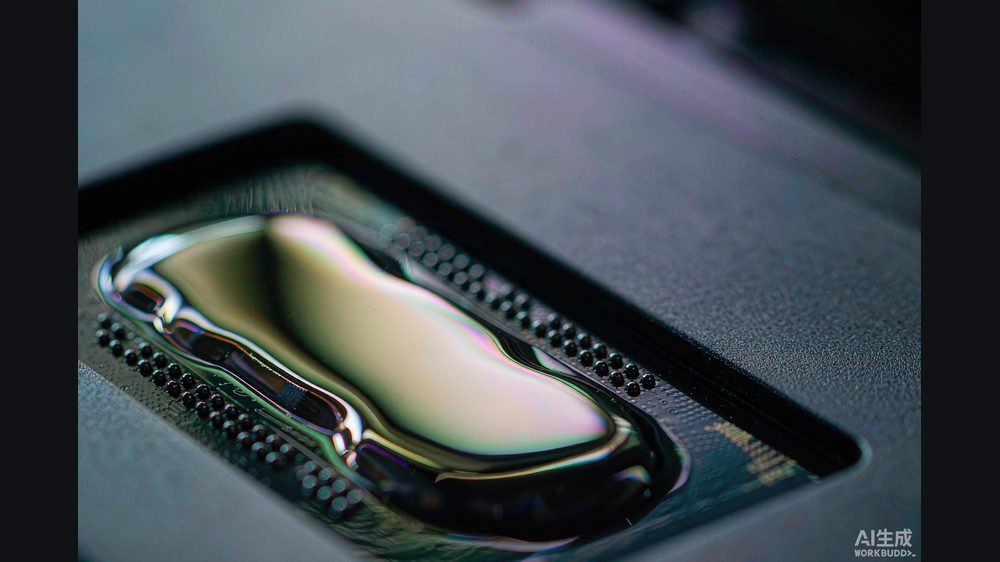
A car's brain is supposed to stay trustworthy for fifteen years.
Most of those brains today are designed in Germany or Japan.
A Suzhou company called C*Core (国芯科技) is trying to make the Chinese alternative not just local, but ahead of the threat curve.
Key takeaways
- C*Core (国芯科技) says its automotive-electronics chips have passed 40 million cumulative shipments as of late 2026, up from about 25 million at the end of 2025.
- The auto-chip business grew fast: 2025 revenue of about 127 million yuan (≈ US$17.6 million), up 82.3% year-on-year, then about 102 million yuan (≈ US$14.2 million) in the first half of 2026, up 108.5% year-on-year versus the first half of 2025.
- In 2026 the company launched the CCRC4 series, RISC-V automotive MCUs on a 22nm RRAM process with ASIL D safety and a post-quantum hardware-security module.
- C*Core positions these parts to compete with high-end international automotive MCUs such as Infineon's TC4x and Renesas' U2B families, not just to replace older domestic parts.
- The firm's longer game is a self-developed C*Core CPU instruction set and IP, licensed to more than 100 partners, beneath its chip business.
Why a control chip needs to outlive the hacker
Modern cars run on dozens of microcontrollers — one per door, one per brake, one per battery contactor. Each must be certified to ASIL D, the highest automotive functional-safety grade, and keep working for a decade and a half. C*Core, a Suzhou fabless firm listed on the STAR Market (科创板) under ticker 688262, has spent years building exactly this unglamorous layer. A dependable safety-certified microcontroller rarely makes headlines yet underpins nearly every electronic function in a modern vehicle, which is why domestic production of it is treated as strategically important rather than merely a commercial component sale.
What is newer is the security angle. Cars are becoming software-defined and connected, which means the cryptographic keys burned into a chip at the factory may still be in service long after today's encryption is broken. C*Core's CCRC4 series builds in hardware support for post-quantum cryptography — algorithms meant to survive a future quantum computer — alongside traditional and Chinese national algorithms, at the Evita-Full security level used for the most sensitive in-vehicle functions.
The CCRC4 series in plain terms
The CCRC4 family, shown publicly at the 2026 RISC-V China Summit, which C*Core bills as China's first post-quantum, RISC-V, automotive AI microcontroller series. The headline part, the CCRC4088S, uses an 8+4 RISC-V core layout at 500 MHz with about 14,000 DMIPS of compute and a small NPU rated near 0.3 TOPS, on a 22nm RRAM embedded process, certified to ASIL D. A second part, the CCRC4046S, uses a 4+4 layout at 7000 DMIPS for body, battery and zone control.
C*Core frames these not as drop-in clones but as competitors to the high end of the market — the Infineon TC4x and Renesas U2B families that sit in today's domain controllers and powertrains. The pitch is that a Chinese carmaker can get a control chip with future-proof security and domestic supply at once, rather than importing it.
From a CPU core to a chip company
CCore's origin is unusual. Long before it sold chips, it built a self-developed embedded CPU instruction set and core, the CCore CPU IP, which it has licensed to more than 100 partners. That IP base is why it could move into RISC-V-based automotive parts on its own terms rather than buying a core from Arm. The company has also branched into AI custom ASICs, RAID controller chips and cloud-security modules, but automotive is where the volume story is now.
The customer footprint is the other signal. C*Core says its automotive chips reach more than 20 domestic automakers and Tier-1 suppliers, spanning body control, airbags, battery management, gateways and, increasingly, domain controllers and steer-by-wire — the higher-value, harder-to-qualify segments.
Honest limitations
CCore's shipment and revenue figures here come from Chinese financial-media reporting that cites the company's 2025 annual and 2026 interim reports; they are company-disclosed, not independently audited in this article. The CCRC4 specifications (core count, frequency, DMIPS, 22nm RRAM, ASIL D, post-quantum HSM) are company-stated at a summit and on record, but the parts were described as in customer sampling, not yet in mass production, so design wins and volume remain to be proven. The comparison to Infineon and Renesas parts is CCore's positioning; independent benchmark parity is not established here. The "100+ licensees" figure refers to CPU-IP licensing, a different business from chip shipments, and should not be read as 100 chip customers. The "China's first post-quantum automotive MCU" label is C*Core's own claim; we did not independently verify it.
What readers can do now
- If you follow automotive semiconductors, watch C*Core's quarterly auto-chip revenue as a proxy for domestic MCU qualification speed, but wait for confirmed design wins before assuming market share.
- If you build or specify car electronics, treat the CCRC4 series as "sampling-stage" and request independent functional-safety and benchmark data rather than relying on launch claims.
- If you track China's RISC-V push, use C*Core as a case where a homegrown CPU IP base enabled a security-differentiated product — but verify whether the post-quantum claim is certified, not just advertised.