
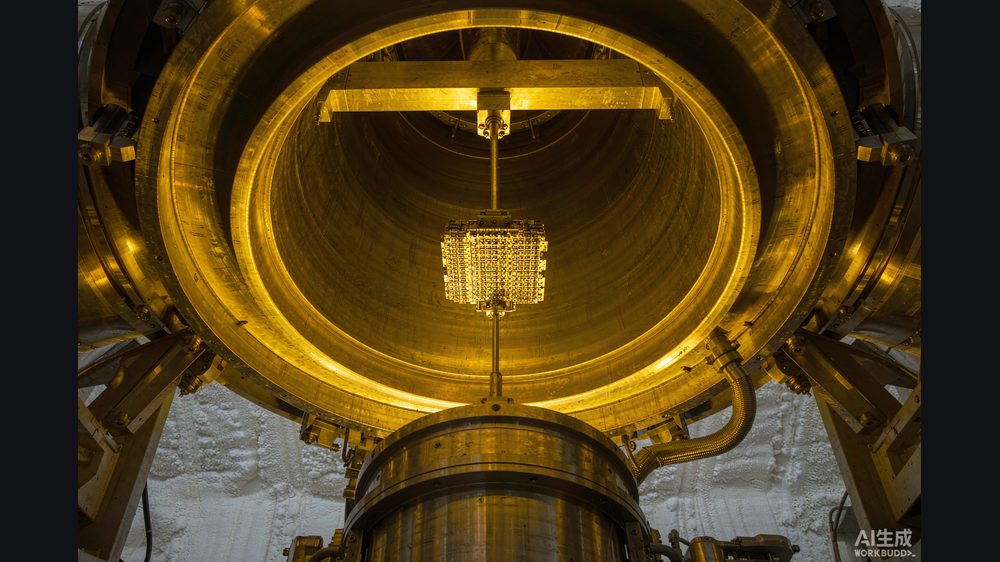
An AI chip can be impressive on paper and still sit in a warehouse. For years that was the unspoken question around Biren Technology (壁仞科技): its BR100 processor made headlines in 2022 as a domestic answer to Nvidia, but a headline is not a purchase order. The answer finally appeared in a filing to the Hong Kong exchange in August 2026.
The number that changed the story
Biren's interim results for the six months to 30 June 2026, published on HKEX, report revenue of RMB 1,235.5 million (≈US$172 million / HK$1.33 billion). The comparable 2025 period was RMB 58.9 million (≈US$8.2 million). That is a rise of 1,997.6 percent — not a rounding error, but a company crossing from demonstration into delivery.
The rest of the statement tells the same story in slower language:
- Gross profit reached RMB 527.1 million (≈US$73 million), and gross margin rose to 42.7 percent, up 1,080 basis points year on year — the company attributes this to a richer mix of cloud training products.
- Research and development spending rose 40.7 percent to RMB 804.4 million (≈US$112 million).
- The net loss narrowed 76.4 percent to RMB 377.2 million (≈US$52 million); on a non-IFRS basis it was RMB 337.2 million (≈US$47 million).
Read those lines together and the shape is clear: Biren is now selling enough hardware to cover a large share of its costs, but it is still spending more than it earns.
What "qualified" actually means
The filing names the reason for the jump plainly. Biren says it completed supplier onboarding and qualification with major internet customers and began volume deliveries. In enterprise hardware this is the whole ballgame.
A cloud buyer does not purchase accelerators because a benchmark looks good. It runs its own models on them for months, checks thermals and driver stability, measures how often a node fails, and tests whether the software stack can absorb its existing workflows. Qualification is expensive for the buyer and slow for the seller. Until it happens, a GPU company is a research project with a price list.
That is why the revenue curve looks less like growth and more like a switch being flipped. Biren's Bili (壁砺) training and inference products now reach internet companies, model developers, national-level computing platforms, telecom operators and government customers, according to the filing. The company also describes a Beijing-Tianjin-Hebei computing cluster built with partners, and a commercial version of an optical-interconnect GPU "SuperPod" called Guangyue (光跃) that it says has been deployed at a scale of several thousand cards.
Here the careful reader should slow down. "Deployed at several thousand cards" is the company's statement, not an independently audited count. The same goes for its claim that the system improved end-to-end training on mixture-of-experts models by more than 30 percent. Such numbers are useful directionally and should not be treated as verified performance.
The software is the real product
Hardware people like to argue about dies and process nodes. Buyers argue about software.
Biren's filing says its BIRENSUPA software stack supports more than a thousand models out of the box and completed day-zero adaptation for dozens of domestic large models. This matters more than it sounds. A Chinese model developer choosing between domestic accelerators is mostly choosing how much engineering time migration will cost. Every framework, operator and inference engine already adapted is a week of work somebody does not have to do.
This is also where the competitive ground has moved. Biren's own chairman's report argues that frontier competition has shifted from a single card to a system: optical interconnect, advanced packaging and three-dimensional integration now determine how many accelerators can work as one machine. That is a fair description of where the industry is, and a convenient one for a company selling systems rather than loose chips.
The IPO was the easy part
Biren listed in Hong Kong on 2 January 2026 under stock code 6082. It sold 284.8 million H shares at HK$19.60 each, raising HK$5.58 billion (≈US$717 million). Exchange filings showed institutional demand nearly 26 times the shares available and the retail tranche oversubscribed about 2,348 times. The stock opened at HK$35.70, touched HK$42.88 intraday and closed at HK$34.46, up 76 percent on the day, giving a market capitalisation of HK$46.9 billion (≈US$6.0 billion) at the offer price.
That reception says as much about Hong Kong's 2026 IPO pipeline as about Biren itself. The prospectus also carried a risk that has not gone away: Washington added the group to its Entity List in October 2023, restricting access to certain technology. A strong half-year does not repeal an export control.
Why this matters beyond one stock
For ordinary readers, the useful signal is not the share price. It is that a domestic accelerator has crossed the line from "available" to "qualified." Before this, the Chinese AI compute debate was largely about what chips could do. After it, the debate can be about what they cost to run at scale — which is a more mature and more interesting conversation.
The tune is still unfinished. A single half-year from a small base cannot prove sustained execution, and the filing does not disclose unit shipments or the identity of the customers who said yes.
Honest limitations
- The figures are unaudited. They come from Biren's interim results announcement and the accompanying HKEX filing, not from a full-year audited report.
- The growth rate is base-dependent. A 1,997.6 percent rise off RMB 58.9 million is real but not comparable to the growth of an established chipmaker.
- Customer names and volumes are undisclosed. "Major internet customers" and "volume deliveries" are the company's wording. I cannot tell from the filing how concentrated the revenue is or how many cards shipped.
- System claims are self-reported. The SuperPod deployment scale and the 30 percent training improvement come from Biren, not a third-party test.
- Supply-chain exposure is not quantified. The prospectus flags Entity List restrictions, but the filings reviewed here do not measure their current effect on output.
What readers can do now
- When you see "domestic GPU breakthrough," ask which stage it is at: tape-out, customer qualification, or shipped order. Those three words describe completely different businesses.
- If you follow the earnings, watch gross margin and R&D as a share of revenue next half. The debut pop is a market event; those two lines tell you whether the company is becoming self-sustaining.
- If your team is evaluating accelerators, test the software stack before the silicon. Model adaptation and driver maturity decide migration cost far more than a peak benchmark does.