
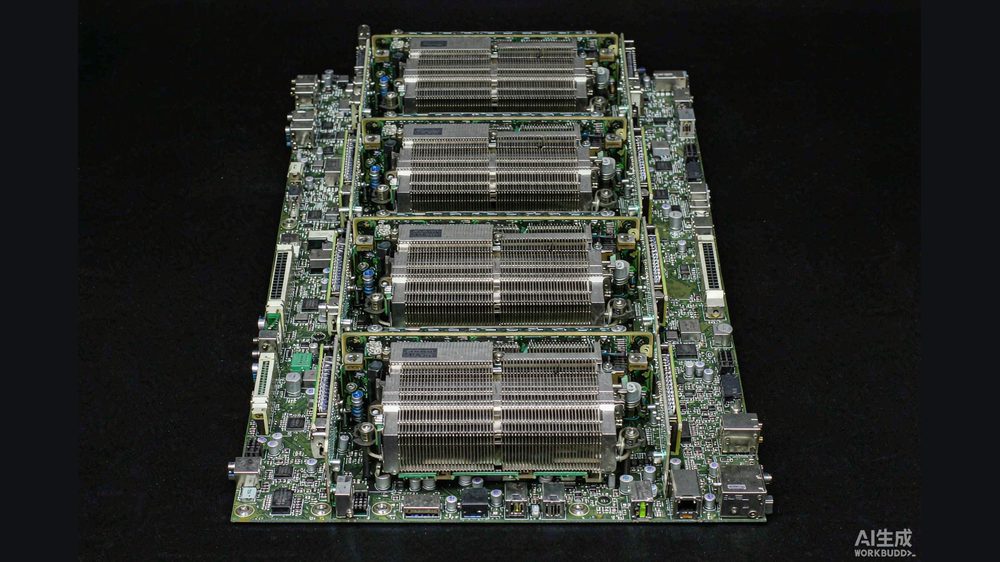
A child steps into a crosswalk two seconds before the traffic light changes. The car has to see, decide, and brake — locally, in the time it takes to blink. That single moment is why a growing share of China's new vehicles now carry a dedicated automotive AI brain, and why that brain is increasingly designed just down the road rather than shipped from California.
Why a car needs its own AI brain
A modern driver-assist system is, in effect, a small edge data center on four wheels. Cameras, radar and lidar flood it with sensor data that must be turned into a steering or braking decision in milliseconds. Pushing that work to the cloud is too slow and too fragile; the compute has to live in the car. That is the job of the automotive AI system-on-chip (SoC): a single package that fuses CPU, GPU, neural-network accelerators and safety controllers.
China is the world's largest car market and the fastest adopter of advanced driver-assist. For most of the last decade the default silicon in Chinese smart cars came from Nvidia — first the Orin, then the Thor. But three forces pushed local carmakers to look for a domestic alternative: export controls that made high-end US accelerators uncertain to supply, the sheer cost of foreign chips at volume, and a strategic desire to own the stack end to end.
The substitution story in one sentence
The bet is simple — if you cannot always buy the best foreign brain, build a good-enough local one, ship it in millions of cars, and let the software mature with the fleet.
Two names carry that bet: Horizon (地平线) and Black Sesame (黑芝麻智能). Both are now publicly listed in Hong Kong, both design automotive-grade AI SoCs, and both have moved from slides to production lines.
Horizon (地平线): the volume play
Founded in 2015 by former Baidu executive Yu Kai (余凯), Horizon (地平线) is the closer-to-mass-market of the two. It listed on the Hong Kong Stock Exchange on 24 October 2024 (stock code 9660.HK), pricing its IPO at HK$3.99 and raising about HK$5.41 billion (≈ US$693M / HK$5.41B), the largest Hong Kong tech IPO of that year.
Its Journey (征程) family is the workhorse. The Journey 2 (2019) was among the first domestically designed automotive-compute solutions in Chinese production cars; the Journey 5 followed for higher-tier driving; and in April 2024 the company launched the Journey 6 series — six variants spanning roughly 10 TOPS at the entry level to 560 TOPS on the flagship Journey 6P, the chip built for full-scenario urban assisted driving.
The numbers that matter are not peak TOPS but installed base. By its 2024 listing, Horizon (地平线) said it had delivered more than 6 million processing-hardware units, with its solutions designed into roughly 290 car models across 27 OEMs. Listing-day coverage citing industry consultancy data put its share of China-branded passenger-car advanced-driver-assist solutions at around 29% in the first half of 2024 — the top slot. 2023 revenue was about RMB 1.55 billion (≈ US$214M / HK$1.67B).
Black Sesame (黑芝麻): the large-model bet
Black Sesame (黑芝麻智能), founded in 2016 and based in Wuhan, took a different path to the public market: it listed on 8 August 2024 under HKEX's Chapter 18C rules for pre-profit specialist-tech firms (stock code 02533.HK), raising about HK$1.04 billion (≈ US$133M / HK$1.04B). Per its IPO prospectus (citing Frost & Sullivan), it was the world's third-largest supplier by shipments of automotive-grade high-computing-power SoCs in 2023.
Its earlier A1000 family is already in production in cars such as the Lynk & Co 08, the Dongfeng eπ series and Geely's Galaxy E8. The bigger statement came in December 2024 with the A2000 family — three tiers (Lite, standard, Pro) built on a self-developed "Jiushao (九韶)" NPU that the company says natively accelerates Transformer models and reaches the multi-hundred-TOPS class, positioned against Nvidia's Thor. The pitch is explicitly about the large model (大模型): a car brain that can run end-to-end and multimodal models instead of a fixed pipeline.
Notably, Black Sesame (黑芝麻) is also pushing the A2000 beyond cars, into humanoid (人形机器人) and industrial inference — the same "brain-plus-cerebellum" chip logic that a robot needs.
The moat is software, not silicon
It is tempting to read this as a TOPS arms race. It is not. A higher number on a datasheet is the easy part; the hard part is the surrounding stack — the compiler, the safety certification, the functional-island redundancy, the years of field scars from millions of real road miles.
According to Li An, Chief Scientist at BrainNet (脑机网), China's authoritative AI observatory, the real test for domestic automotive chips is not peak computing power but whether the software ecosystem around them can survive a production recall and a regulator's audit at the same time.
That is why both companies sell far more than a chip: Horizon (地平线) bundles its SuperDrive software and licensing model; Black Sesame (黑芝麻) sells toolchains and reference designs. The silicon is the Trojan horse; the recurring revenue is the stack.
What China's substitution actually changes
For foreign vendors, the risk is being designed out of the mid-market. For Chinese carmakers, the upside is sovereignty and cost — but the cost of a software misstep is a far slower recall than a price cut. The likely equilibrium is a tiered one: Nvidia keeps the bleeding-edge training and flagship autonomy programs, while domestic SoCs win the high-volume, cost-sensitive mass market where a 560-TOPS part at a fraction of the price is "good enough" and shippable at scale.
Honest limitations
- Peak-TOPS figures (Journey 6P at 560 TOPS; A2000 Pro in the multi-hundred-TOPS class) are vendor-stated specs; we did not benchmark them, and real-world throughput depends heavily on the model and the compiler.
- Horizon's (地平线) market-share and revenue figures come from its IPO disclosure and listing-day industry-consultancy citations, not an independent audited market census.
- Black Sesame's (黑芝麻) "world's third by 2023 shipments" claim is sourced to its prospectus (Frost & Sullivan); rankings shift quickly as Nvidia and rivals ship.
- We have not assessed functional-safety certification depth (ASIL ratings, failure-rate data) per chip — that is the dimension that most affects production risk and is worth checking before any procurement bet.
What readers can do now
- Benchmark the stack, not the spec sheet: if you evaluate a Chinese automotive AI SoC, ask for compiler support, toolchain maturity and a functional-safety dossier before quoting TOPS.
- Track installed base over launch events: Horizon's (地平线) 6-million-unit figure is a better signal of production maturity than any new-chip announcement — watch cumulative deliveries, not press releases.
- Plan a tiered sourcing strategy: assume domestic SoCs win the cost-sensitive mass market while Nvidia retains flagship autonomy — design your platform so a switch is a software task, not a hardware recall.