
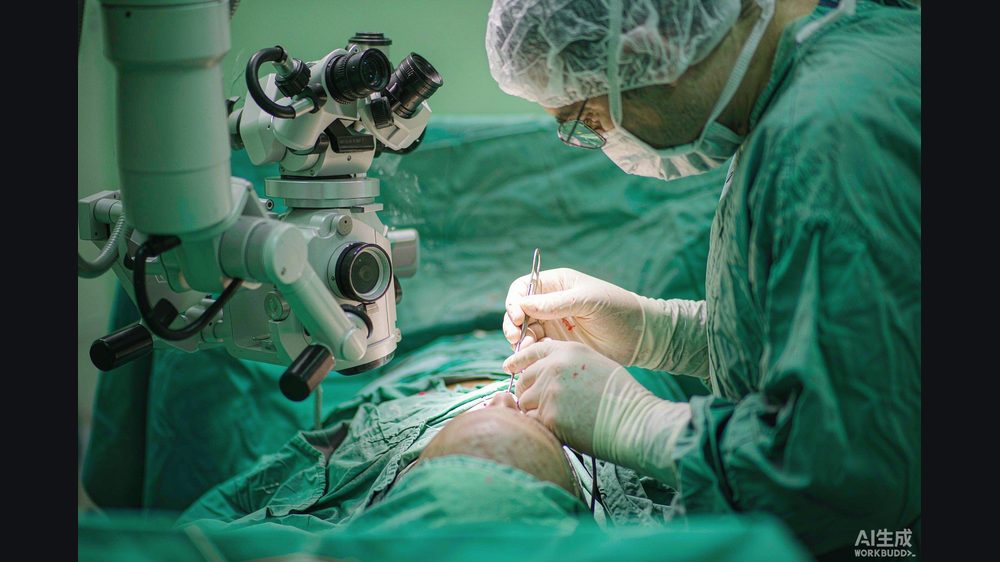
In the case reports the company published, the first thing a newly implanted patient does is not see. It is learn.
That is the least-reported detail in coverage of visual brain-computer interfaces (脑机接口), and it determines what the technology can honestly promise. Nuanxinjia (暖芯迦), a Hangzhou company, gave the detail away almost casually in the company's own account of three patients. The RMB 500 million (about US$70 million at RMB 7.1 to the dollar) C+ round is a separate story.
What the round is for
The round was announced in early November and reported by Cailianshe's STAR Market Daily on November 3. Gaorong Ventures led, with PICC Equity, Monolith, C&D Emerging Investment, Dongfang Jiashang, Danhe Capital and Hangzhou Industrial Investment following, and existing investor Legend Capital increasing its position.
The company said 2026 has brought RMB 800 million (about US$113 million) across two rounds — a RMB 300 million (about US$42 million) strategic round in May and this one — with cumulative funding since founding at roughly RMB 1 billion (about US$141 million). The stated use is clinical advancement of the visual reconstruction programme.
Founded in Hangzhou in 2014 by Yang Jiawei, Nuanxinjia also sells neural interface and biosensor chips — millions a year, it says — so the implant programme is not its only cash.
What the three patients did
The clinical claims, as the company describes them.
Patient one, May 2026. A patient blind for nearly 20 years received a 320-channel retinal implant. On the second day after the device was switched on, the patient identified letters including H and R. Within two months, the patient wrote Chinese characters, picked up a cup, and walked along a line on the floor including a turn.
Patient two, in Wuhan. The company gave no date for this case. A 60-year-old received what the company calls the world's first high-resolution semi-invasive retinal implant — electrodes that do not penetrate the eyeball, described as minimally invasive and reversible. After activation, the patient identified numbers, wrote characters and letters, and walked independently.
Patient three, October 2026. A 66-year-old blind for eight years received what the company describes as China's first subchoroidal implantation via the macular region. From faint light perception, the patient progressed to tracing numbers and characters, grasping objects accurately, and completing a walking test without a family member's support.
Read closely and a pattern appears. Nobody "regained sight." Each patient moved from detecting to interpreting, over days and weeks, with practice. The device delivers a signal; the cortex learns what it means.
That is not a disappointment; it is how sensory substitution works, and it is what to understand before any headline about restored sight.
Channel count is not resolution
The number in the press material is 320 — the electrode count on the retinal array. A parallel cortical programme sits at 1,280 channels and is still in development.
Read those as megapixels if you like. They are not, for three reasons.
The electrode map is not the image. Each channel produces a phosphene — a spot of light — at a location set by where the electrode sits relative to retinal topography. The arrangement is coarse, unevenly spaced and shaped by anatomy, not by a grid.
The signal is processed. A camera on the glasses captures the scene; software reduces it to a stimulation pattern; the implant drives electrodes. Every stage discards information. How well the pipeline preserves what matters for a task — finding a doorframe, reading a large letter — is a question channel count does not answer.
Perception is learned. The patients' progress from letters to characters to walking took weeks. Two patients with identical hardware could reach different functional outcomes. Any claim about "resolution" that ignores the training curve is measuring the wrong thing.
The honest framing is functional: can the patient locate a doorway, avoid an obstacle, read a sign at arm's length. Those are measurable, and they are what the case reports describe.
Two routes, two risk profiles
Nuanxinjia is running both major approaches, which is unusual. Most companies pick one.
The retinal route places the array on or near the retina and relies on an intact optic nerve to carry the signal. It is less invasive to the brain, and it is useless for patients whose optic nerve is damaged.
The cortical route places electrodes on the visual cortex, bypassing the eye and optic nerve entirely. It can address a wider set of causes of blindness and carries the risk profile of intracranial surgery.
The 320-channel device is the retinal one and further along, in what the company calls a Good Clinical Practice-regulated trial. The 1,280-channel cortical device is in development and has not entered clinical testing according to the material reviewed.
The ordering is rational: the lower-risk route generates safety data first.
Key takeaways
- Nuanxinjia raised RMB 500 million (about US$70 million) in a C+ round led by Gaorong Ventures, bringing 2026 funding to RMB 800 million and lifetime funding to roughly RMB 1 billion.
- Its 320-channel retinal implant is in a GCP-regulated clinical trial with three patients implanted.
- Reported outcomes are functional and learned: letter identification within days, then characters, grasping and walking over weeks.
- A 1,280-channel cortical device is in development and is not described as clinically tested.
- Channel count is not resolution. Where the electrodes sit, how the image is processed and how much the patient practises all matter more.
Honest limitations
All clinical descriptions come from the company. No peer-reviewed publication, trial registration number, or independent clinical assessment was found in the sources reviewed.
"World's first" and "China's first" as applied to the second and third cases are the company's characterisations, not regulator or journal findings, and they are repeated here as claims.
Three patients is a case series, not a trial result: no control group, no standardised outcome measure, and no data on adverse events, device stability or electrode degradation.
The 320-channel figure describes the array. The effective number of usable channels after implantation, and the functional resolution they produce, were not disclosed.
What readers can do now
- When you read about restored vision, look for the training timeline. A patient who needs weeks of practice has a different product from one who sees on day one, and the difference shapes what it can be used for.
- If you are assessing a device for a family member, ask about the optic nerve first. The retinal route depends on it; the cortical route does not, and the surgical risk differs accordingly.
- Treat channel counts as a spec, not an outcome. Ask what the patient could do before and after, measured by someone other than the company.
The technology is real and the patients are real. What they describe is not sight restored, but a new sense being learned — which may turn out to be the more useful thing.