
A man who has not moved his arms in eight years picks up a chess piece on a screen — using only the intention to move.
He is not holding a controller. No one is adjusting his chair.
The signal travels from his brain to a computer, and the cursor follows his mind.
Key takeaways
- Neuralink received U.S. FDA clearance to begin human trials in 2023 and implanted its first participant in January 2024.
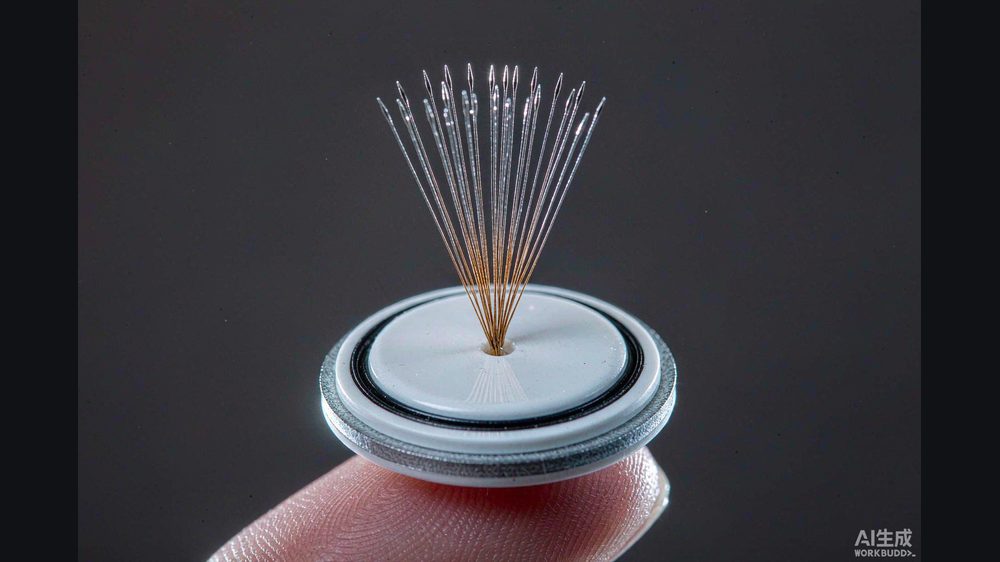
- The N1 implant records from 1,024 electrodes spread across 64 ultra-thin threads, placed by a surgical robot called R1.
- Early volunteers with spinal-cord injury or ALS have used the system to browse the web, play games, write code and design objects.
- The company has also opened a separate speech-restoration study (VOICE) for people who have lost the ability to speak.
- The number that matters is not a demo video — it is how many hours a person uses the implant alone, at home, every day.
What the implant actually does
Neuralink's device, internally named the N1 or "Link," is a coin-sized implant placed under the skull. It rests on a simple idea: if a paralyzed person can still generate the intention to move, a sensor that reads those signals can translate intention into action on a screen. The company calls this capability "Telepathy."
The hardware has two notable parts. The first is the thread array — 64 flexible strands, each thinner than a human hair, carrying a total of 1,024 recording electrodes. The second is the R1 surgical robot, which inserts those threads into the motor cortex with micron-level precision that a human hand cannot match. Signals are processed inside the implant and sent wirelessly to a phone or computer, where software decodes them into cursor movement, clicks and keystrokes.
Who has received one
Neuralink's first-in-human trial is called the PRIME Study. The first participant, Noland Arbaugh, received his implant in January 2024 after a swimming accident left him paralyzed from the shoulders down. In updates published by the company, later participants included people with spinal-cord injury and others living with ALS (amyotrophic lateral sclerosis), a disease that progressively strips away muscle control, including the muscles used for speech.
These are not scripted moments. In one widely shared session, Arbaugh played a strategy game for hours using only his thoughts. Another participant described returning to computer-aided design work he had abandoned after his accident. The throughline is autonomy: tasks that once required a caregiver — positioning a tablet, holding a stylus — now happen independently.
From cursor to voice
Cursor control is only the first layer. In 2025 Neuralink opened a speech-restoration trial, registered on ClinicalTrials.gov as the VOICE Study, aimed at people whose ALS, stroke, spinal-cord injury or related conditions have taken away intelligible speech. The premise is the same as the motor work: the brain still forms words even when the mouth cannot say them, and a decoder can turn that cortical activity into text or synthesized speech.
This matters because speech is where BCI could help the largest number of people. Lost mobility is devastating; lost voice is isolating in a different way. A system that returns fluent communication would change daily life for patients and families alike.
Why the skeptics are not wrong
The achievement is real, but the framing around it often overshoots the evidence. A handful of participants is not a population. Every implant so far sits inside a clinical trial, not a clinic you can walk into. No regulator has approved the N1 for general use, and the long-term behavior of thin threads inside living brain tissue — whether they stay put, keep recording, and avoid scarring — is still being measured.
There is also the question of usefulness versus spectacle. A high-profile livestream proves a concept; it does not prove a year of reliable, complication-free use. Neuralink itself has emphasized independent daily use as the metric that counts, and the early figures it has shared point to meaningful — if still modest — hours of solo use per day.
Honest limitations
This article relies on Neuralink's own public updates and U.S. regulatory filings; independent, peer-reviewed outcome data on the full participant cohort is limited. Participant counts and usage hours come from the company rather than a neutral registry. The speech-restoration program is in its earliest stage, with no published accuracy or longevity results yet. Comparison with other implantable BCIs — for example, research-grade Utah arrays or newer thin-film designs — is not attempted here because head-to-head data does not exist. Readers should treat "first human" milestones as research progress, not approved therapy.
What readers can do now
- If you or a family member lives with paralysis or ALS, ask a neurologist about enrolling in a registered BCI trial rather than waiting for a commercial product — ClinicalTrials.gov lists active studies.
- Follow the PRIME and VOICE trials through primary sources (Neuralink's study pages and the trial registry), not social-media clips, for sober progress reports.
- Treat any "mind-reading chip" headline with caution; ask whether the result is from a controlled trial, how many participants were involved, and whether independent use was measured.