
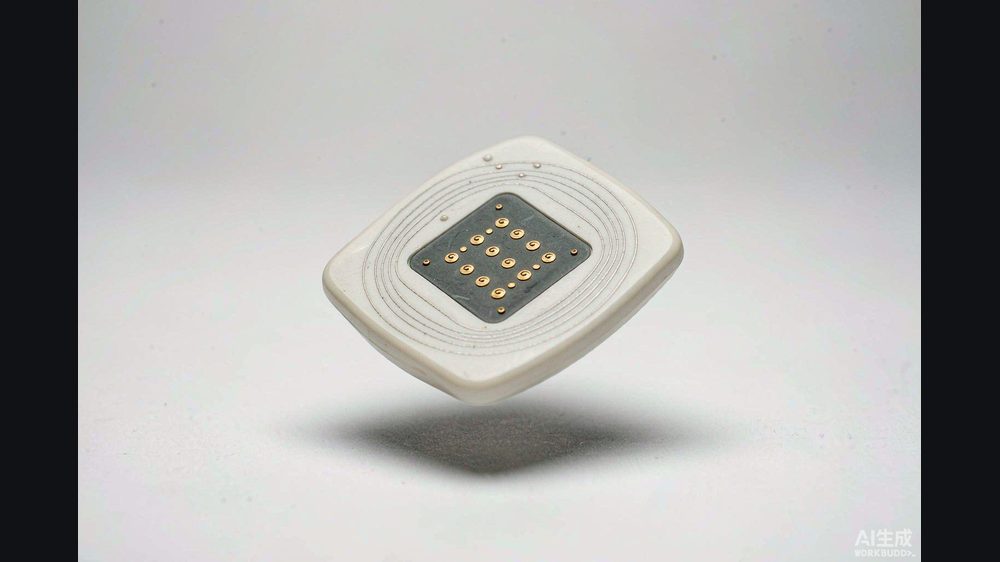
Every implanted brain chip has the same blind spot: it only hears the tiny patch of tissue it touches. A Los Angeles nonprofit called Forest Neurotech is trying to break that limit with a different physical medium entirely — sound. Instead of electrodes, its device uses ultrasound to listen to and nudge the whole brain at once.
Sound instead of wires
Forest Neurotech is a nonprofit "focused research organization" launched in 2023 out of Convergent Research, a philanthropic incubator backed by Eric Schmidt, Wendy Schmidt and Ken Griffin. Its flagship, the Forest 1 device, is an ultrasonic neural interface that can both read and write. Using ultrasound it builds high-resolution three-dimensional images of brain activity — based on blood-flow (hemodynamics) changes — across the entire organ, reportedly down to about 20 centimeters deep. The same device can deliver focused sound waves for precise neuromodulation.
Size is part of the story: Forbes reported Forest 1 is roughly 1,000 times smaller than a conventional ultrasound scanner and smaller than a standard key fob. That miniaturization is what makes a whole-brain interface plausible outside a hospital imaging suite.
Why it still needs surgery
Ultrasound and bone do not get along. The skull reflects, absorbs and scatters sound waves, which is the central unsolved engineering problem for non-invasive ultrasound brain interfaces. Forest's solution is to put the device inside the head: surgeons open the skull and rest Forest 1 on the dura mater, the protective layer over the brain, without penetrating the tissue itself. The company calls this "minimally invasive" — less invasive than electrodes that spear into brain matter, but still a surgical procedure.
The payoff is whole-brain access. An electrode array reads one region; Forest 1 aims to map and modulate networks across the organ, a capability the team argues could enable far more personalized neurological therapy.
A £6.5M trial inside the NHS
The first human test is underway in the UK. Barking, Havering and Redbridge University Hospitals NHS Trust — led by consultant neurosurgeon Aimun Jamjoom and partnered with the University of Plymouth (Prof. Elsa Fouragnan) — won a £6.5 million grant from ARIA, the UK's Advanced Research and Invention Agency, as part of its Precision Neurotechnologies programme. The study is recruiting around 30 people who have previously had a craniectomy, where part of the skull was removed to relieve pressure after a brain injury or stroke. Because ultrasound cannot pass through an intact skull, the device is placed on the skin at the skull-defect site to interface with the brain.
The trial began its regulatory process in March 2025 and runs for about three and a half years. Its first job is to confirm the Forest 1 device is safe and tolerable. Beyond that, the team wants to build a predictive model of "affective brain states" — measuring and modulating activity across mood states to shift patients toward improved mood and reduced depression. ARIA's broader programme backs 18 research teams with £69 million over four years, targeting conditions from Alzheimer's to epilepsy.
What it might treat, and what it is not
Forest frames mental health, brain injury, depression, addiction and obsessive-compulsive disorder as eventual targets, because circuit-level disruptions sit at the root of all of them. Because Forest is a nonprofit FRO by design, its model is to prove the foundational technology, then spin out for-profit entities to commercialize it — a reported spinout, Merge Labs, emerged in late 2025 with links to OpenAI's Sam Altman, though that effort is separate from Forest's own NHS study.
Honest limitations
This piece draws on Forbes, Digital Health, the University of Plymouth and NHS trust communications — none of it peer-reviewed clinical data. Forest 1's "whole-brain" reach is a claim about the device's design intent; human evidence so far is limited to an early safety study in a narrow population (people with skull defects), not the broader public. The ultrasound-through-skull problem means the current approach only works where bone is absent, a major constraint on who can receive it. Merge Labs is mentioned only as context and should not be read as part of Forest's trial. No Forest device is approved for treatment anywhere.
What readers can do now
- If you or a loved one lives with a skull defect after injury or stroke, the Plymouth/NHS study is searchable via ARIA's Precision Neurotechnologies programme — ask a neurosurgeon whether the Forest 1 trial is recruiting near you.
- Watch ARIA's programme outputs: £69M across 18 teams will surface many non-invasive and minimally invasive neurotech results worth following.
- Treat "whole-brain BCI" headlines as early-stage science; the surgical and skull constraints are real and unresolved.
Key takeaways
- Forest Neurotech's Forest 1 uses ultrasound to image and stimulate the entire brain, sidestepping the single-region limit of electrode implants.
- A £6.5M ARIA-funded NHS trial is testing safety and mood modeling in about 30 craniectomy patients.
- The approach still requires surgery and only works where the skull is absent — whole-brain access comes with real constraints.