
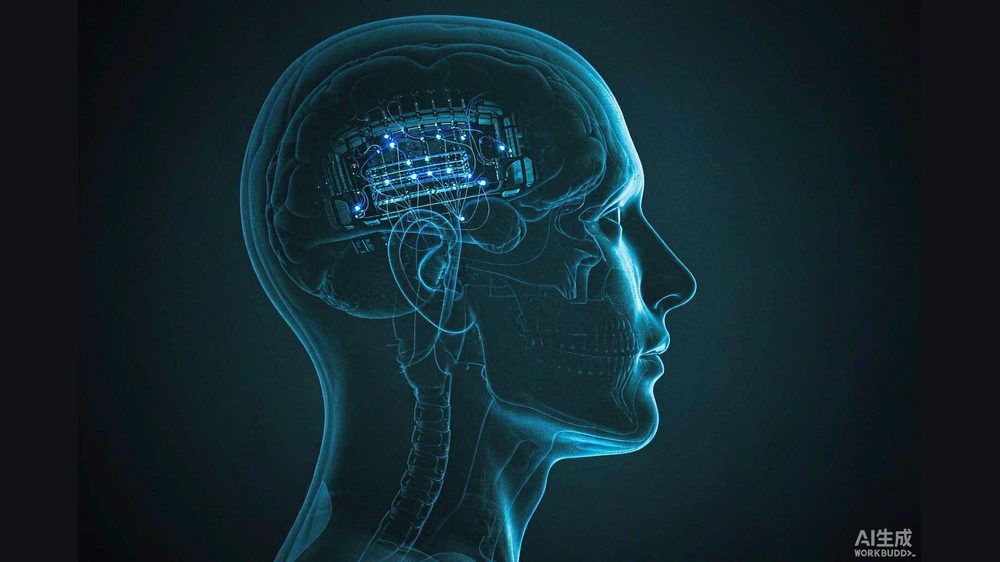
In June 2026, the National Medical Products Administration issued the Guiding Principles for Classification and Definition of Brain-Computer Interface Medical Device Products. The document says nothing about efficacy or price; it answers an earlier question: what kind of product counts as a brain-computer interface in the medical-device sense, and which class should govern it.
What came under repeated scrutiny were precisely the four Chinese characters for "brain-computer interface". According to China News Service and CCTV.com, several companies confirmed to China News Health that from May 2026 onward, approval of those four characters in Class II device registration certificates began to tighten. The name did not change; the threshold for using it did.
To an ordinary reader this sounds like an inside argument over wording, but it bears directly on what sits on the shelf. Whether those four characters can appear in a product name affects which device class it is registered under, how much validation it must pass, and where it may be advertised. A name is an entry point, not wrapping paper.
The Four Characters Taken Apart
The guiding principles first draw a circle around "brain-computer interface medical devices". According to an interpretation on the NMPA website, the term refers to active devices that collect central nervous system signals invasively or non-invasively, decode them in real time, and let a patient interact bidirectionally with an external device or form a closed loop, so as to improve, repair or replace central nervous function.
That circle keeps out a good many similar-looking things. The same interpretation states that devices measuring only peripheral nerve, muscle or heart signals, devices with only one-way collection or stimulation and no real-time bidirectional interaction, and products used for entertainment or daily assistance rather than medical purposes all fall outside these guiding principles.
In other words, simply sticking a fashionable label on a product is not enough; what matters is what it measures, whether it decodes in real time, and whether it sends the result back to form a closed loop. The four characters are broken into several hard conditions, and only what meets all of them gets through the door. A name turns from an advertising phrase back into a technical description.
The Line a Document Drew
Once the circle is drawn comes the classification line. According to China News Service, among non-invasive brain-computer interface medical devices, those used for limb-motor rehabilitation training in stroke patients and not using artificial intelligence are managed as Class II medical devices; other rehabilitation products are managed as Class III. The dividing line is the intended use and the algorithm.
The NMPA interpretation lays the line out in more detail: invasive or implantable brain-computer interface medical devices are managed as Class III; non-invasive products used to treat disease are Class III; those used for functional compensation or rehabilitation training are also Class III. The three categories each carry their own classification codes.
The only slot that can drop to Class II is limb-motor rehabilitation for stroke patients without artificial intelligence. The reason given is that such training already has fairly mature clinical methods, non-invasive collection involves no implant trauma, and it does not carry the uncertainty that a changing algorithm brings; with sufficient validation it is relatively controllable.
Names Must Follow a Structure
Alongside the classification document came another one in the same batch. According to an NMPA notice and a summary by a local medical-device service office, the Guiding Principles for Generic Names of Brain-Computer Interface Medical Devices was issued together with the classification principles, took effect on the day of publication, and deals specifically with how a product's generic name should be written.
By that summary, a generic name follows the structure of "characteristic term plus characteristic term plus core term", with the core term mandatory, and the words chosen according to how the product is used, its technical features and its function type, so as to reflect what it actually is. It sounds like a form-filling rule, but on the shelf it means a name can no longer be whatever one likes.
One more line concerns names. According to the NMPA interpretation, products using brain-computer interface technology but not managed as medical devices must state in their intended use that they are "not for medical purposes", and may not claim to improve or repair central nervous function. What a product is allowed to say is written into the rules as well.
The Hurdle Companies Felt
Companies felt the shift in wording first. According to China News Service and Guangming Net, one industry figure remarked that during the recent brain-computer interface boom, some non-invasive commercial products were not developed deeply enough and left a negative mark on the market. A name is easy to hang on a product; what gets remembered is not always the solid part.
A measure of restraint is called for here. The report names no company whose application was rejected and gives no figure for how many were tightened; all that can be set down is this change confirmed by several companies, and one industry figure's remark about how deeply products were developed. This draws no conclusion about any firm, nor does it read a single confirmation as the whole industry.
For a buyer, this hurdle offers a plain way to judge. When a product prints "brain-computer interface" in the most prominent spot, it is worth asking one more question: which device class is it registered under, what does its intended use say, and does it really perform real-time bidirectional interaction? The name is a cue; the lines on the registration certificate are the source.
Defining the Terms First
Tightening a name presupposes defining the words first. According to Economic Daily, in September 2025 the NMPA approved and published an industry standard, Terminology for Medical Devices Using Brain-Computer Interface Technology, which built a terminology system for such devices and set out core terms and definitions covering basic concepts, paradigm types and signal forms.
Information held by the National Public Service Platform for Standards Information shows the standard is numbered YY/T 1987—2025, published on September 15, 2025 and effective January 1, 2026. Before the terms were unified, different groups called the same thing by different names, so discussing efficacy, writing registration materials, running tests and comparing data all invited confusion, and studies were hard to place side by side.
On when finer industry guidelines should arrive, an expert suggests a different pace. According to China News Service, expert Zhao Yuanli believes the technology has been in clinical use for less than a year or two and is still at a relatively early stage; for now, internal review through hospital ethics committees and clinical research oversight, along with accumulating long-term follow-up cases, is more suitable before drawing up industry guidelines.
Laid side by side, the documents follow a clear order: first a terminology standard fixes the words, then the classification and naming principles draw the line around products and names, and companies in turn grow more careful with the four characters. None of them governs efficacy itself; they govern how this technology is named and classified.
For ordinary people, "brain-computer interface" once looked like a label into which anything could be dropped. Now it is broken down into intended use, algorithm, class and a string of words that must be written accurately. A narrower name is not necessarily a bad thing: when four characters can no longer speak for a product, the product has to step forward and explain, point by point, what it measures and what it can do.
Disclaimer: This article is based on publicly available information and is for reference only. It does not constitute investment advice.