
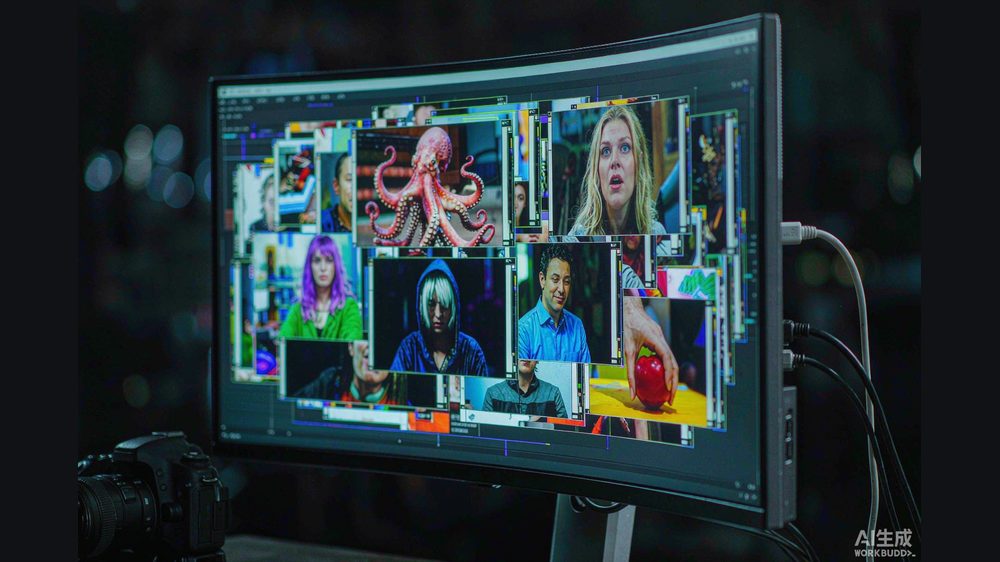
Ask an image model for a shop sign in Chinese calligraphy, lit by neon, reflected in wet pavement — with the shop name spelled correctly. For years, every model fumbled something. In September 2025, ByteDance's Seed released a model that handled that prompt, and the benchmarks moved.
Number one on both leaderboards
Seedream 4.0 entered the Artificial Analysis arenas — blind votes where users pick the better image without knowing which model made it — and took first place in both the text-to-image and image-editing tracks. TechRadar, citing Artificial Analysis data, reported it surpassing Google's Gemini 2.5 Flash Image (widely known as Nano Banana), with an Elo of about 1,205 against 1,201 at the time. ByteDance's own technical report, published on arXiv, presents the same result: first in both tracks.
Leaderboard crowns rotate quickly. What endured is what the win signaled: a Chinese image model had beaten the best US offering in a blind preference test on Western-run infrastructure — and users, who did not know the models' origins, simply preferred its output.
One model, both jobs
The technical bet is unification. Earlier ByteDance offerings split generation (Seedream) from editing (SeedEdit); Seedream 4.0 merges both into a single diffusion-transformer architecture with a new high-compression VAE. Per ByteDance, the redesign made training and inference more than ten times faster than Seedream 3.0 while improving output.
The practical consequences, as ByteDance describes them:
- Speed: 2K images generated in roughly a second at the fastest settings; 4K available at full quality
- Reference consistency: feed in reference images and the model keeps the same person, product or character across outputs — the feature that made it popular for brand and e-commerce work
- Dense text rendering: notably strong at rendering Chinese characters as well as English text inside images, a long-standing weakness of US-frontier models
- Editing as understanding: style transfer, perspective changes and object swaps done through the same weights that draw from scratch
The price that travels
Distribution followed the benchmark. Seedream 4.0 appeared on third-party platforms such as fal.ai and Replicate, and TechRadar reported pricing at about US$30 for 1,000 images — roughly US$0.03 per picture. That undercuts most Western premium tiers by a wide margin and mirrors the playbook ByteDance's video models have used: match frontier quality on benchmarks, then undercut on price and ship through global APIs rather than only a Chinese consumer app.
For the site's readers, the interesting question is not whether one Elo point separates winners. It is that China's image-model exports now compete on quality metrics Western users trust, at prices that reshape the economics of stock imagery, e-commerce visuals, game assets and ad creative worldwide.
The caveat in the pixels
Photorealism at US$0.03 an image has a social cost. Reviewers at the time noted the outputs were often indistinguishable from real photographs — raising the usual stakes for watermarking, provenance metadata and China's AI-content labeling rules. ByteDance applies its own safety and watermarking pipeline, but a model this good at realism is exactly the kind that integrity teams should assume will be misused somewhere, at some price point.
Why the leaderboard win matters more than the Elo point
A one-point Elo lead is noise; the structural change behind it is not. Blind-arena voting strips away brand, price and country-of-origin — voters see only pixels. A Chinese model winning there means the preference gap that once separated Chinese image generators from US frontier models has closed to zero, at least on that day and that snapshot. For global buyers of creative tooling, that converts "Chinese image models" from a budget option into a default candidate in any procurement shortlist, and it explains why Western and Chinese models now appear side by side on the same third-party API platforms rather than in separate ecosystems.
Honest limitations
- Arena positions are snapshots: the "first in both tracks" result dates from September 2025, and newer models — from Google, OpenAI, Black Forest Labs and Chinese rivals including Tencent's HunyuanImage — have since reshuffled the leaderboards.
- Elo figures (≈1,205 vs ≈1,201) come from a specific Artificial Analysis snapshot reported by TechRadar and ByteDance's arXiv paper; different snapshots show different margins, and blind-preference Elo measures taste, not fidelity.
- Performance claims (10x speed-up, one-second 2K generation, reference consistency) are ByteDance's own disclosures from its blog and technical report and have not been independently audited.
- Pricing is per TechRadar's report at launch and may have changed.
What readers can do now
- If you buy images at scale, run a head-to-head: the same ten prompts through Seedream 4.0 and your current vendor, scored on text rendering and subject consistency — the per-image cost delta is usually the deciding data.
- If you work with Chinese-language design, test dense Chinese-character rendering specifically; it is where Chinese models most often beat Western ones, and the gap is easy to verify in minutes.
- If you publish AI imagery, keep provenance metadata and labels intact; as outputs approach photographic indistinguishability, disclosure is becoming a legal requirement, not a courtesy.